A luxury smart fridge never really sleeps. All night it hums quietly in the corner of the kitchen, holding the milk at exactly three degrees, watching its shelves with small cameras, and waiting for the moment you ask it, from the supermarket aisle, whether you still have eggs.
It is a cooling machine, a computer and a camera system sharing one steel cabinet. This is how a luxury smart fridge works, from the compressor at the back to the screen on the door.
How It Works
Step 1: The compressor squeezes the refrigerant
Everything starts at the back of the fridge, where a compressor squeezes a gas called refrigerant until it is hot and under high pressure. The hot gas is pushed through a set of thin coils on the back of the cabinet, where it gives up its heat to the kitchen air and turns into a liquid, like steam condensing on a cold window.
The compressor is the only moving part in the whole cooling loop, and it runs in short bursts rather than all the time. A luxury fridge uses a variable-speed compressor that can run slowly and quietly when the kitchen is cool, and faster when the door has been opened a dozen times during dinner. The motor sits on rubber mounts inside a sealed steel case, so its vibration never reaches the cabinet.
Step 2: The refrigerant expands and steals heat
The liquid refrigerant is then pushed through a tiny valve into a second set of coils inside the fridge, where the pressure drops suddenly. As the liquid turns back into a gas, it soaks up heat from the air around the coils, and that is what makes the inside of the fridge cold. The cold gas is drawn back to the compressor, and the loop begins again.
A fan blows air across the cold coils and around the shelves, so the cold spreads evenly instead of pooling at the back. Without that fan, the milk at the front would be warm while the vegetables at the back froze.
Step 3: The sensors keep every shelf at its own temperature
A luxury fridge does not have one temperature. It has several, watched by sensors in the fridge section, the freezer and the crisper drawers. The fridge holds at around three degrees, the freezer at minus eighteen, and the drawers can be set warmer or colder depending on whether they hold salad, meat or cheese.
When a sensor reports that a section has warmed up, the controller opens a small damper, a flap that lets more cold air in, or speeds up the compressor. The sensors check again every few seconds, so the temperature barely moves even when the door is opened and closed all evening.
Step 4: The cameras watch what is inside
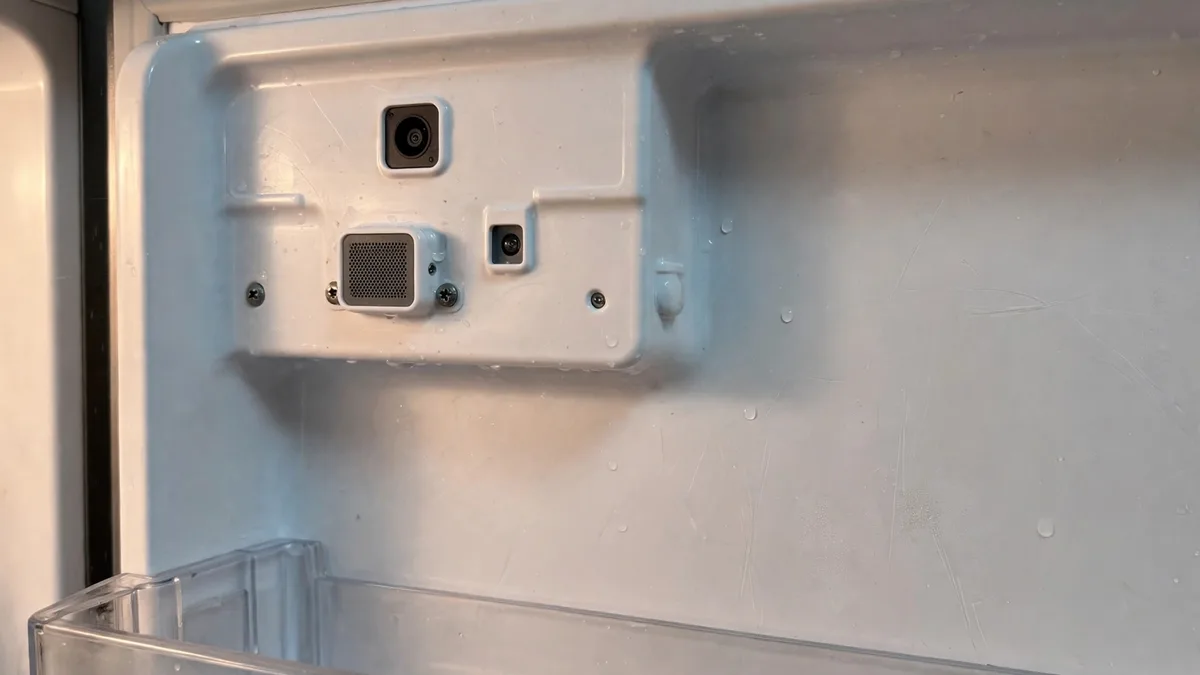
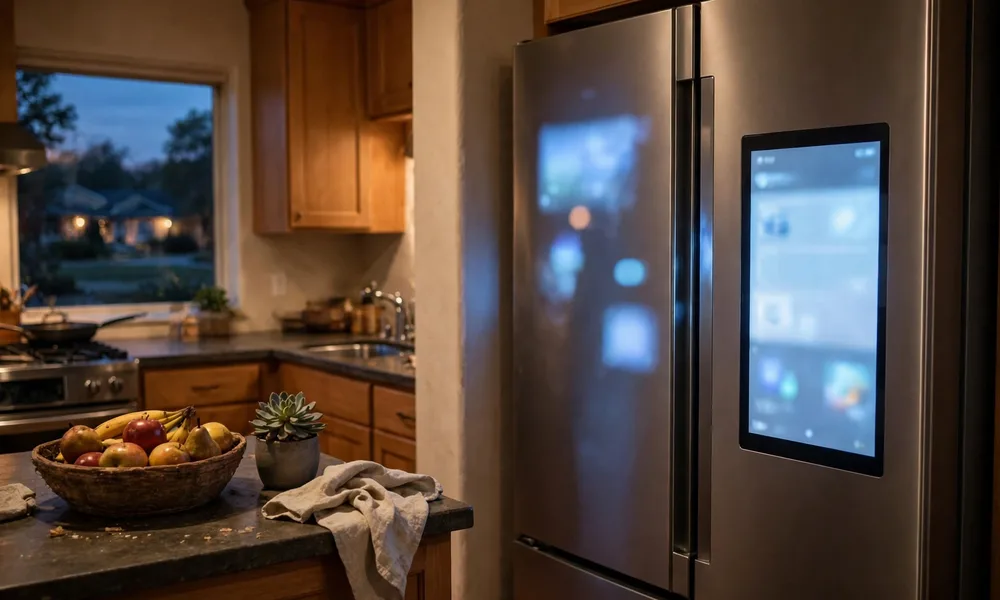
Inside the door, small cameras take a photograph every time the door closes. The pictures are sent to the fridge’s computer, which recognises the shapes of bottles, cartons and jars and builds a list of what is on the shelves. The list is what lets the fridge tell you that the milk is running low, or that the eggs expired last Tuesday.
The cameras work in the dark, lit by the fridge’s own interior lights, and they are angled to see past the tall bottles at the front to the jars hiding behind them. The photographs never leave the home unless the owner asks the fridge to share them with a shopping app.
Step 5: The screen and apps run the kitchen
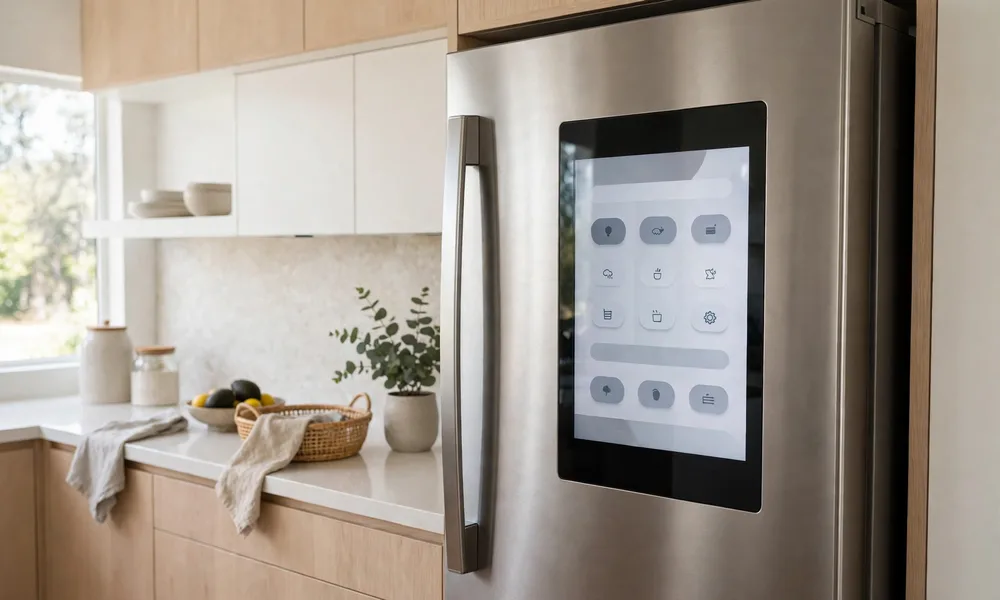
The touch screen on the door is the fridge’s face. From it, the family can see the temperature of every section, look at the shopping list the cameras built, play music, leave notes for each other, and check the weather before the school run. The screen talks to the home network, so the same list and notes appear on everyone’s phones.
Behind the screen, the fridge’s software also watches its own health. It tracks how often the compressor runs, how long the door stays open, and whether the water filter needs changing, and it sends a quiet alert to the owner’s phone before a small problem becomes a warm fridge full of spoiled food.
Step 6: The ice maker, water and power saving work together
At the top of the freezer, an ice maker fills a tray with filtered water, freezes it, and twists the tray to drop the cubes into a bin, refilling itself whenever the bin runs low. The water dispenser in the door draws from the same filter, chilling the water as it passes through a coil inside the fridge.
All of this runs on a power-saving routine. At night, when the kitchen is quiet and the door stays shut, the fridge lets the temperature drift a fraction of a degree higher and slows the fans, saving electricity without ever letting the food warm up enough to matter.
| Spec | Detail |
|---|---|
| Cooling loop | Variable-speed compressor with refrigerant coils and a circulation fan |
| Temperatures | Fridge around 3 degrees, freezer around minus 18, drawers adjustable |
| Sensors | Temperature sensors in every section, checked every few seconds |
| Cameras | Door cameras photographing shelves on every close, building a stock list |
| Screen | Touch display for temperatures, lists, notes and music, synced to phones |
| Ice and water | Filtered ice maker and chilled dispenser with night power saving |
The hardest part of running a luxury smart fridge is the balance between cold and quiet. It must keep food at a steady chill around the clock, answer the screen and the cameras, and make ice, all while humming so softly that nobody in the kitchen notices it. The fridge that manages it becomes part of the furniture, trusted and forgotten, until the day it tells you the milk is gone, and you realise it has been watching out for you all along.
What One Costs
A luxury smart fridge typically costs an estimated $4,000 to $10,000, and the price is set mostly by its size, the size of its screen, and how clever its cameras and sensors are. A tall single-door fridge sits near the bottom of the range, while a wide French-door model with a full screen and twin ice makers costs far more. To see how the cabinet itself is put together, how a luxury smart fridge is made follows the steel, the cooling pipes and the factory testing, and how a luxury smart lock works shows another smart home device that never really sleeps.
A Rare Fact
A luxury smart fridge can tell the difference between a door left open and a door opened a hundred times in one evening. It counts the openings, watches how fast the temperature rises, and if the door is truly ajar it sends an alert to the owner’s phone, sometimes saving a whole fridge of food from a door that was only nudged, not shut.
A luxury smart fridge is a cooling loop, a set of watchful sensors and a small computer that knows what is for dinner. It works all day and all night, holding its temperatures steady, photographing its shelves and answering questions from the supermarket aisle. For another screen in the home that watches and answers, how a luxury smart mirror works shows a mirror that does far more than reflect.