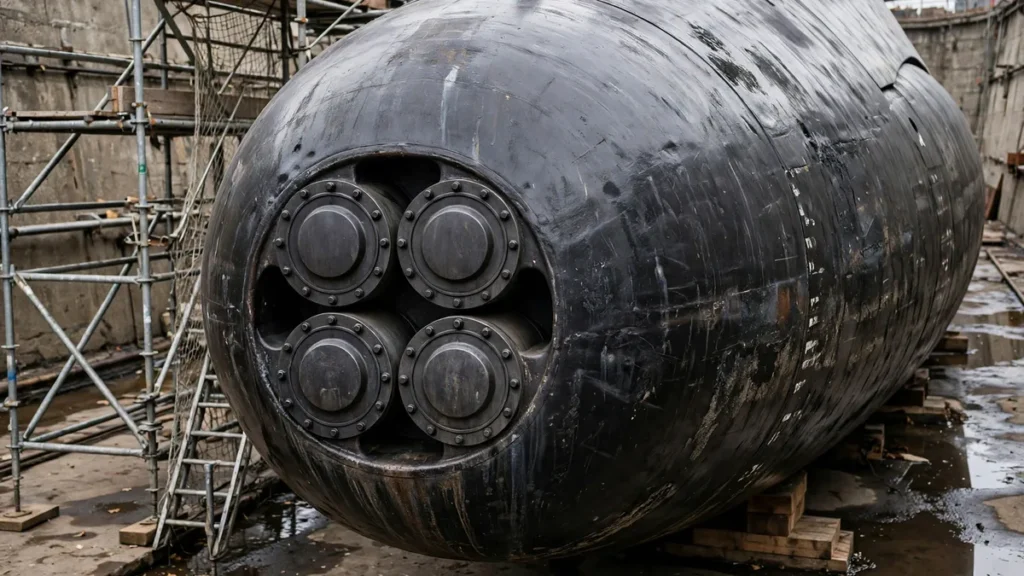
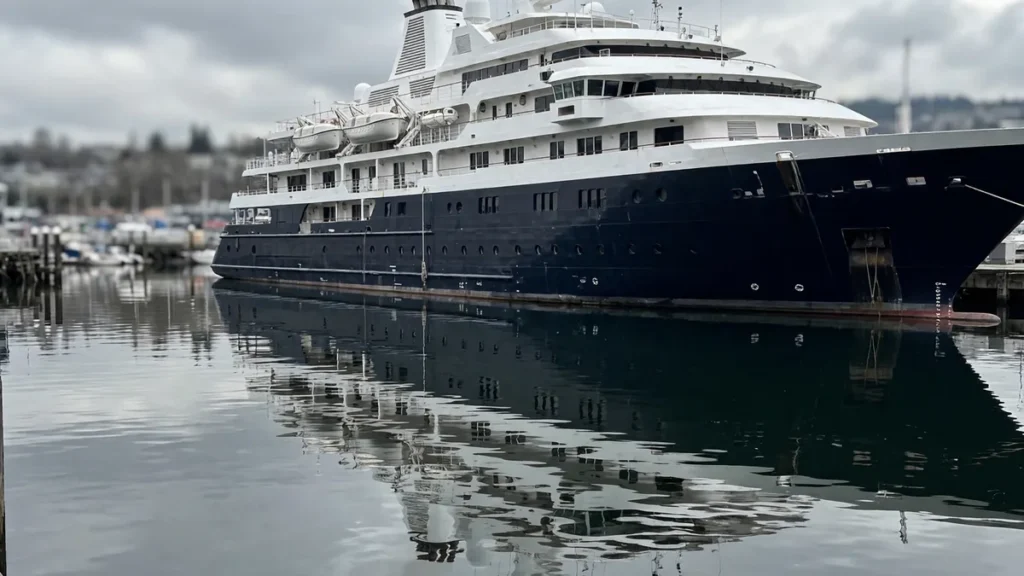
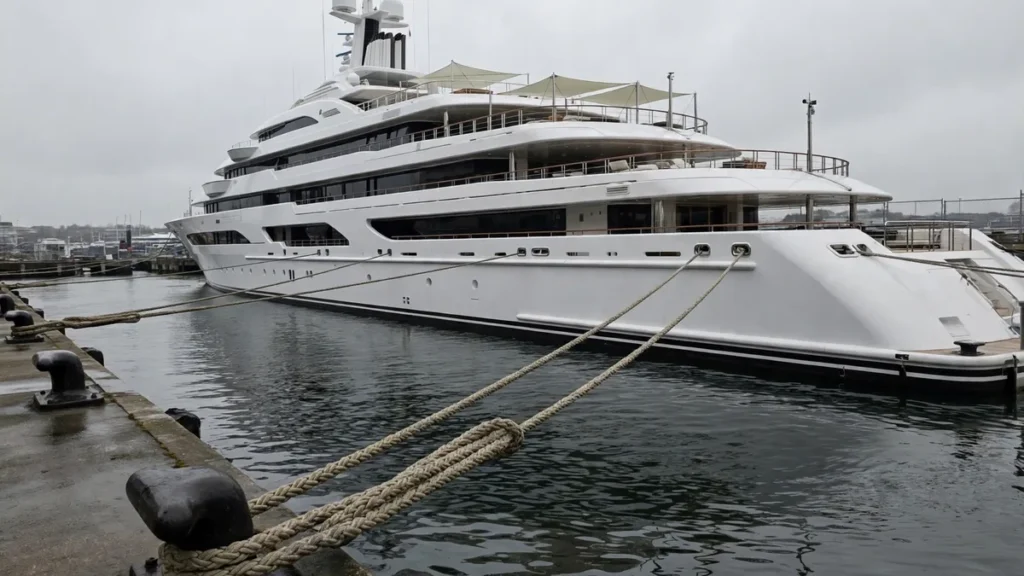
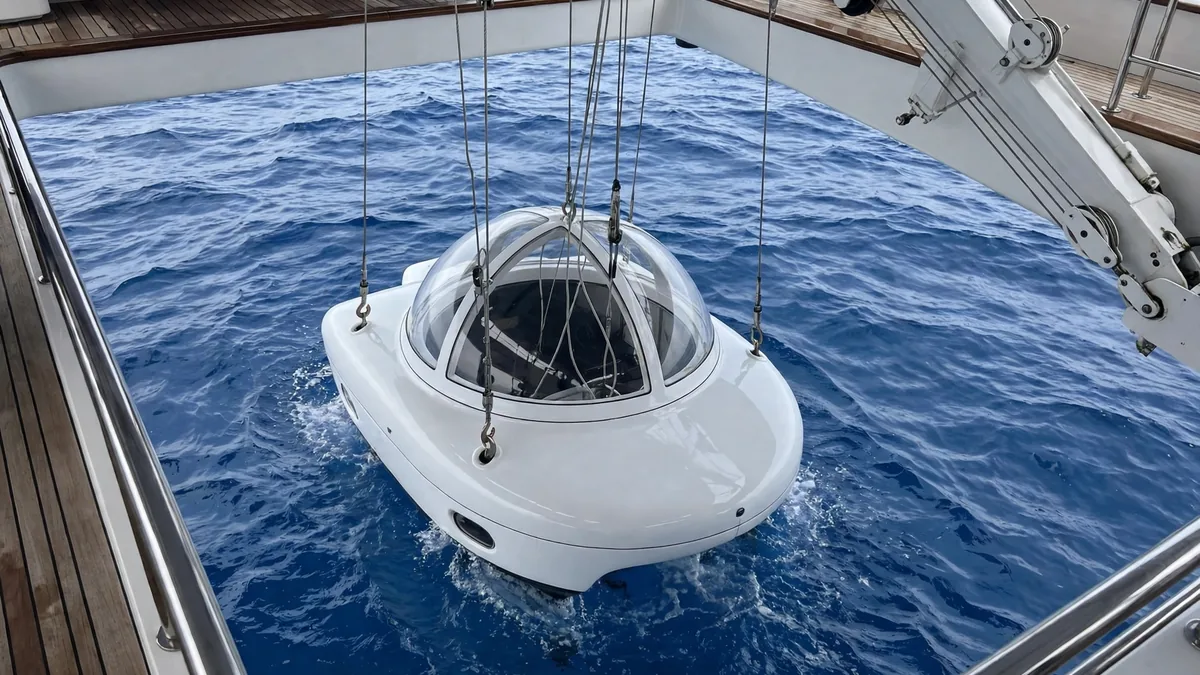
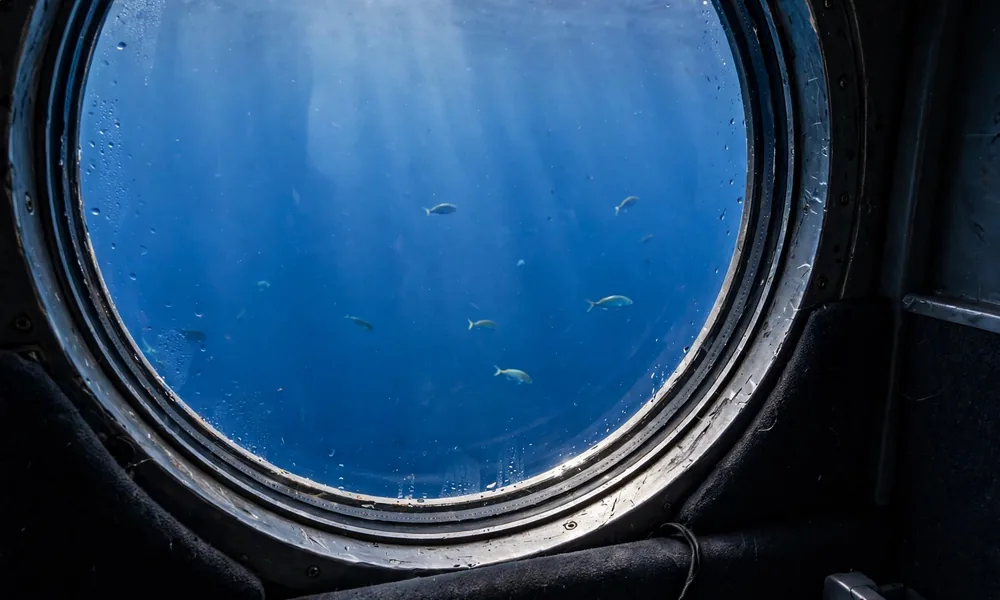
The yacht stops in open water, the crane swings out, and a white pod the size of a small car is lowered over the side. Inside it, three guests sit in armchairs behind a clear dome, watching the blue water close over them. There is no rush, no noise, just the light fading from blue to green to black as the pod sinks towards a world almost no one ever sees.
A luxury submersible is a submarine shrunk to its essentials: a strong shell, a battery, a few motors and a window, built to take people down and bring them back safely. It cannot stay down for days like a military submarine, and it does not need to. It is built for a few hours of wonder, and every part of it is designed around that single promise.
How It Works
Step 1: The pressure hull keeps the sea out
The heart of the submersible is its pressure hull, usually a sphere of titanium or a thick acrylic dome, because a sphere spreads the crushing force of deep water evenly in every direction. At a thousand metres down, the water presses with about a hundred times the force it does at the surface, enough to crush a car flat, yet inside the hull the air stays at normal pressure and the guests sit in comfort. The hull is tested far beyond its rated depth before it ever carries a person.
Step 2: Buoyancy and ballast control the dive
A submersible sinks and rises by changing its weight, not by pushing itself down. It carries tanks that can be flooded with seawater to make it heavier, and weights that can be dropped in an emergency to make it light again. Small trim tanks let the pilot keep it level, and the whole system is designed so that if everything fails, the submersible becomes buoyant and floats back to the surface on its own.
Step 3: Thrusters steer it through the water
Electric thrusters, small propellers in pods around the hull, push the submersible in any direction, forward, sideways, up or down. The pilot steers with a joystick, and a computer blends the thrusters so the craft moves smoothly instead of jerking. Speed is slow, a gentle walking pace, because the point is to look, not to race, and slow movement also saves the battery for a longer dive.
Step 4: Life support keeps the air fresh
Inside the sealed hull, the crew and guests breathe the same air for hours, so the submersible carries oxygen to replace what is breathed and scrubbers that pull carbon dioxide out of the air. Sensors watch the oxygen and carbon dioxide levels constantly, and alarms sound long before either becomes a problem. There is also emergency oxygen and enough reserve air to wait out a rescue, because the air system is never allowed to be a single point of failure.
Step 5: Batteries power everything
Everything runs on batteries, usually lithium packs like those in an electric car, because there is no engine and no exhaust underwater. The batteries drive the thrusters, the lights, the cameras and the life support, and the pilot watches their charge the way a driver watches a fuel gauge. A dive is planned so that a large reserve always remains, enough to return to the surface with power to spare.
Step 6: Surfacing and recovery
When the dive ends, the pilot drops ballast or runs the thrusters upward, and the submersible rises slowly through the brightening water. On the surface it bobs like a buoy until the support yacht’s crane hooks on and lifts it back aboard. The crew then check the hull, recharge the batteries and replenish the life support, and the submersible is ready to dive again, sometimes the very same day.
| Specification | Typical figure |
|---|---|
| Depth rating | An estimated 500 to 1,000 metres for most luxury tourist submersibles |
| Passengers | Two to five guests plus a pilot, seated around a clear dome |
| Hull material | Titanium sphere or thick acrylic dome, sometimes both together |
| Endurance | Around 6 to 12 hours underwater, with reserves held back |
| Speed | A gentle 2 to 3 knots, built for looking rather than travelling |
| Weight | An estimated 5,000 to 10,000 kg, light enough for a yacht crane |
Before a submersible ever carries a paying guest, it must be certified by a classification society, an independent body that inspects the hull, tests the life support and watches the crew run emergency drills. The certification is not a single event but a rhythm: the hull is inspected on a schedule, the batteries are tested, and every dive is logged in detail. The pilot trains for months, learning to fly the craft by instruments when the water turns dark and to handle failures calmly, from a thruster fault to a lost light. Guests get a safety briefing before they board, the way airline passengers do, and then the hatch closes and the ordinary world disappears. What they see below depends on the place: coral walls, wrecks, and animals that have never seen sunlight.
What One Costs
A luxury submersible typically costs an estimated $2,000,000 to $5,000,000 to buy, and a single dive for guests can cost an estimated $10,000 to $25,000 per person on a charter. The price is set by the pressure hull, the certification and the support systems, and every dive needs a trained pilot and a support crew. The battery is the quiet heart of the machine, and the luxury submarine battery specs explain how deep-diving batteries are built, while how luxury submarine sonar works covers the sense that guides larger boats in the dark.
A Rare Fact
The clear dome of a submersible flexes under pressure. Thick acrylic is strong, but it is not rigid like steel, and as the craft sinks, the dome compresses very slightly, by millimetres, under the weight of the water. Engineers design for that movement, letting the dome settle into its frame rather than fighting it, and the guests inside never feel a thing, they only notice that the light outside has turned a deeper blue. The dome is wiped clean before every dive, because a single smear can blur the whole view for everyone inside.
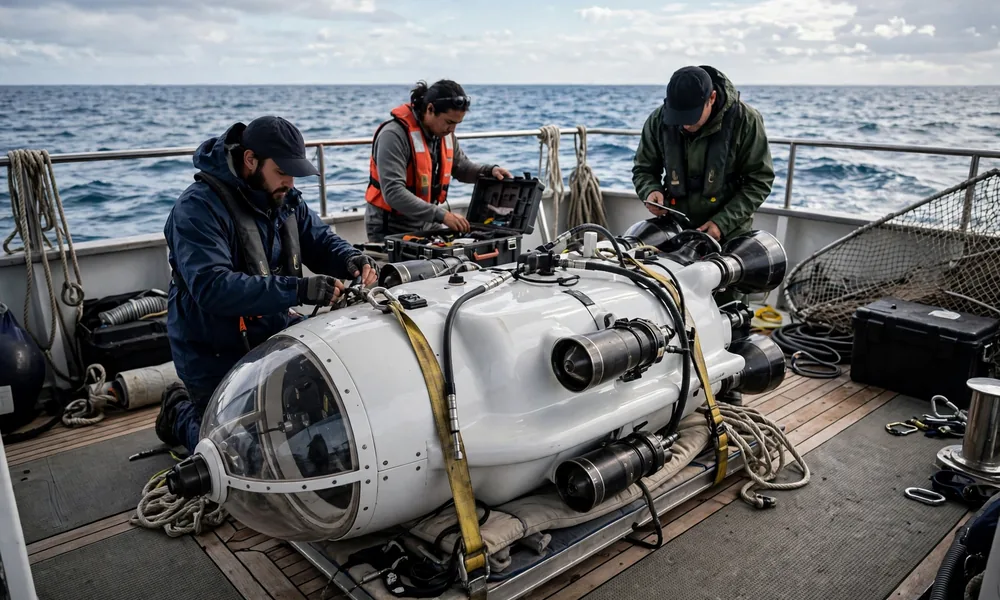
A luxury submersible is a small machine with a large idea behind it, that ordinary people should be able to visit the deep sea and come back for dinner. It does not conquer the ocean, it borrows a few hours from it, carefully, with backups for the backups. When it surfaces again, dripping and bright in the sun, the guests climb out changed, and the little pod is washed down for the next descent. For the small boats that work closer to the surface, how a luxury yacht dinghy works shows a far simpler kind of tender. The lights of the submersible are part of the show too, switched on only in the dark, where they pick out colours that sunlight never reaches, reds and oranges that vanish within a few metres of the surface. Guests often say the return journey is the strangest part, watching the black water turn blue again and the surface shimmer above them, like coming back through a door they did not know was there.