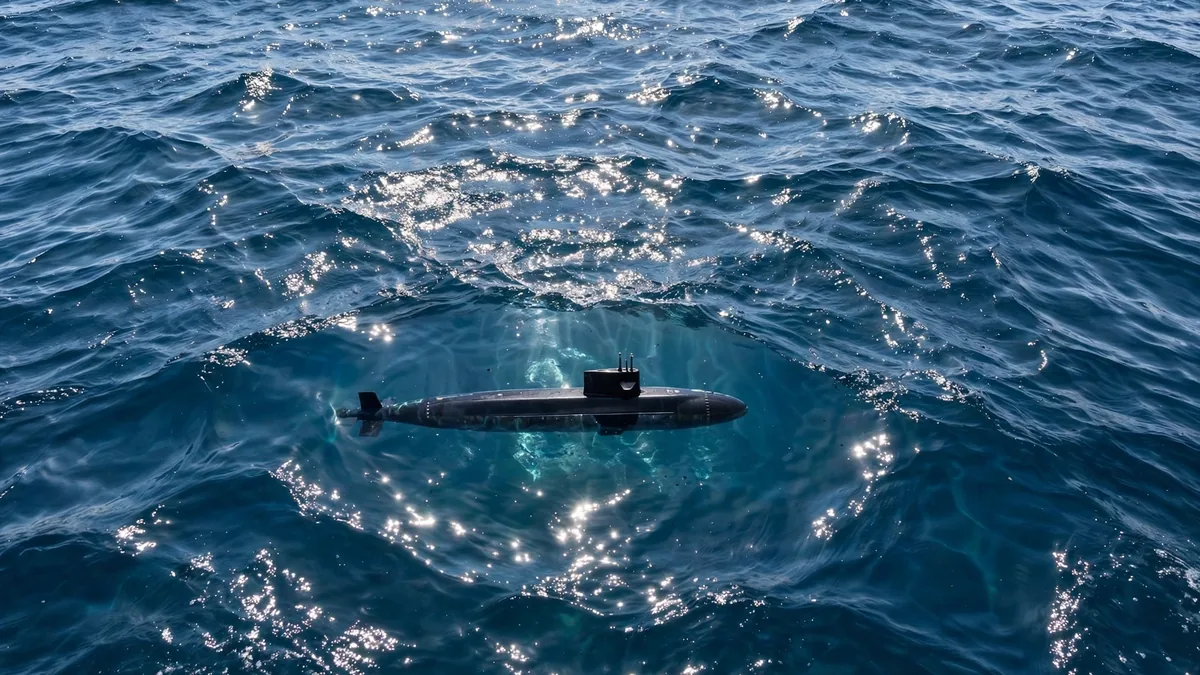
Two hundred metres below the surface, there is no light at all. The water is black, cold and silent to human ears, and the submarine moving through it cannot see where it is going. There are no windows, no headlights, no view of any kind. And yet the captain knows exactly what is around them: the slope of the seabed below, a fishing boat passing three kilometres away, a whale singing somewhere off to the left.
That knowledge comes from sonar, the submarine’s ears. It listens to the ocean the way a bat listens to the night, sending out pulses of sound and reading the echoes, or simply sitting quietly and hearing what the sea itself is saying. On a luxury submarine, built for exploration and adventure rather than war, sonar is a tool of discovery. Here is how it works.
Luxury submarines use sonar very differently from the warships that invented it. There is no hunt, no hiding from an enemy, only curiosity. The sonar guides the boat to a coral reef the guests want to see, keeps it clear of rocks in water no sunlight reaches, and tells the crew when a pod of whales is near enough to be worth surfacing for. The same echoes that once searched for other vessels now map the seabed in detail, revealing shipwrecks and underwater cliffs that no diver could ever reach. For the passengers, most of whom will never see the sonar room, it is the quiet reason their voyage feels like magic: the boat always seems to know where the wonders are.
How It Works
Step 1: Sound is sent out into the water
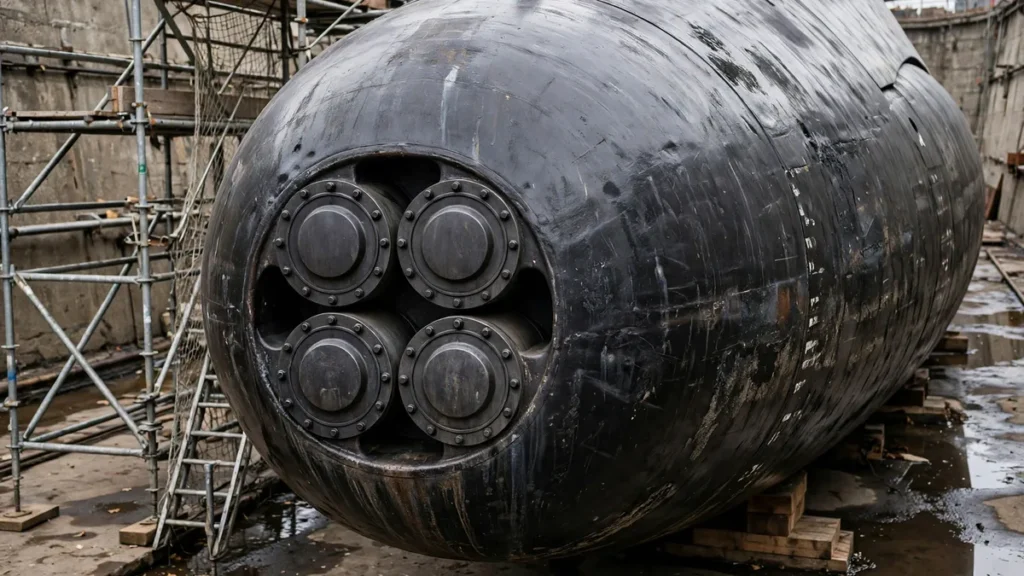
Active sonar begins with a pulse. A bank of transducers in the bow dome converts a burst of electrical energy into a pressure wave, a ping, that travels through the water in every direction. Sound moves through seawater at roughly one and a half kilometres per second, far faster than in air, so the ping races away from the submarine and bounces off anything solid it meets: rock, wreck, reef or another vessel. The louder and cleaner the pulse, the further it travels and the sharper the picture it paints.
Step 2: The echo comes home
When the pulse strikes something, a small part of it bounces back towards the submarine. The transducers, which can both send and receive, catch that returning echo and turn it back into an electrical signal. The time the echo took to return tells the crew how far away the object is, because sound travels at a known speed. A faint echo means something small or far away; a strong one means something large or close. The whole process takes seconds, and it repeats hundreds of times a minute.
Step 3: Transducers turn sound into signals
The transducer array is the heart of the system. It is made of hundreds of ceramic elements, each one a small disc that flexes when sound hits it and produces a tiny voltage. Together they form an ear far more sensitive than any human one, able to pick up echoes so faint they would be lost in the background murmur of the sea. The elements are arranged in a dome at the bow, filled with oil that carries sound the same way seawater does, so the pulse passes through without distortion.
Step 4: Computers build a picture from the echoes
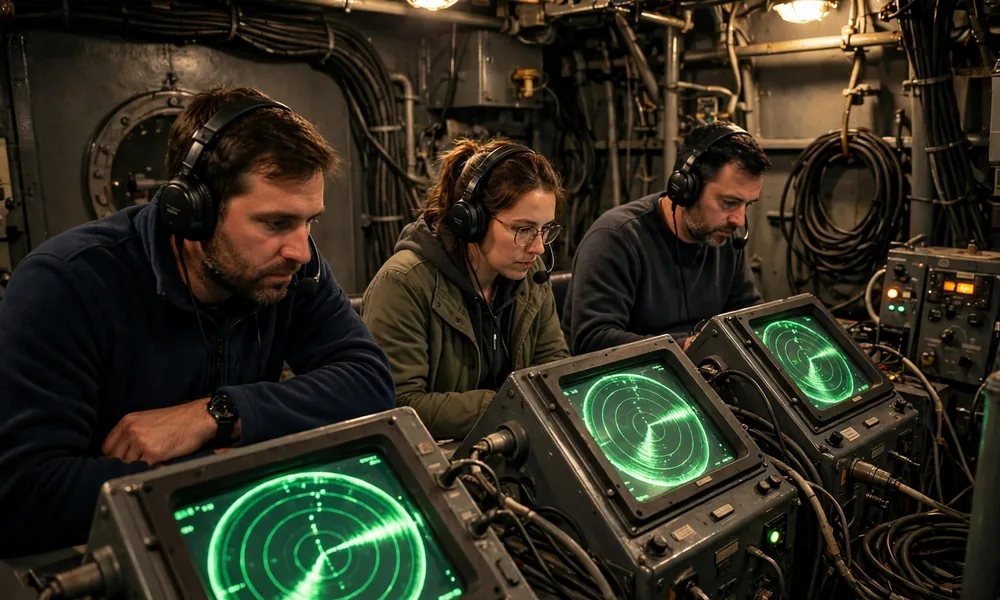
Raw echoes mean nothing on their own, so the signals flow to a bank of computers that turn them into something a human can read. The software compares the timing and strength of echoes from every transducer, works out the bearing and distance of each object, and paints it on a display as a glowing mark on a dark screen. Modern systems can track dozens of contacts at once, tell a rocky seabed from a school of fish, and even recognise the shape of a wreck from the pattern of its echoes. The display can also build a three-dimensional picture of the seabed, showing cliffs, valleys and wrecks in shades of colour, which lets the crew steer around dangers they could never see and find features worth a closer look.
Step 5: Passive listening hears without being heard
A luxury submarine does not always ping. Pinging announces its position to anything listening, so much of the time it uses passive sonar instead: it simply listens. Hydrophones mounted along the hull pick up the sounds of the ocean itself, the rumble of a distant ship’s propellers, the clicks of dolphins, the groan of ice. Because the submarine makes almost no noise of its own, its crew can hear a fishing boat kilometres away long before that boat has any idea they are there.
Step 6: The crew reads the sea and decides
The final step is human. Sonar operators watch the displays, listen through headphones, and learn to recognise the signature of each sound the way a musician recognises an instrument. They call out contacts to the captain, who decides whether to steer around a reef, rise to look at a wreck, or simply drift and listen a little longer. On a luxury expedition, that decision might mean the difference between sailing past a whale and watching it breach a hundred metres away.

Luxury Submarine Sonar Specifications
The figures below describe a typical sonar system on a luxury submarine. Larger boats carry bigger arrays, but the principles are the same.
| Specification | Typical figure | What it means |
|---|---|---|
| Sound speed in seawater | About 1,500 metres per second | Sound travels four times faster in water than in air. |
| Active range | Up to 10 kilometres | Further in deep, quiet water, shorter in noisy shallows. |
| Passive range | Up to 50 kilometres | A loud ship can be heard from very far away in the deep ocean. |
| Transducer elements | 200 to 1,000 | Ceramic discs in the bow dome, each one sending and receiving. |
| Frequency range | 1 to 100 kilohertz | Low notes travel far, high notes give fine detail. |
| Contacts tracked | Dozens at once | Software sorts echoes into separate objects on the display. |
What It Costs
A luxury submarine sonar system costs an estimated $500,000 to $3,000,000 to build and install, including the transducer array, the processing computers and the displays, depending on the size of the boat and how far the system must listen, with the most capable expedition systems costing more. Those are estimates, not quotes, and they reflect hundreds of precision ceramic elements and software that must turn faint echoes into a picture a human can trust. The vessel that carries it is covered in how a luxury submarine works, and the numbers behind that vessel are explained in luxury submarine specs explained.
A Rare Fact
Here is a detail most people never guess. Sonar operators can hear the rain. Raindrops striking the surface of the ocean make a faint pattering sound underwater, and a good passive sonar system can tell whether it is raining above, and even how hard, from hundreds of metres below. Submariners have used that sound for decades to check the weather without ever surfacing, which is one reason an expedition crew trusts its ears more than any forecast, as how a luxury expedition submarine works shows.