Deep below the surface, where no sunlight reaches and no engine can breathe, a submarine runs on nothing but stored electricity. The crew speaks quietly, the lights are dim, and the only sound is the soft whirr of a propeller turning on battery power. The machine that makes this possible is not glamorous: it is a room full of heavy cells, thick cables and quiet chemistry, tucked into the belly of the boat. The spec sheet is where that hidden power is written down, and it reads very differently from the sheet of an ordinary battery.
A submarine battery has a job that pulls in two directions. It must hold an enormous amount of energy, enough to drive a vessel weighing hundreds of tonnes for hours underwater, and at the same time it must be safe in a sealed steel tube, where a fire or a leak of gas could be fatal. Luxury submarines add a third demand, which is silence: the battery must deliver its power without vibration, so the boat stays invisible to anyone listening. The numbers on the spec sheet explain how, and they are worth reading before buying.

Capacity, Voltage and the Cells
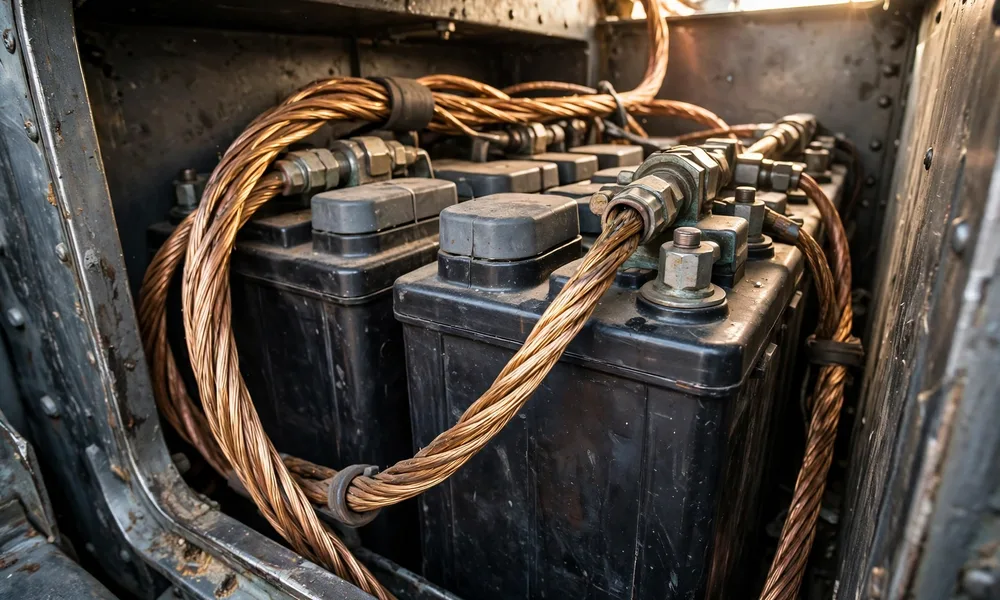
The first number on the sheet is the capacity, measured in kilowatt hours, and on a luxury submarine it usually runs from 100 to 1,000 kilowatt hours. That sounds like a lot, and it is: a family car carries perhaps 60 kilowatt hours, while a large submarine battery can hold ten times as much. The capacity decides how long the boat can stay underwater on battery power alone, which is usually 8 to 24 hours at a slow cruising speed. The best batteries use lithium-ion cells, which store more energy in less space than the old lead-acid batteries, and they charge faster too.
The second number is the voltage, and on a luxury submarine battery it usually runs from 300 to 800 volts. High voltage matters because it lets the motors draw a lot of power through thinner cables, which saves weight and space inside a boat where every kilogram counts. The cells are wired together in long strings, and each string is watched by a battery management system, a computer that checks the temperature and charge of every cell, hundreds of times a second. If one cell gets too hot or too full, the system isolates it before it can cause trouble. The spec sheet should list both the voltage and the number of cells, and both matter.
The third set of numbers is about endurance, and it is the set that decides how the submarine is actually used. A battery that can drive the boat at 5 knots for a whole day is far more useful than one that can sprint at 15 knots for an hour and then go flat. The best luxury batteries are rated for thousands of charge cycles, which means they can be charged and emptied day after day for years without losing much capacity. The spec sheet lists the cycle life, the charge time and the safe depth of discharge, and a buyer who reads it will know whether the battery suits long quiet patrols or short fast dives.
The Spec Table, in Plain Numbers
| Specification | Typical luxury submarine battery | What it means |
|---|---|---|
| Capacity | 100 to 1,000 kilowatt hours | The energy on board, and the real limit on time underwater. |
| Voltage | 300 to 800 volts | High voltage lets the motors draw power through thinner cables. |
| Cell type | Lithium-ion | More energy in less space than old lead-acid batteries. |
| Underwater endurance | 8 to 24 hours | At a slow cruising speed, on battery power alone. |
| Cruising speed | 3 to 6 knots | Quiet and efficient, the speed the boat uses most. |
| Battery weight | 2 to 20 tonnes | Lithium-ion weighs about half as much as lead-acid. |
| Cycle life | 3,000 to 6,000 cycles | How many full charges the battery survives before fading. |
| Charge time | 4 to 8 hours | A full recharge from the boat’s generators or a shore supply. |
| Cooling | Liquid cooled | Keeps the cells at a safe temperature under heavy load. |
| Safety systems | Gas extraction and isolation | Shuts down a faulty cell string in milliseconds. |
Reading the Numbers Like an Engineer
The numbers only make sense together. A battery that is very large but very heavy will steal space and weight from the rest of the boat, and a battery with a high voltage but a weak management system will be dangerous in a sealed hull. The way to read the sheet is to look for balance: capacity, voltage, weight and cycle life should all point at the same kind of diving, and if one number looks far better than the others, the battery is probably being asked to do a job its construction cannot support. Top speed is the number buyers ask about first, and it is the least useful, because a submarine spends most of its time cruising slowly and quietly, and a short sprint matters far less than a long, silent endurance.
Safety is the number that matters most and gets talked about least. A luxury submarine battery should have multiple layers of protection: fireproof cell casings, gas extraction, water cooling and a management system that can shut down a faulty string in milliseconds. The spec sheet should list the safety systems, and a good one will describe them in detail.
What a Luxury Submarine Battery Costs
Prices are estimates, and they vary with the maker and the specification, but a luxury submarine battery is generally estimated at roughly $500,000 to $3 million, with the largest and most advanced systems estimated at $5 million or more. An ordinary industrial battery costs far less, but it is not built to survive pressure, salt water and years of deep cycling inside a sealed steel tube. The running costs are low, with no fuel and little servicing, though the cells will slowly lose capacity after many years of diving, and a good battery is built so that individual cell strings can be replaced without removing the whole system.
A Rare Fact Worth Knowing
Here is the detail that surprises even experienced engineers: the best luxury submarine batteries are tested like spacecraft, not like car parts. The cells are shaken, heated, cooled, punctured and flooded in a laboratory, and the whole battery is charged and emptied thousands of times, so the makers can find the weak point before a customer does. A cheap battery is tested until it works once; a luxury submarine battery is tested until it fails, and then it is made stronger. That is why the good ones keep a submarine silent and safe after years of deep diving, when the cheap ones are already losing capacity and raising alarms.
For anyone comparing submarine batteries, the advice is simple: start with the dive, not the capacity. Know how long the boat must stay down, how quietly it must run and how often it must recharge, and then read the spec sheet to see whether the capacity, voltage, weight and cycle life match that dive. The story of how a luxury submarine battery is made shows the building behind the cells and the cables, why a luxury submarine battery is so expensive covers why a battery like this costs so much in the first place, and how a luxury submarine works explains the boat the battery powers.