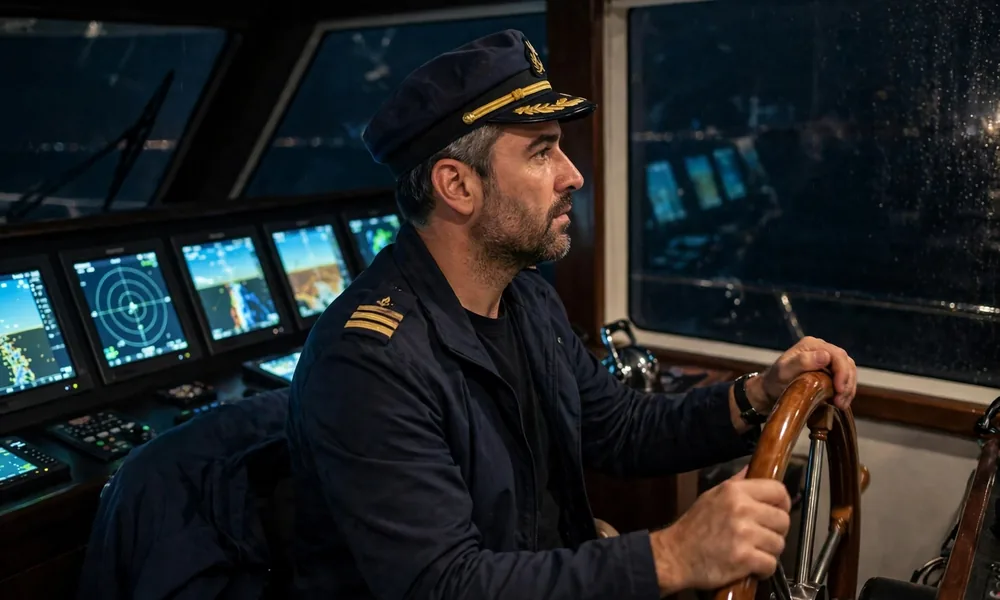
At the top of a superyacht, behind a wall of glass, a captain stands with both hands on a wheel that is barely bigger than a dinner plate. In front of him are screens showing the sea, the weather, the engines and every other yacht for miles around, and behind him is a quiet room with two chairs, a chart table and a coffee machine. It is the bridge, and it is the most expensive room on the yacht, not because of its furniture but because of what it can do, which is to drive a floating hotel through the dark, in a storm, without hitting anything.
A bridge looks like a cockpit, but it is really a nervous system. It joins the steering, the engines, the radar, the charts and the radios into one place, so a single watchkeeper can see everything and control everything. Building and running one means fitting the glass, the consoles, the electronics and the backups, and then learning to trust them. This is how it works.

How It Works
Step 1: The glass gives the watchkeeper the sea
Everything starts with the view, because a bridge is useless if the watchkeeper cannot see. The windscreen is made of large panes of laminated glass, raked back so the sun does not glare and the rain runs off, and the glass is heated so it never mists in cold weather. The bridge is placed high and forward, so the captain can see the bow and both sides of the yacht, and the consoles are kept low so they never block the view. Wipers, washers and a clear-view screen that spins the rain away keep the glass clear in a storm, and a watchkeeper who cannot see is a watchkeeper who is already in trouble.
Step 2: Radar and charts build the picture
What the eye cannot see, the electronics can. Radar sweeps the sea around the yacht, painting other vessels, buoys and coastlines as glowing marks on a screen, even in fog or darkness, and the electronic charts show the yacht’s position, its course and the depth beneath it. The system tracks other ships automatically, working out their course and speed, and warns the bridge minutes before a human eye would notice the danger.
Step 3: The helm and throttles answer the captain
Steering a yacht is done from the bridge with a wheel or a joystick, and the command travels as an electronic signal to the rudder and the engines below. The wheel is light and precise, and the throttles beside it control the engines, so the captain can speed up, slow down or stop from one chair. On most modern yachts the steering is backed by an autopilot, which holds a course or follows a planned route while the watchkeeper supervises, and the autopilot hands back control the moment the captain touches the wheel. The connection is doubled, with a backup steering system that can be used from the bridge or from the engine room if the main system fails.
Step 4: The engines and systems report to the bridge
The bridge is not only for navigation, because every system on the yacht reports there too. Screens show the engines’ speed and temperature, the fuel in the tanks, the power from the generators, the stabilizers’ fin angles and the state of the alarms. If a pump fails or a temperature climbs, the bridge knows first, and the watchkeeper can call the engineer below before the problem becomes serious. The bridge is the yacht’s head, and the engine room is its heart, and the link between them is a stream of numbers that never stops, day or night.
Step 5: Radios and satellite keep the yacht connected
A yacht at sea is alone, and the bridge is its only link to the world. Radios connect the captain to other ships, to port control and to rescue services, while satellite systems carry phone calls, weather forecasts and chart updates. The bridge keeps a log of everything, every course change, every radio call and every alarm, because the log is the yacht’s memory and its legal record.
Step 6: The watch changes, but the bridge never sleeps
A yacht under way is watched around the clock, and the bridge works in watches, with officers handing over at set hours. Each handover is formal, with the outgoing officer briefing the incoming one on the course, the traffic, the weather and anything unusual, and the new officer signs the log to take responsibility. The bridge never sleeps, even when the guests do, and the quiet hours before dawn are when its watchkeepers earn their keep.
| Specification | Typical figure |
|---|---|
| Position | High and forward, with a clear view of the bow and both sides |
| Glass | Heated laminated panes, raked back, with wipers and clear-view screens |
| Navigation | Radar, electronic charts, autopilot and satellite positioning |
| Controls | Wheel or joystick steering, throttles, and a backup steering system |
| Comms | Radios to ships and ports, satellite phone and weather updates |
| Watch | Manned around the clock, with formal handovers and a written log |
The most important instrument on a bridge is not a screen but a habit, which is the habit of looking out of the window. Electronics can fail, charts can be out of date, and a radar can miss a small fishing boat in a rain squall, so good watchkeepers are trained to lift their eyes from the screens and scan the sea with their own eyes, every few minutes, without fail. The bridge is designed to make that easy, with the glass in front, the consoles low, and nothing in the way, because a yacht is ultimately driven by a person, not a machine.
What One Costs
A yacht bridge typically costs an estimated $500,000 to $3,000,000 to fit out, and the price is set mostly by the electronics, the glass and the integration of the systems. A modest bridge with good radar and charts sits at the low end, while a large bridge with multiple screens, a full sensor suite and a satellite system can cost more than a house. The price is in the equipment, not the size, and inside the most expensive room on a ship explains why a ship’s bridge costs what it does, while how a luxury submarine periscope works shows a very different way of seeing the sea.
A Rare Fact
Some yacht bridges have a second helm outside, on a flybridge in the open air, so the captain can drive the yacht from the sunshine with a better view of the dock when coming alongside. The outside helm is a favourite in good weather, but the enclosed bridge is where the serious work happens, in the dark, in the rain and in busy shipping lanes. The two helms are linked, and control passes between them with a switch, so the captain can move from one to the other without the yacht ever being without a driver, a small detail that matters enormously when a hundred-tonne yacht is sliding into a tight berth.
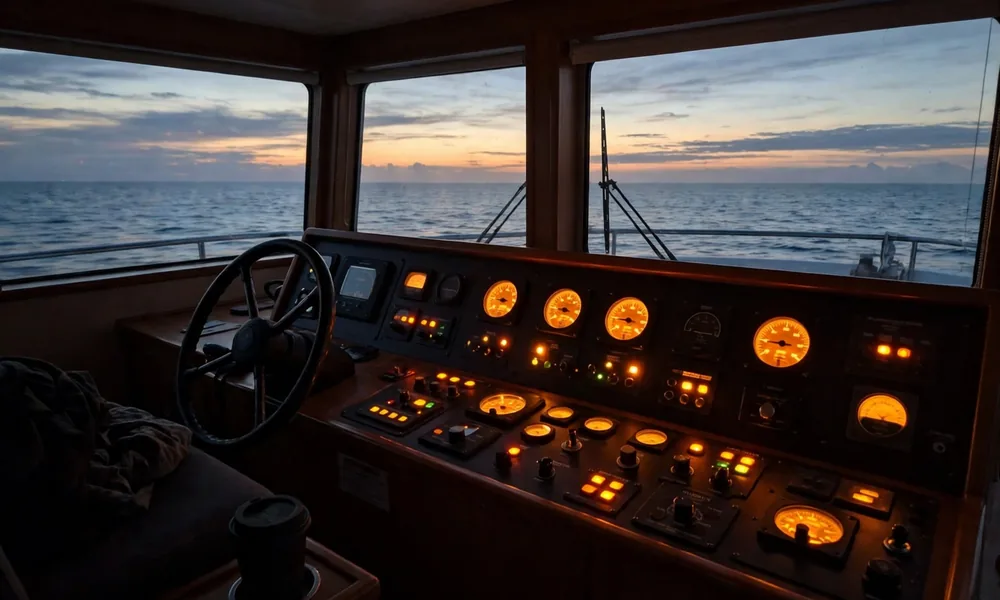
A yacht bridge is a glass room full of screens, a wheel the size of a dinner plate, and a watchkeeper who never stops looking. It joins the steering, the engines, the radar and the radios into one place, and it works around the clock so the guests can sleep. For the numbers behind a much bigger ship’s systems, the numbers behind a luxury cargo ship lays out what scale does to a vessel.


