A library on a superyacht is the opposite of everything else on board. The decks outside are bright, open and full of wind, while the library is small, warm and still, a room built for one person with a book and an hour to spare. It is also one of the most technically demanding rooms on the yacht, because books and the sea do not naturally get along.
Paper hates damp, leather hates salt air, and a tall shelf of hardbacks becomes a hazard the moment the yacht rolls. Building a yacht library means solving all of that without the room ever looking like a solution. This is how a luxury yacht library is made.

How It’s Made
Step 1: The library is placed in the calmest part of the yacht
Like the gym, the library is put where the yacht moves least, low down and near the middle of the hull, but for a different reason. A reader needs stillness, and a shelf of books needs a deck that does not throw them across the room, so the library usually sits on a main or lower deck, away from the engine room’s vibration and the bow’s pitch.
The room is drawn small on purpose.
Step 2: The shelves are built into the structure of the room
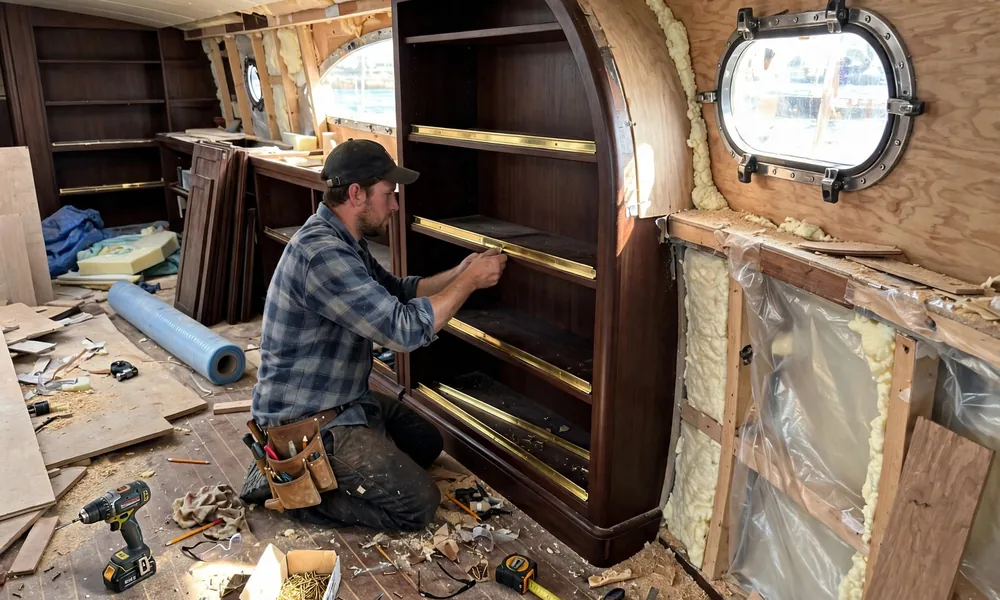
Yacht library shelves are not furniture; they are part of the ship. Each bookcase is built from marine plywood and solid hardwood, bonded and screwed into the bulkheads and the deck, so the whole wall of shelves becomes a rigid part of the room rather than a heavy object standing in it. The shelves are shallow, so books sit close to the wall, and each shelf is given a raised lip at the front.
Behind the visible wood, the builders add brass rails and discreet retaining bars that swing across the shelves when the yacht is under way. The bars are designed to disappear when the yacht is at anchor, so the library looks like a room in a house rather than a cabin on a ship, and the books stay put in either case.
Step 3: Climate control keeps the books dry and cool
Books are the most fragile cargo a yacht carries. Paper swells in damp air, leather cracks in dry heat, and mould can take hold in a single humid week, so the library gets its own carefully controlled climate. A dedicated air-handling branch feeds the room with dry, filtered air, holding the humidity in a narrow band that suits both the books and the reader.
Hidden sensors watch the humidity around the clock, and if it climbs, the system dries the air automatically, long before a single page can curl.
Step 4: Lighting is designed to protect the pages
Sunlight is the enemy of a library, fading covers and drying out bindings, so the lighting is planned as carefully as the shelves. Windows, where they exist, are fitted with ultraviolet-filtering glass and blinds that can cut the glare completely, and the main light comes from warm, low-level lamps rather than bright overhead fittings.
Each reading seat gets its own adjustable lamp, shielded so the light falls on the page and not on the shelves, and the general lighting is dimmable to a soft evening glow. The result is a room that feels candlelit even at noon, with every book protected from the light that would otherwise age it in a season.
Step 5: The collection is chosen, bound and catalogued
Once the room is finished, the books themselves arrive, and on a large yacht the collection is a project of its own. A librarian or book dealer selects the titles, often mixing classics, travel writing, art books and the owner’s favourites, and the books are rebound in matching leather or cloth so the shelves look as considered as the woodwork around them.
Each book is catalogued, sometimes in a small digital index on the yacht’s network, so a guest can find a title from their cabin before walking to the library. Fragile first editions are kept behind glass or in a locked cabinet, while the working collection sits open on the shelves, ready to be picked up and read.
Step 6: The room is finished and tested at sea
The last stage is the finishing: leather on the armchair, a soft rug on the floor, a small desk with a lamp, and the quiet details that make the room feel lived in rather than staged. The joinery is polished, the brass is lacquered, and the shelves are filled, leaving a few spaces empty so the collection can grow.
Then the library is tested under way, with the yacht rolling through real seas while the crew check every shelf, rail and lamp. Anything that rattles is tightened, any book that slips is given a better rail, and the climate system is checked against a full day at sea. Only when the room stays silent, dry and still does the library pass, and the yacht gains its quietest corner.
| Spec | Detail |
|---|---|
| Location | Low and central, away from engine vibration and bow pitch |
| Shelving | Hardwood bookcases bonded into the bulkheads with brass retaining rails |
| Climate | Dedicated dry filtered air, humidity held steady by hidden sensors |
| Lighting | Warm dimmable lamps with ultraviolet-filtered windows and blinds |
| Collection | Curated titles, often rebound in matching leather and catalogued digitally |
| Testing | Checked under way until shelves stay silent and books stay put |
The hardest part of a yacht library is that it has to do two jobs that pull in opposite directions. It must be a working ship’s cabin, built to survive a storm, and a room that feels like it belongs in a country house, with nothing in it that looks like it belongs on a ship. The joiners, the climate engineers and the book dealers all work toward the same illusion, and when it succeeds, a guest opening the door forgets they are at sea at all.
What One Costs
A luxury yacht library typically costs an estimated $180,000 to $700,000 to build and fit out, and the price is set mostly by the joinery, the climate system and the book collection rather than the size of the room. A modest library with standard shelves and a few hundred books sits near the bottom of the range, while a large collection of rebound and rare books can cost more than the room itself. The books alone can run into six figures, and how a luxury yacht bridge works shows the very different room where the yacht is actually run, while how a luxury superyacht is made follows the whole vessel from hull to handover.
A Rare Fact
Some yacht libraries hide a secret door in the bookcase, a panel that swings open on a concealed hinge to reveal a private study, a safe room or a passage to the owner’s cabin, a trick borrowed from country houses and rebuilt to survive a rolling sea.

A luxury yacht library is a small room of hardwood, brass and carefully dried air, built to keep paper safe on a moving sea and to give one person a quiet hour away from the rest of the yacht. It is the least spectacular room on board, and for the people who use it, the most valued. For the vessel that carries it, how a luxury yacht is made explains how the hull, decks and interiors come together.


