A sauna on a yacht is a small wooden room that holds a dry, fierce heat while the sea slides past outside the hull. Step inside and the air smells of warm cedar, the benches are hot to the touch, and the cold of the ocean feels a world away, even though it is only a few inches through the wall.
Using one is a small ritual, and the room is built to run it the same way every time. The heater warms the stones, the stones warm the air, a ladle of water turns to steam, This is how a luxury yacht sauna works, from the moment the heater is switched on to the cool air on deck afterwards.
How It Works
Step 1: The heater warms the stones
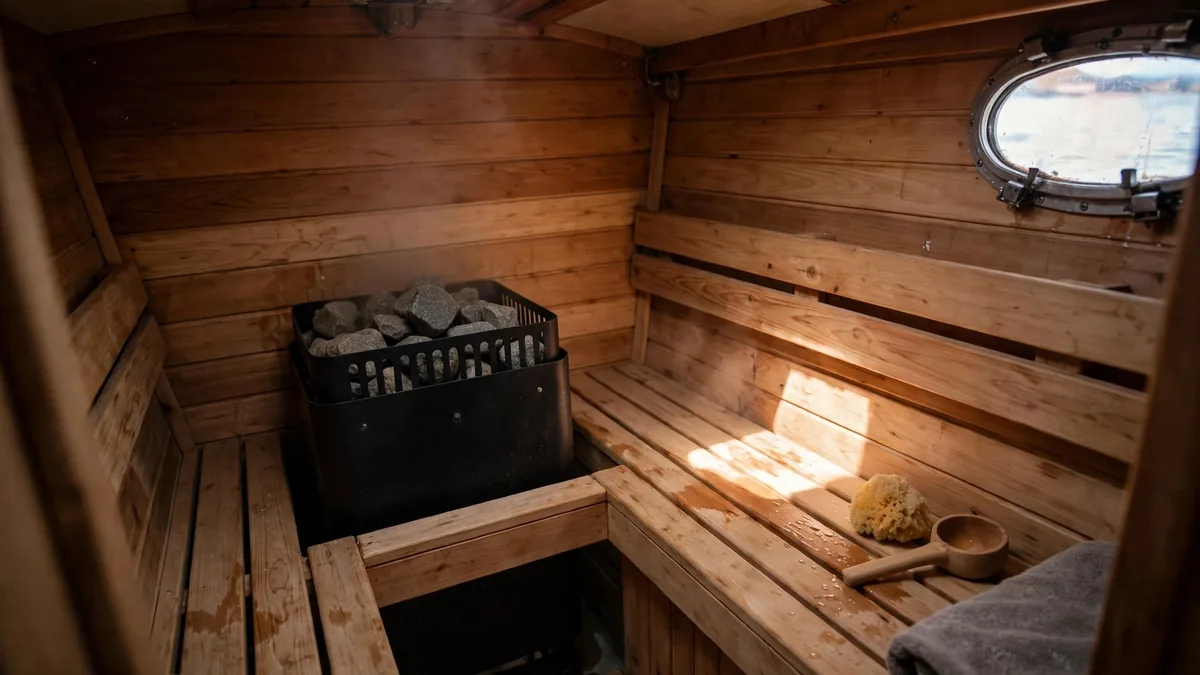
Every session starts at the control panel outside the door, where the crew set the temperature, usually between seventy and ninety degrees, and the time. Inside, the electric heater switches on, and its elements glow red inside a steel body, warming the basket of rough volcanic stones piled on top of it.
Heating takes about half an hour, and the crew check the thermometer on the wall before anyone goes in. The heater sits low in one corner, behind a wooden guard that keeps skin away from the hot metal
Step 2: Water on the stones makes the steam
Once the room is hot, the steam is made by hand. A guest takes the wooden ladle, dips it in the bucket of water beside the heater, and pours a ladleful over the stones. The water hits the hot rock and bursts into steam with a hiss, and a wave of damp heat rolls across the room, warming the skin in a way dry air never does.
The steam lasts only a minute or two before it fades, which is why the ladle is used again and again through a session, a little water at a time rather than a flood.

Step 3: The benches hold the heat in layers
The benches are where the heat is felt, and they are built in two tiers for a reason. Hot air rises, so the top bench is always much hotter than the lower one, and a guest chooses their seat by how much heat they want, climbing up for the full blast or sitting low to ease into it. The cedar stays cool enough to lean against even when the room is at full heat,
Guests sit or lie on towels, and the benches are wide enough to stretch out on, The room is small on purpose, because a small room heats evenly and holds its warmth, while a large one would have cold corners and a heater working twice as hard.
Step 4: The vents keep the air moving
A sauna that sealed tight would be unbearable, so the room breathes through vents, a low vent near the heater that lets fresh air in, and a high vent near the ceiling that lets stale air out. The air changes slowly, a few times an hour, enough to keep the room fresh without cooling it down,
The steam has to escape too, and the ceiling is sloped very slightly so condensation runs to the walls instead of dripping on the people below. A drain in the floor takes away the water from the steam, and after a session the door is left open for a while, so the room can dry out before the next use.
Step 5: The timer and controls keep it safe
Safety on a yacht sauna is mostly about the timer. The heater cannot be left running, because the timer outside the room cuts the power when the set time ends, and a second safety cut-out inside the heater trips if the temperature ever climbs too high. The controls are simple, a dial for temperature and a dial for time, and the crew set them for every session rather than leaving them to guests.
There is also a rule of the sea that shapes how the sauna is used: nobody goes in alone, and nobody stays in for more than twenty minutes at a time. The session ends with a cool shower or a step out onto the deck, where the sea air does the rest.
Step 6: The cool-down and the clean-up
The best part of a yacht sauna is what comes after it. Guests step out onto the deck and into the sea air, or under a cool shower, and the sudden cold after the heat is the point of the whole ritual, waking the skin up and leaving the body feeling lighter. On a yacht the sea is only steps away, and some guests go straight from the bench to the swim platform for a dip, which is the oldest part of the tradition.
Then the crew clean the room. The benches are wiped down, the floor is rinsed, the bucket is refilled and the door is left open to dry. The heater is checked once it has cooled, the room is ready for the next evening, smelling faintly of cedar and nothing else.
| Spec | Detail |
|---|---|
| Temperature | Seventy to ninety degrees, set on the panel outside the door |
| Heater | Electric unit low in a corner, stones piled on top, timer controlled |
| Steam | A ladle of water on hot stones, a little at a time, sharp and short |
| Benches | Two tiers, top bench hottest, cedar cool enough to lean on |
| Ventilation | Low vent in, high vent out, ceiling sloped so drips run away |
| Session | About twenty minutes, then cool air or a dip in the sea |
The hardest part of a yacht sauna is the balance of heat and air. Too little ventilation and the room turns stale and suffocating, too much and the heater cannot hold its temperature, so the vents are adjusted by hand every time the yacht moves into different weather.
What One Costs
A luxury yacht sauna typically costs an estimated $30,000 to $150,000, set mostly by its size, the heater and the cedar lining. A small two-person sauna sits near the bottom, while a large room with a full stone heater and a shower beside it costs far more. The steam is only part of the ritual, and how a yacht jacuzzi works shows the warm water waiting on deck after a session, while how a luxury yacht spa is made covers the quiet room built for unwinding beside it.
A Rare Fact
In Finland, where the sauna was born, the tradition is to cool off by rolling in the snow after a session, and on a yacht the closest thing is a plunge into the sea. Some owners keep the sauna next to the swim platform on purpose, so the run from the hot bench to the cold water takes only a few steps.
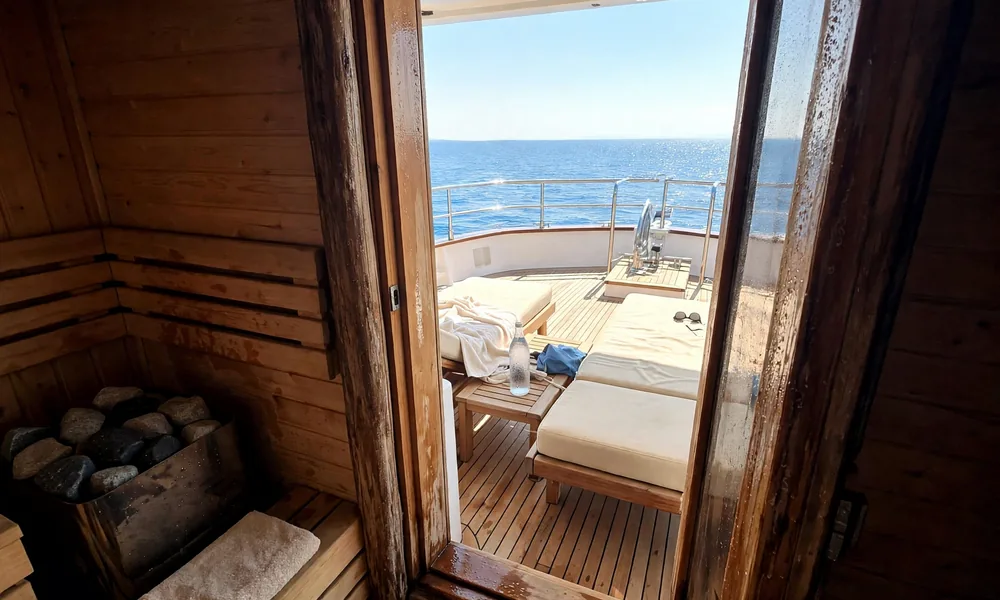
A luxury yacht sauna is a heater, a basket of stones, a ladle of water, two tiers of cedar benches and a timer that never lets it run too long, all breathing through vents that keep the air fresh. It is the hottest room on the ship, and the smallest. Building that room is a craft of its own, and how a luxury yacht sauna is made shows how the cedar, the insulation and the heater come together.