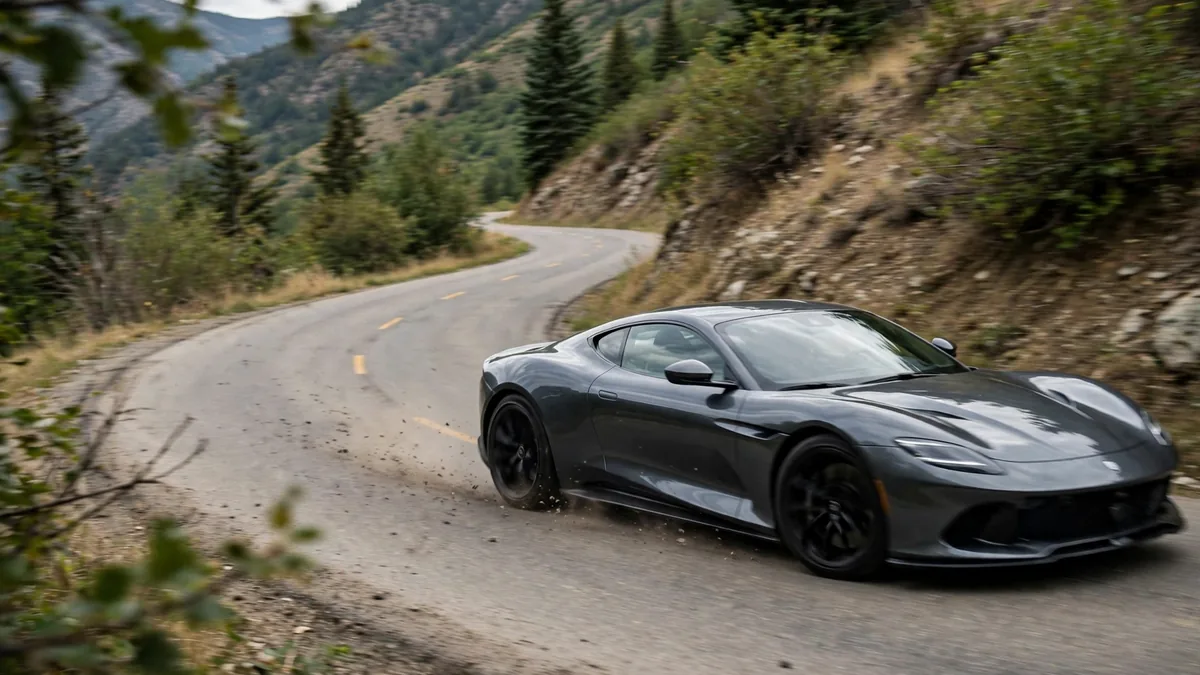
A luxury car gliding over a broken road looks like a trick, and in a way it is. The body stays calm while the wheels below it dance over every bump, pothole and patch of rough tarmac. Passengers sip their coffee, the cabin stays quiet, and nothing about the ride suggests the chaos happening underneath. That calm is not luck or soft springs. It is the work of an active suspension, a system that watches the road, thinks about what is coming, and adjusts itself hundreds of times every second.
Ordinary suspension is a compromise frozen in metal. Springs and dampers are tuned once, at the factory, and then they must cope with everything from a smooth motorway to a rutted country lane. Active suspension breaks that compromise. Sensors measure wheel movement, body lean and steering input, a computer decides what each corner of the car should do, and actuators change the damping or even lift and lower the car in real time. The result is a car that can be soft over bumps and firm through corners, often within the same second.
What the Spec Sheet Is Really Telling You
Response time is the headline figure
The most important number on an active suspension spec sheet is how fast it can react, usually quoted in milliseconds. A system that adjusts in five milliseconds can respond to a bump before the body has even started to move, while a slower system is always playing catch-up. Think of it as the difference between a goalkeeper who dives as the ball is kicked and one who dives after it has passed. Fast response is what lets the car cancel a bump instead of merely softening it, and it is the reason the best systems feel almost supernatural on rough roads.
Damping force decides the character
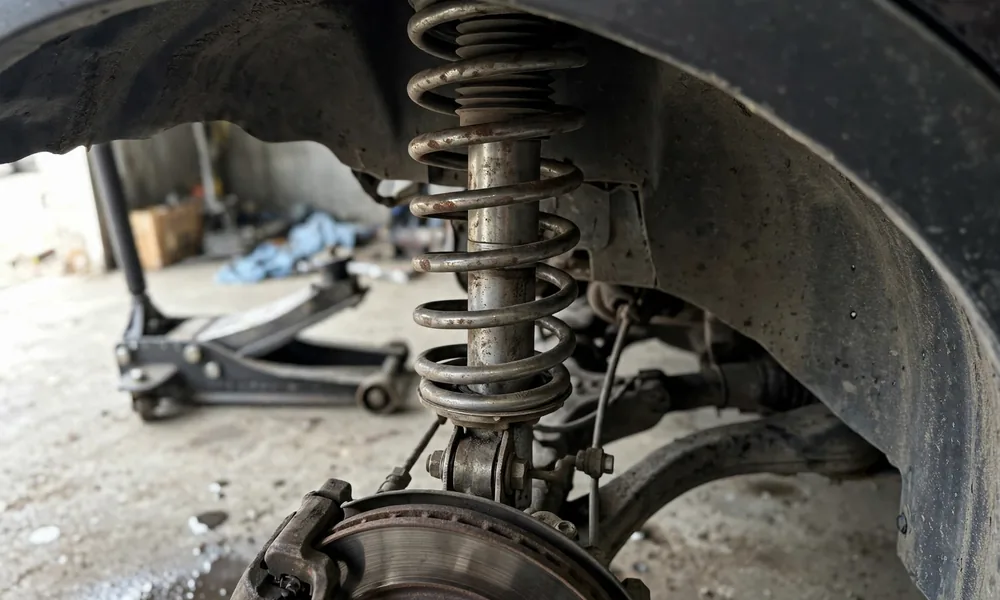
Damping force, measured in newtons, describes how hard the dampers resist movement. High damping keeps the body flat and controlled, which suits fast cornering, while low damping lets the wheels move freely over bumps, which suits comfort. An active system changes this force constantly, so the same car can feel like a limousine on a motorway and a sports car on a twisting road. When a spec sheet quotes a damping range rather than a single figure, that range is the whole point: a wide range means a wider difference between comfort and sport.
Travel tells you how much bump it can swallow
Suspension travel, the distance a wheel can move up and down, is usually listed in millimetres. More travel means the wheel can follow bigger bumps without passing the shock to the body, which is why off-road cars have so much of it. Luxury cars trade some travel for a lower stance and sharper handling, then rely on fast actuators to make the most of what they have. A figure of 80 to 100 millimetres is typical for a luxury saloon, and the clever part is how little of it you ever notice being used.
Ride height is more than a look
Many active systems can raise or lower the car, and the spec sheet lists the range, often 20 to 50 millimetres. Lowering the car at speed cuts drag and improves stability, while raising it helps over speed bumps, steep driveways and rough ground. Some systems even lean the car into a corner, like a motorbike, or lift one side to make getting in easier. Ride height adjustment is the most visible part of the system, and it is also the easiest way to feel the difference between one car and another.
Sensors are the system’s eyes
The sheet may list the number of sensors and how often they sample the road, sometimes a thousand times a second or more. Cameras can even scan the road ahead and prepare the suspension before the wheel reaches a bump, a trick called preview. More sensors and faster sampling mean the computer builds a better picture of what is happening, and a better picture means a smoother decision. It is the same logic as a good driver looking far ahead instead of staring at the bonnet.
Key Specifications
The figures below describe a typical modern luxury active suspension; individual systems vary widely by maker and model.
| Specification | Typical figure | What it means |
|---|---|---|
| Response time | 5 to 20 milliseconds | How quickly the system can react to a bump or a corner |
| Damping force range | 500 to 5,000 newtons | A wide range means a bigger gap between soft comfort and firm control |
| Suspension travel | 80 to 120 millimetres | How far a wheel can move to absorb a bump |
| Ride height adjustment | 20 to 50 millimetres | Lower for speed and stability, higher for rough ground and steep driveways |
| Sensor sampling rate | 500 to 1,000 times per second | Faster sampling gives the computer a clearer picture of the road |
| Body roll reduction | Up to 50 percent | How much less the car leans in corners compared with passive suspension |
| System weight | 30 to 60 kilograms | The extra hardware, paid for many times over in comfort and control |
| Power draw | 200 to 500 watts | The energy the system uses, roughly a strong headlight bulb or two |
How to Read It in Five Minutes
Start with the response time and the damping range, because together they describe how clever the system is. A fast response with a wide damping range means the car can change its mind quickly and completely, which is the whole promise of active suspension. Then look at the travel and the ride height range, which tell you how much real-world roughness the car can handle. Finally, check the sensor sampling rate: a system that reads the road a thousand times a second will always feel calmer than one that reads it half as often. Read this way, the sheet stops being a list of parts and becomes a description of a feeling, the feeling of a road that has been quietly ironed flat beneath you.
To see the parts that make those numbers possible, how a luxury active suspension works follows the sensors, computer and actuators step by step, and luxury carbon fibre chassis specs explained shows how a stiff, light chassis gives the suspension a stable platform to work from. For the machine that pushes all of this hardest, luxury racing car specs explained explains how the same ideas are tuned for the track.
A Rare Fact
Here is something the spec sheet never mentions: some of the most advanced active suspension systems can make a car lean into a corner, like a motorcyclist, instead of leaning away from it. Cameras and sensors read the bend ahead, the actuators tilt the body a few degrees into the turn, and passengers feel less sideways force than they would in an ordinary car. It is rehearsing the corner before the car reaches it, and that quiet rehearsal is what makes the ride feel so strangely calm.
An active suspension spec sheet is really a promise about comfort and control at the same time, two things that used to fight each other. Response time, damping range, travel and sensors all describe how well the car can keep that promise on a road it has never seen before. Learn to read them together, and the next sheet you pick up will tell you not just how the car is built, but how it will feel on the worst road you drive it on.


