He lifted the bare tub with one hand on each side and it barely moved, which was the wrong feeling entirely. A thing that size should have been heavy, a steel frame you wrestled onto a bench, but this black shell weighed less than the toolbox beside it. He tapped it with a knuckle and it answered with a dull, hard knock, like a drum made of stone. That was the moment the chassis stopped being a part and became the whole car.
A luxury carbon fibre chassis is the skeleton of a hypercar, the single structure that holds the engine, the suspension, the seats and the driver. It is built from woven carbon threads set in resin, baked hard in an autoclave, and it replaces dozens of steel parts with one rigid shell. The spec sheet for such a chassis reads like a riddle: it is lighter than steel, stiffer than steel, and far more expensive than steel. Understanding those numbers is the fastest way to understand why a hypercar feels the way it does.
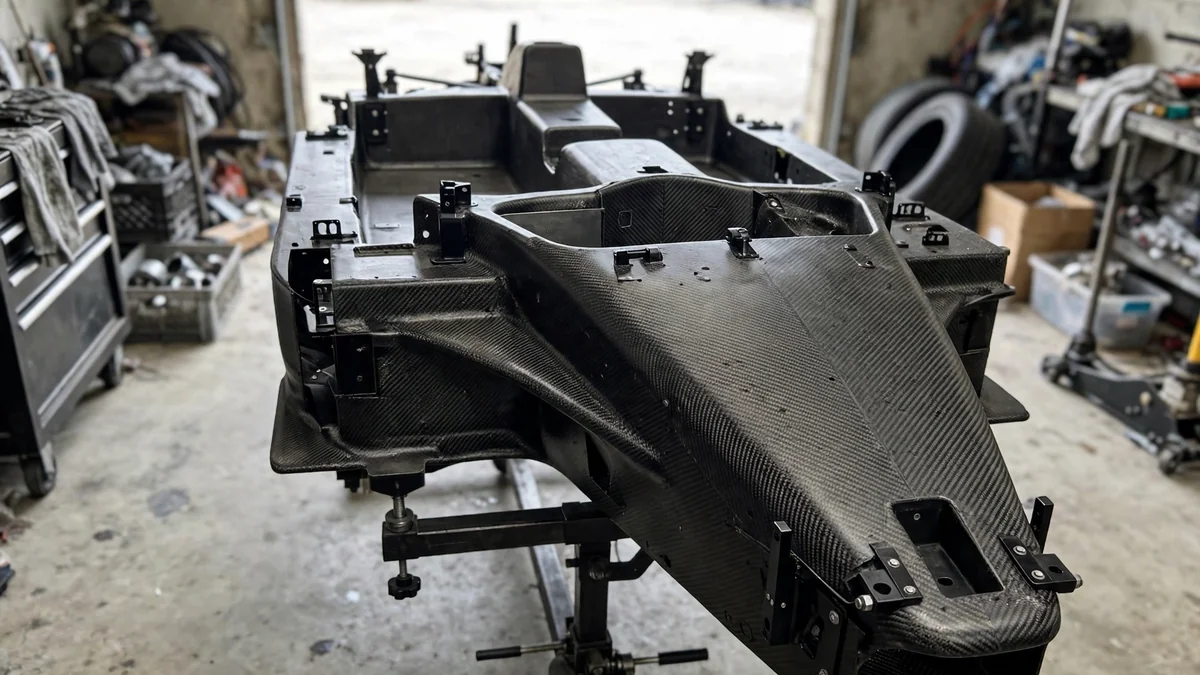
Reading a Luxury Carbon Fibre Chassis Spec Sheet
Step 1: Weight is the first number that matters
A carbon fibre monocoque for a luxury hypercar typically weighs between 70 and 110 kilograms, while a comparable steel body structure can weigh more than twice as much. Look for the bare tub weight on the spec sheet, not the weight of the finished car, because the tub is the honest figure. A lighter tub is the foundation of everything else a hypercar promises.
Step 2: Torsional stiffness is what you feel in corners
Torsional stiffness measures how much the chassis twists when the car corners hard, and carbon fibre tubs are usually rated at 30,000 to 50,000 newton-metres per degree. A stiff chassis lets the suspension do its job properly, because the wheels stay where the engineers put them instead of the body flexing around them. That is why a hypercar feels so precise on a fast bend, and why the numbers matter more than the badge. The suspension that hangs from this rigid shell is explained in our guide to how a hypercar suspension works, and the two systems are designed together from the first sketch.
Step 3: The fibre, the weave and the layup
Not all carbon fibre is the same. The spec sheet may name the fibre grade, the weave pattern and the number of layers, and each choice changes the result. A plain weave looks neat and is easy to lay, a twill weave drapes better over curves, and unidirectional layers put strength exactly where the loads run. A typical tub uses many layers, sometimes more than twenty in the most stressed areas, with the fibres aimed along the forces the car will meet. The layup schedule is the recipe, and a good one is worth more than the raw material.
Step 4: The resin and the cure
Carbon fibre on its own is just cloth, soft and floppy until resin binds it and heat cures it hard. Luxury chassis use epoxy resins cured in an autoclave, a large heated pressure vessel, at temperatures around 120 to 180 degrees Celsius. The pressure squeezes out air bubbles and excess resin, leaving a dense, void-free structure. Ask how a chassis is cured and you learn how seriously its maker takes quality.
Step 5: Crash structure and the safety cell
A carbon tub is not just light and stiff, it is also a safety cell. The driver sits inside a rigid survival cell, with crash structures at the front and rear designed to absorb energy in a controlled crush. Carbon fibre absorbs energy differently from metal: it fractures progressively rather than bending, and engineers tune the layup so the structure fails in a predictable way. The result is a car that can protect its occupants in a severe impact while weighing far less than a steel equivalent. The braking that keeps such a car out of trouble is covered in our guide to how carbon ceramic brakes are made, a system built for the same speeds.
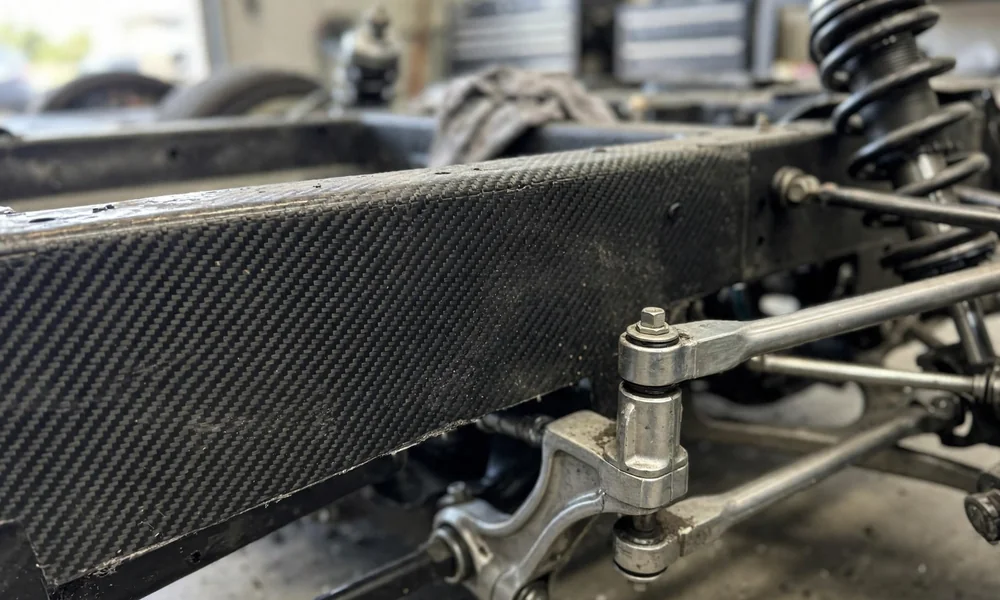
Step 6: Mounting points and the parts that bolt on
A chassis is only useful if everything else can bolt to it accurately. Metal inserts are bonded into the carbon at the suspension, engine and seat mounting points, and their positions are held to tolerances measured in fractions of a millimetre. If a mounting point is even slightly out, the suspension geometry is wrong and the car will never handle as designed. The spec sheet rarely lists these tolerances, but the way the inserts are made and checked is a good test of a maker’s standards. Precision here is what separates a true hypercar tub from a decorative carbon shell.
Step 7: Repairability and the life of the tub
Carbon fibre does not rust and does not fatigue the way metal does, so a well-made tub can last the life of the car. The trade-off is repair: a damaged section cannot simply be hammered straight, and a serious impact usually means a specialist repair or a new tub. Minor damage can be patched by a trained technician, but the work needs the right materials and a controlled cure. When you read a spec sheet, remember that the tub is a long-term commitment, and its durability is part of its value.
Luxury Carbon Fibre Chassis Specs at a Glance
| Specification | Typical luxury figure | What it means |
|---|---|---|
| Bare tub weight | 70 to 110 kilograms | Less weight for the engine to move |
| Torsional stiffness | 30,000 to 50,000 Nm per degree | The body barely twists in corners |
| Fibre layers | Often more than 20 in key areas | Strength aimed along the loads |
| Cure temperature | 120 to 180 degrees Celsius | Autoclave cure for a void-free tub |
| Density | About 1.6 grams per cubic centimetre | Far lighter than steel or aluminium |
| Build time | Several weeks per tub | Mostly skilled hand work |
What a Luxury Carbon Fibre Chassis Costs
A carbon fibre monocoque for a luxury hypercar typically costs an estimated $150,000 to $400,000 to make, depending on size, complexity and the level of hand finishing, and a replacement tub after a serious crash can cost an estimated $200,000 or more. The finished hypercar that carries it usually costs an estimated $2 million to $4 million. These are estimates, not quoted prices, and they vary widely with the maker and the specification.

A Rare Fact About Carbon Fibre Chassis
The first carbon fibre monocoque in a racing car appeared in the early 1980s, and it was so strong that when one crashed, the driver walked away from an impact that would have destroyed an aluminium car. Rival teams were slow to believe the numbers, until the same tub survived crash after crash and kept its drivers safe. Within a few years every serious racing car used one, and the technology moved from the track to the road. The tub you see in a modern hypercar is a direct descendant of that racing breakthrough.
The best way to read a carbon fibre chassis spec sheet is to look for the tub weight, the stiffness figure and the cure method, and to treat those three numbers as the truth of the car. If the tub is light, the stiffness is high and the cure is autoclaved, the rest of the car has a proper foundation. A hypercar is only as good as its skeleton, and the numbers will tell you that before you ever drive it. For the engine that such a chassis carries, see our guide to Bugatti W16 engine specs explained.


