A bumper used to be the simplest part of a car. It was a strip of steel bolted to the front, and its job was to take a knock so the rest of the car did not have to. On a luxury car the bumper still takes the knock, but it has become one of the most complicated parts of the whole machine. It hides radar sensors, parking cameras, air guides and crash structures behind a painted skin, and the numbers on its specification sheet read more like the numbers for a piece of safety equipment than for a piece of trim.
The strange part is that the bumper you see is barely the bumper at all. The painted cover is only the outer layer, and behind it sits a beam, a set of crushable absorbers and a row of sensors that watch the road ahead. Each layer has its own specification, and each one matters only when something goes wrong.

Luxury Car Bumper Specs at a Glance
Before the detail, here are the headline numbers for a typical luxury car bumper. A smaller car will sit at the modest end of each range, with fewer sensors and a simpler beam, while a top model pushes further, but the pattern of a painted cover hiding a crash structure and a row of sensors stays the same.
| Specification | Typical figure | Why it matters |
|---|---|---|
| Overall width | Full width of the car, about 1.9 metres | Sets how much of the front is protected |
| Cover material | Painted thermoplastic, polypropylene blend | Flexes in a small knock instead of cracking |
| Impact beam | Aluminium or high-strength steel | Spreads crash force across the front |
| Low-speed impact | 5 km/h with no damage to lights or sensors | Parking knocks stay cheap to repair |
| Pedestrian protection | Soft upper section, 70 mm of crush space | Softens a strike for a pedestrian |
| Sensor count | 4 to 6 radar and ultrasonic sensors | Feeds parking aid and cruise control |
| Complete weight | 18 to 28 kilograms fitted | Light enough to help fuel economy |
| Hidden fittings | Towing eye and washer jets behind flush covers | Kept clean until they are needed |
The Cover: Painted Plastic With a Job to Do
The cover is the part you see, and it is made from a thermoplastic that is chosen to bend rather than break. In a parking knock at walking pace it flexes and springs back, and a scuff can often be polished out without replacing anything. The paint is the same paint as the rest of the car, applied in the same booth, so the bumper matches the bonnet exactly, and the shine you admire in a showroom is the same shine that hides a working safety part.
The cover also has to be invisible to radar. The sensors behind it send radio waves through the plastic to watch the road, and the paint and the plastic must be thin and even enough to let those waves pass without distortion.
The Beam and the Absorbers: What Happens in a Crash
Behind the cover sits the beam, a bar of aluminium or high-strength steel that runs the full width of the car, and its job is to take the force of a crash and spread it sideways into the body of the car. In front of the beam sit the absorbers, blocks of foam or crushable plastic that squash in a controlled way, soaking up energy before it reaches the beam, the chassis or the people inside. The whole stack is designed to crush in a set order, a few millimetres at a time, so the deceleration is as gentle as physics allows.
The numbers matter because the order matters. If the absorbers are too stiff, the force reaches the cabin too fast, and if they are too soft, the beam is struck before it can do its work. The engineers tune the stack for the weight of that exact car, so the bumper of a heavy luxury saloon is not the bumper of a light sports car, even when the two look the same from the outside.
Sensors in the Bumper: Eyes Behind the Paint
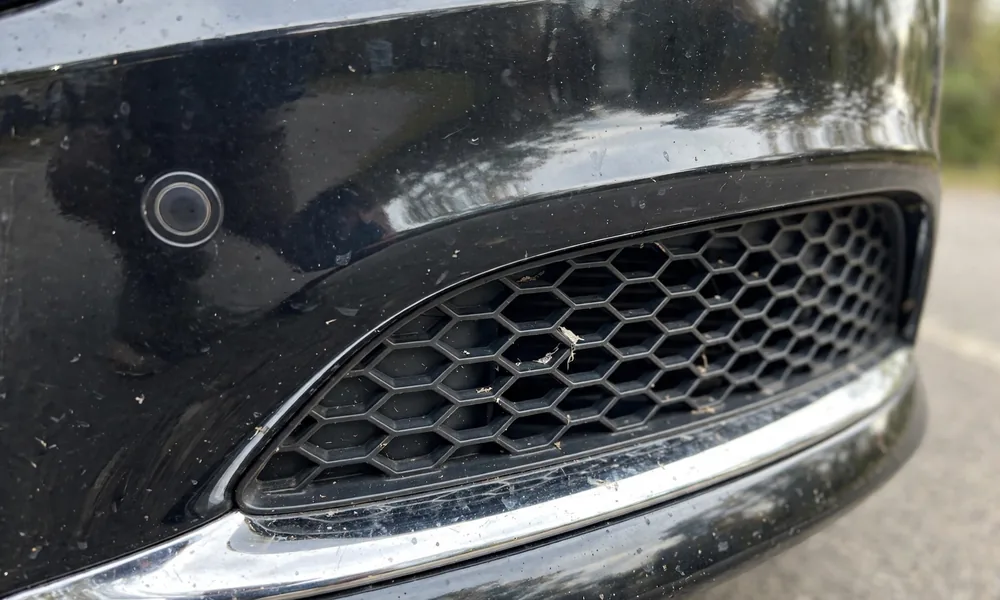
The modern bumper is also a sensor housing, and that is the change most owners never notice. Ultrasonic sensors in the cover measure the gap to the car in front when you park, a radar unit behind the badge watches the traffic ahead for the adaptive cruise control, and on some cars a camera sits low in the grille to give a view of the kerb.
The trouble is that a sensor cannot be moved. After even a small knock, the bumper must be refitted and the sensors recalibrated, often with a target board set up in front of the car and a diagnostic tool telling the technician when each sensor is pointing true again. Skip that step and the car may brake for a shadow or miss a car that is really there. The calibration is part of the repair, and it is one of the reasons a luxury bumper costs far more to fix than its painted cover suggests.
A Rare Fact About the Luxury Car Bumper
The bumper has an unlikely ancestor. The first cars had no bumpers at all, and drivers simply accepted that a collision would damage the car. The first bumpers appeared in the early twentieth century as simple steel bars, and for decades they were the most visibly steel part of a car, chrome-plated and bolted on with pride. The change came when safety rules began to demand bumpers that protected people as well as cars, and the steel bar gave way to the plastic cover, the beam and the absorber. The modern luxury bumper is the end of that journey: a painted skin that looks like decoration, hiding a crash structure tuned for one car, a set of sensors that watch the road, and a pedestrian-friendly upper section that is designed to be soft to the touch, all in a part most drivers never think about until they need it.
What the Specs Mean for You
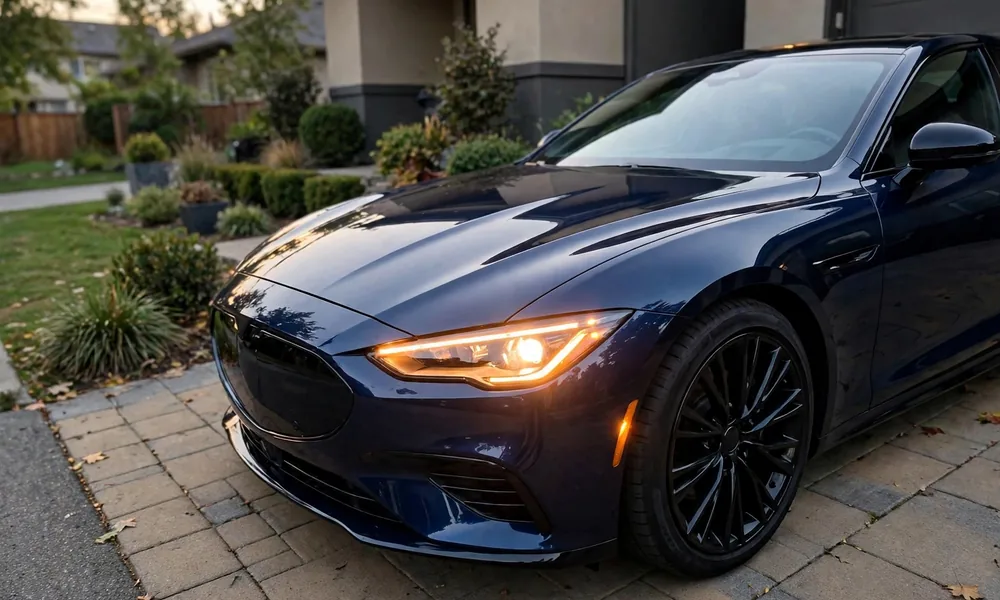
If you ever inspect a luxury car, crouch down and look at the bumper first, because a good bumper sits evenly with the wings, the gaps are the same on both sides, and the paint matches the bonnet without a hint of a difference in shade. Press it gently with your palm: it should give a little and spring back, and the sensors should sit flush, with no cracks around their edges. Ask when the sensors were last calibrated, because a bumper that has never been checked after a knock may be watching the road with a squint.
The bumper is the most underestimated part of a luxury car, and its numbers make sense once you see what they are for: a painted cover that hides a crash structure, a set of eyes for the safety systems, and a soft touch for the people outside the car. The same thinking runs through the rest of the car, from the diffuser specifications that shape the air underneath, to the taillight specifications that warn the traffic behind, and the reason a spoiler is so expensive to make and fit. Read the figures, and the bumper stops being a piece of trim and starts being the car’s first line of defence.