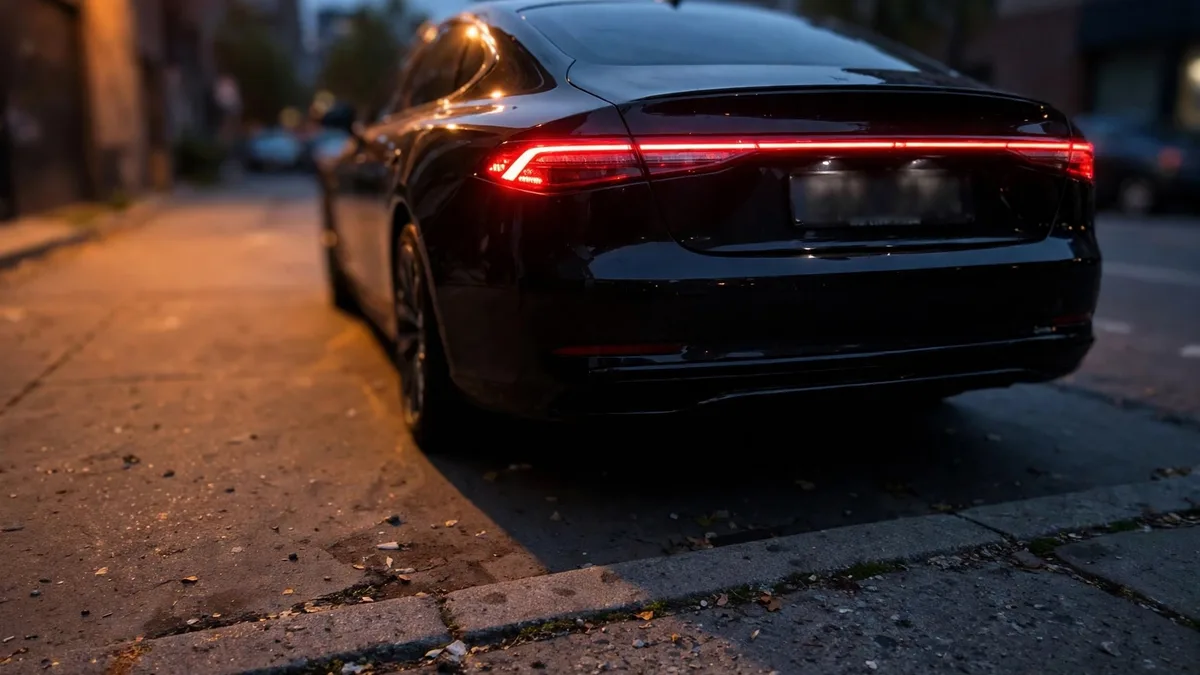
A luxury taillight looks like a thin strip of red glass. It glows when you brake, sweeps when you indicate, and otherwise sits quietly at the back of the car, doing nothing at all. The specification sheet behind that quiet strip is anything but quiet. It is full of numbers for LED counts, brightness, animation speed, lens materials and light patterns, and each number decides whether the driver behind you sees your brake lights a fraction of a second sooner, which is often the difference between a near miss and a shunt.
Most of those numbers are easy to misread. More LEDs sound better until you learn they are pointed at the wrong angle. The figures matter, but only when you know what each one is actually measuring.
This guide walks through the figures on a luxury car taillight specification sheet and explains what each one means in plain language, so the next time you compare two cars you will know which numbers deserve your attention and which ones are just decoration.
Luxury Car Taillight Specs at a Glance
| Specification | Entry Luxury | Mid Luxury | Flagship |
|---|---|---|---|
| LED count | 40 to 80 diodes | 120 to 200 diodes | 300 plus, OLED panels |
| Brake brightness | 80 candela | 130 candela | 180 candela, adaptive |
| Light up time | 200 milliseconds | 120 milliseconds | Under 90 milliseconds |
| Indicator | Flashing, fixed | Sequential sweep | Sweep, 3D depth |
| Lens material | Polycarbonate | Coated polycarbonate | Smoked glass, coated |
| Welcome animation | None | Simple fade | Full light show |
LED Count and Brightness: How Many, How Bright
LED count is the first number on the sheet, and it runs from about 40 diodes on an entry luxury car to more than 300 on a flagship, where the diodes give way to OLED panels that glow as whole surfaces rather than points. The count matters because each diode is a separate light source, and more sources mean the lamp can draw shapes, sweep patterns and change brightness across its width.
Brightness is listed in candela, and the brake light is the figure to watch. The carbon ceramic brake specifications show the same idea at the other end of the car, where stopping power has to be strong but controlled, and the taillight follows the same rule: bright enough to be seen in sunlight, gentle enough to be watched at night.

Light Up Time: The Milliseconds That Save Bumpers
Light up time is the most important number on the whole sheet, and it is measured in milliseconds. It is the time between the driver pressing the brake pedal and the lamp reaching full brightness. An entry luxury lamp takes about 200 milliseconds, a mid luxury one about 120, and a flagship under 90. A driver behind you reacts to the light, not to your pedal, and an earlier light is an earlier reaction.
The speed comes from the diodes themselves. An old bulb has a filament that has to heat up before it glows, which is why older brake lights seemed to fade in rather than snap on. The V12 engine specifications show a similar obsession with response time at the front of the car, where throttle delay is measured in the same tiny units, and the taillight engineers chase the same fractions at the back. When you read the sheet, a faster light up time is worth more than a higher LED count.
Indicators and Animation: The Sweep That Speaks
The indicator is where the taillight stops being a lamp and starts being a signal. An entry luxury car flashes its indicator on and off, the way cars have done for a century. A mid luxury car sweeps it, lighting the diodes one after another from the inside out so the light appears to flow towards the corner the car is turning into. A flagship adds depth, with layers of light at different distances inside the lens, so the sweep looks three dimensional even in daylight.
Welcome animation is the playful part of the sheet. When you unlock a flagship, the taillights run a short light show, sweeping and fading in a pattern the maker designed like a signature. An entry luxury car does nothing at all, and a mid luxury one offers a simple fade. The dual clutch gearbox specifications show the same design thinking in a mechanical part, where a faster shift is also a smoother one, and the taillight is judged the same way: a light that moves well is a light that communicates well.

Lens and Housing: What the Light Shines Through
Lens material is listed in plain words, and it decides how the lamp ages. An entry luxury lens is polycarbonate, a tough plastic that is light and cheap to mould into complex shapes. A mid luxury lens is coated polycarbonate, with a hard layer that resists scratches and yellowing from sunlight. A flagship uses smoked glass or a heavily coated lens, darker when unlit and clearer when lit, so the lamp disappears into the bodywork during the day and appears at night.
The housing is the part nobody sees, and the sheet lists its sealing standard. A taillight lives outside the car in rain, car washes and winter salt, and a poor seal lets water in, where it fogs the lens from inside and corrodes the electronics. The sealing is tested with pressure and spray, and the best housings are vented, with a small membrane that lets air move as the lamp heats and cools but keeps water out. A fogged taillight is not just ugly: condensation scatters the light and cuts the brightness the driver behind you sees, which is why the sealing figure belongs next to the brightness figure on the sheet. A vented housing breathes as the lamp heats and cools, so the lens stays clear through winter and summer alike.
A Rare Fact About the Taillight
Here is a detail that surprises people who think of the taillight as a modern invention. The first cars had no taillights at all, and the first ones that appeared were small oil lamps that a driver had to light by hand before driving at night. The LED taillight of today, with its hundreds of diodes and sweeping animations, is still doing the same job as that little oil lamp: telling the person behind you that you are there, and that you are about to slow down.
What the Specs Mean for You
If you are comparing luxury cars, read the taillight sheet in this order: light up time under 120 milliseconds, brake brightness around 130 candela or more, a sequential indicator that sweeps towards the turn, and a coated lens that will not yellow. Those four figures decide whether the driver behind you sees you soon enough, which is the only job the taillight truly has.
Then enjoy the rest, and judge it honestly. A welcome animation is a pleasure every time you unlock the car; an OLED panel is beautiful in a way a row of diodes never will be. But neither of them stops a shunt. A taillight that lights up fast and shines bright is worth more than a taillight that dances, however pretty the dance, and the numbers on the sheet are the only honest preview of that you will ever get.