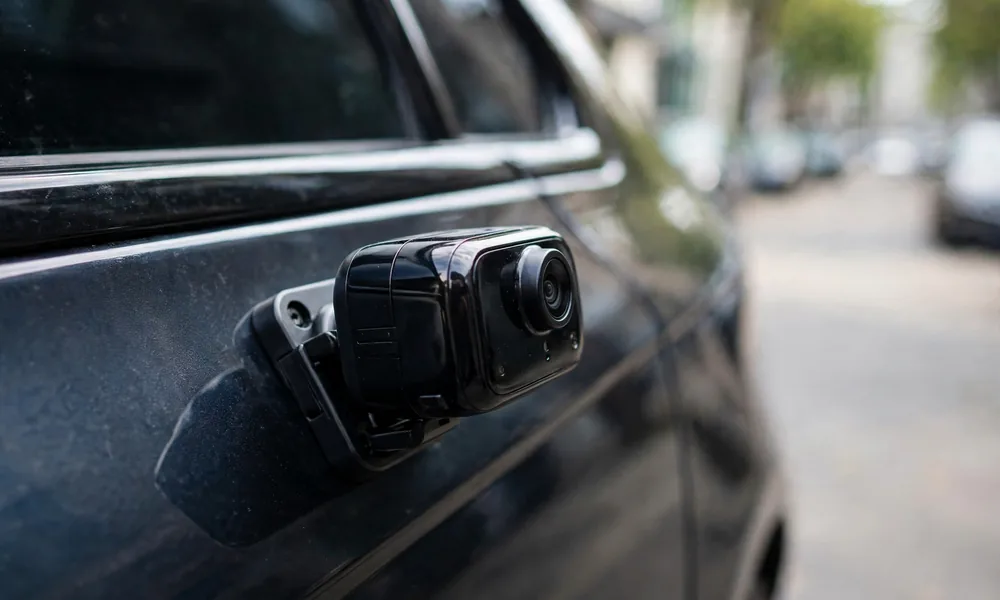
On a rainy evening, a driver glances toward the door of a luxury car and sees the road behind in perfect clarity. There is no glass mirror outside, no rain beading on its surface, and no blind spot where a cyclist can hide. Instead, a slim screen inside the door shows a bright, wide view from a tiny camera tucked into a small housing on the outside of the car.
A luxury car digital mirror replaces the traditional side mirror with a camera and a display, and the numbers behind it matter more than the idea itself. The camera must survive rain, ice, dust and vibration, the screen must stay clear in bright sun and at night, and the whole system must react instantly, because a driver cannot wait for a picture to load.

How It Works
Step 1: The camera sensor and the lens
Everything starts with the small camera that lives where the mirror used to be. It is built around an image sensor chosen for low light, so it can still show a clear picture on a dark country road, and a lens no bigger than a fingertip that is ground and polished to keep the picture sharp right to the edges. The lens carries coatings that cut glare from headlights and low sun, which is something a plain piece of glass could never do.
The sensor usually captures a high-definition picture, and in a luxury car that picture is processed many times a second so movement looks smooth rather than jerky. The same idea of putting useful information exactly where the driver looks appears in other luxury cars, and the way a luxury car heads-up display works shows how a display can sit naturally in the driver’s line of sight.
Step 2: The screen inside the door
The display is built to a different standard from a phone or a television. It uses a bright panel that stays readable in direct sunlight, with a coating that cuts reflections from the windows, and it is mounted inside the door almost exactly where the driver would look at a normal mirror. Sizes in luxury cars usually run from about seven to twelve inches across, and the screen is framed in leather, wood or brushed metal so it looks like part of the car rather than something bolted on afterwards.
The panel adjusts itself automatically, dimming as the car enters a tunnel and brightening again in open sun, and the picture stays steady when the car shakes over a rough road. Wiring runs inside the door, protected from water that drips down the window, and the connector is locked in place so years of vibration cannot loosen it.
Step 3: Sealing, heating and cleaning the camera
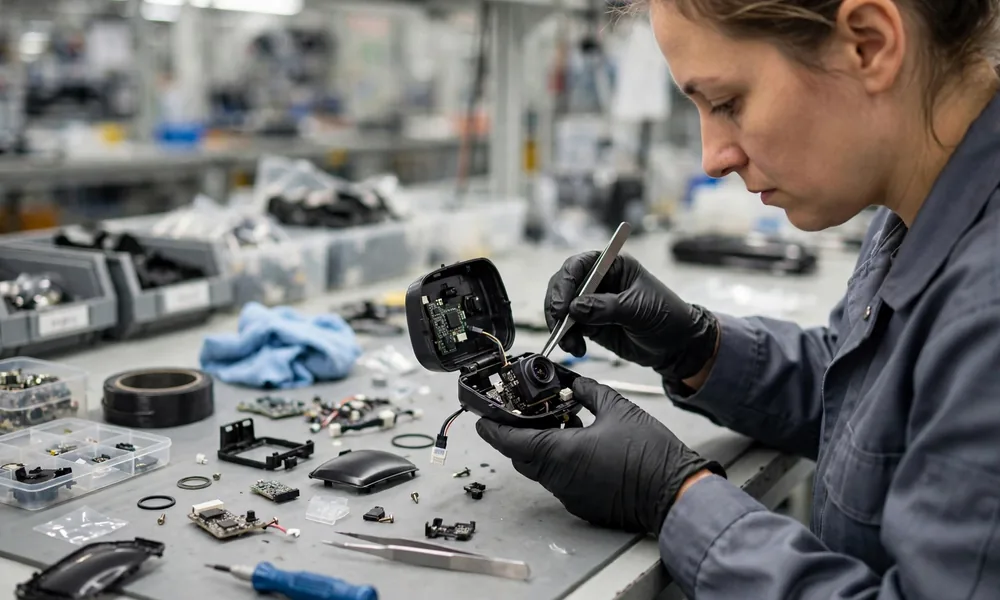
A camera that lives outside a car has a hard life, so the housing is sealed with gaskets around the lens, the cable entry and every join. The finished unit is tested with jets of water and blasts of dust until it keeps working through a storm, a freezing morning and a dusty summer road. Each camera is assembled in a clean room, because a single speck of dust on the lens or the sensor would show up as a mark on the driver’s screen.
Two small features make the difference in bad weather. A heater warms the lens just enough to melt frost without distorting the picture, and a tiny washer sprays a jet of fluid across the glass when the driver cleans the windscreen. The camera that feeds the mirror in how a luxury car digital mirror is made is built in the same way, with the sealing and the heater tested together before the unit is ever fitted to a car.
Step 4: Wiring, processing and delay
Connecting the camera to the screen takes a shielded cable that carries the picture without interference from the car’s other electronics. The cable runs through the door hinge, where it flexes every time the door opens and closes, so it is built with extra-strong insulation and tested by bending it thousands of times. A small processor sits between the camera and the screen, adjusting brightness, widening the view when the driver indicates, and tilting the picture down to show the kerb when the car reverses.
The specification drivers feel most is delay, and in a good system it is a tiny fraction of a second, so small that the picture feels live. Anything slower would be dangerous, because a driver judges gaps by how big other cars look and a late picture would lie about where they are. The processor, the cable and the screen are therefore matched as one system, not bought as separate parts, and tested together until the delay is too small to notice.
Step 5: Testing, tuning and fitting
Before a digital mirror is fitted to a car, it is tested as a complete system. Test drivers use it in rain, in tunnels, at night and on motorways, and engineers compare what the screen shows with what a normal mirror would show. The picture is tuned so distances look true, because a picture that makes other cars look further away than they really are would invite a dangerous lane change, and the warnings are checked so the car tells the driver at once if a camera is damaged.
Only when the picture is sharp, the delay is tiny and the warnings work is the mirror signed off and fitted on the production line, where it is checked once more before the car leaves the factory. The same habit of testing a clever device until it is boringly reliable appears across luxury machines, and the way a luxury car speaker system is specified shows how every number in a premium car is tuned to work together rather than standing alone.
| Specification | Typical luxury digital mirror |
|---|---|
| Camera type | Small exterior camera with a low-light image sensor |
| Picture quality | High-definition video, processed many times a second |
| Display size | About 7 to 12 inches, mounted inside the door |
| Field of view | Wider than a glass mirror, with a blind-spot mode |
| Weather protection | Sealed housing, lens heater and washer jet |
| Night performance | Brightened picture with glare control for headlights |
| Picture delay | Almost instant, a tiny fraction of a second |
| Extra features | Blind-spot widening and a kerb view when reversing |
A luxury car digital mirror system is an estimate of $1,500 to $4,000 per car as a factory option, depending on the size of the screens, the quality of the cameras and whether the system is fitted to one side or both. The price covers the cameras, the displays, the processor, the wiring and the testing, and it is a small part of the cost of a luxury car that already carries dozens of cameras and sensors.
Here is a rare fact worth knowing. A digital mirror can see further than a glass mirror in one surprising way: it can keep working when the rear window is blocked. In some luxury cars, the camera that feeds the mirror sits outside the cabin, so even if the back seats are piled high with luggage or the rear window is covered in snow, the driver still gets a clear view of the road behind. It is a small trick, but on a long winter journey it is the difference between guessing and knowing what is behind you.


