At first light on a building site, a tower crane stands above the rooftops, its long arm reaching out over streets that are still quiet. A load of glass panels waits below, wrapped and strapped, worth more than many cars. The operator lifts it without a shout, without a jolt, and without the deep rumble that used to roll across every site at dawn. The panels rise in a smooth, steady line and settle onto the top floor exactly where the fitters are waiting.
A luxury electric crane is a battery-powered lifting machine built for that kind of precise, quiet work. It replaces a diesel engine with electric motors, a battery pack and a control system that can move a load by a few centimetres at a time. The luxury part is not decoration. It is the quality of the steel, the smoothness of the controls and the strength of the safety systems.

How It Works
The numbers on a crane specification sheet only make sense when you know what each part does. A crane is a balance between reach, weight and power, and every figure describes one side of that balance. The mast gives height, the jib gives reach, the motors give movement, and the counterweights keep the whole machine steady. When one number grows, another usually has to change with it.
Step 1: The mast sets the height and the limit
The mast is made from steel sections stacked together, each bolted to the next. The taller the mast, the higher the crane can lift, but height also adds weight and wind load. A typical luxury electric tower crane reaches about 40 to 60 metres.
Engineers check the mast carefully. The steel must resist bending, the bolts must hold under repeated loading, and the base must spread the weight across its foundation. A crane that leans even slightly will swing its load off line, so levelling the base is one of the first jobs on site.
Step 2: The battery pack and motors supply the power
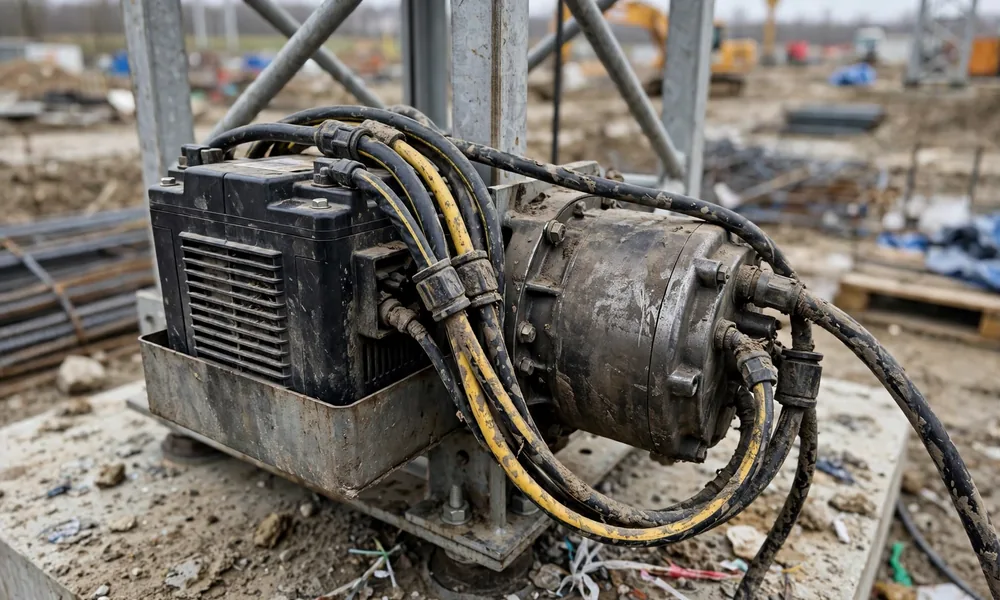
Where a diesel crane has a fuel tank and a noisy engine, the electric crane carries a battery pack in a protected steel case, usually at the base or in the counter-jib. The pack stores enough energy for a full working shift, and it can be charged overnight from a site supply or topped up during a break. The motors draw from it silently, with no exhaust and far less vibration.
Three main motors do the work: one turns the top of the crane, one raises and lowers the hook, and one moves the trolley along the jib. Each motor has a brake that holds the load still if the power is cut, and each controller can slow a heavy load to a gentle stop. A heavy electric vehicle is only as good as the frame underneath it, and the way a luxury electric truck is made shows how that steel chassis is built before anything else is fitted.
Step 3: The jib and the load chart decide the reach
The jib is the long horizontal arm that carries the load out over the site. Its length is listed on the specification sheet, often between 40 and 70 metres, and it is the number that most people notice first. Yet a crane can lift its heaviest load only close to the mast, and the safe load falls as the trolley moves further out.
The load chart shows the maximum load at each distance from the mast, changing with jib length, counterweight and wind. A luxury crane may lift 10 tonnes close in and only 1.5 tonnes at full reach. The crane’s computer checks every lift against it before the hook moves.
Step 4: The hook, trolley and cables carry the load
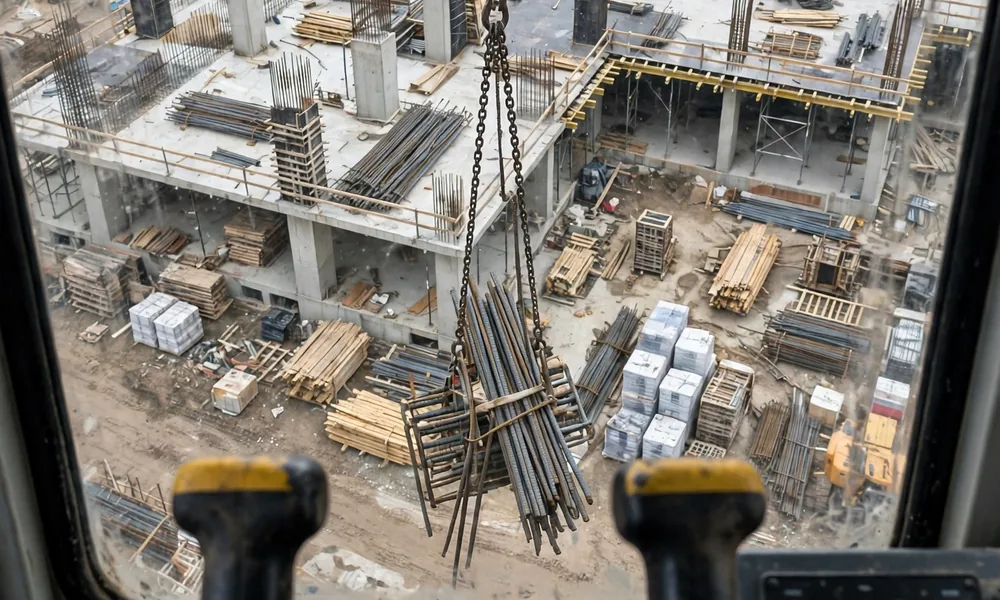
The hook block, the trolley and the wire ropes form the working end of the crane. The trolley runs along the jib, pulled by its own motor and rope, while the hoist rope runs from a drum in the machinery deck, through the trolley, down to the hook. The rope is inspected strand by strand, because a worn rope is one of the few parts that can fail without warning.
On a luxury machine, the hook moves at several speeds. A fast speed brings an empty hook back quickly, while a slow, fine speed lowers a fragile load onto its fixings. The operator can feel the difference through the controls, and the load moment indicator watches the weight and radius at all times. If the load approaches the safe limit, the system warns the operator and then stops the movement that would make it worse. The same attention to a working mechanism appears in other large electric machines, and how a luxury electric excavator works shows how electric motors and careful control turn power into precise movement.
Step 5: The cab, sensors and tests prove it is safe
The cab sits high on the crane, with a clear view down to the load and across the site. Inside, the operator has joysticks, a load display and a radio link to the banksman on the ground. Modern cabs are heated, insulated and fitted with a comfortable seat, because an operator who is cold, tired or unable to see clearly is more likely to make a mistake.
Before the crane lifts a real load, it is tested. Engineers check the brakes, the limit switches, the wind sensor and the emergency stop, then run a load trial with a known weight. The crane must lift, hold, slew and lower that weight smoothly, and the structure must show no sign of strain. Only when those tests pass is the crane handed over for work, and the tests are repeated at regular intervals for as long as it stays on site. A well-built electric machine earns its reputation in this quiet testing phase, long before anyone sees it lift, just as how a luxury electric crane is made shows the steel, motors and safety systems coming together before the first lift.
| Specification | Typical luxury electric crane |
|---|---|
| Maximum lifting capacity | About 8 to 12 tonnes close to the mast |
| Maximum jib length | About 50 to 70 metres |
| Maximum hook height | About 40 to 60 metres free-standing |
| Battery and charging | Large lithium battery pack, overnight site charging |
| Hoist speed | Variable, with a slow fine-control speed |
| Noise level | Much quieter than a diesel crane |
A luxury electric tower crane of this size typically costs an estimated 400,000 to 900,000 dollars, depending on its height, reach, battery size and cab equipment. That estimate covers the machine itself, not transport, assembly, the foundation or the operator. Smaller electric cranes cost less, while very tall or long-reach models cost more, and hiring one for a project is often far cheaper than buying it outright.
A rare fact worth knowing is that an electric crane can recover energy as it lowers a load. The hoist motor acts as a generator while the load descends, feeding a small amount of power back into the battery instead of wasting it as heat in the brakes. It is a small saving on each lift, but over thousands of lifts on a long project it adds up, and it is one of the quiet advantages that diesel cranes simply cannot offer.
In the end, the specification sheet is a story about balance. A good crane balances height, reach, weight and power well, and the luxury electric crane does so quietly and cleanly.