A luxury drone camera is sold on numbers that sound impressive and mean very little until you know what sits behind them. Megapixels, sensor inches, aperture figures and bitrates fill the specification sheet, and two drones with identical headline numbers can produce footage that looks nothing alike.
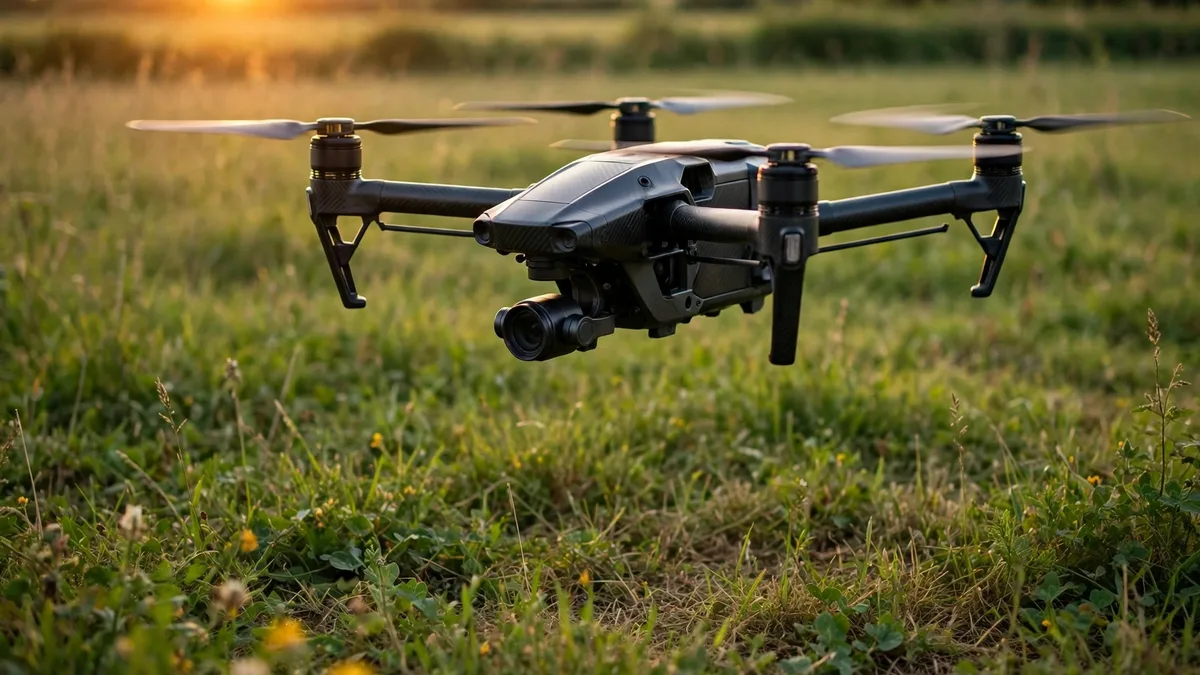
The reason is that a drone camera is a whole imaging system squeezed into a pod the size of a coffee cup, hanging under a flying machine that vibrates, tilts and fights the wind. Every specification is a trade-off against weight, heat and battery life, and understanding those trade-offs is the difference between a camera that earns its price and one that only looks good on paper.
Specs at a Glance
| Specification | Typical Luxury Range | What It Means |
|---|---|---|
| Sensor size | 1 inch to Four Thirds | Bigger sensor, cleaner image |
| Resolution | 20 to 48 megapixels | Detail for stills and cropping |
| Video | 4K to 5.1K, 10-bit | Smooth colour grading in editing |
| Aperture | f/2.8 to f/11 | Light control and depth of field |
| Gimbal | 3-axis mechanical | Steady footage in wind |
| Transmission range | 10 to 20 kilometres | How far the live feed reaches |
The Sensor: The Number That Matters Most
The sensor is the most important specification on the sheet, and it is measured in inches that do not mean what they seem. A one-inch sensor is not one inch across; the figure comes from an old video-tube convention, and the real diagonal is closer to sixteen millimetres. A Four Thirds sensor is larger still, and the jump from a small phone-sized sensor to a one-inch sensor is the biggest single leap in image quality a drone buyer can make.
A larger sensor gathers more light, which means cleaner shadows, less noise at dusk, and more room to recover detail. That matters enormously for a drone, because the best aerial light often arrives early in the morning or late in the evening, when a small sensor is already struggling. Resolution, by contrast, is often overstated: a 48-megapixel image from a tiny sensor can look worse than a 20-megapixel image from a large one, because the tiny pixels collect less light each. The sensor sits at the centre of how a luxury drone camera is made, where the optics, the housing and the cooling around it explain why the assembly is so costly.
Dynamic range is the sensor specification that shows up most in finished footage. It measures how much detail the camera holds between the brightest sky and the darkest shadow in the same frame, and a drone that can hold both keeps skies blue instead of washing white. Luxury models quote thirteen or fourteen stops, and that figure, more than the megapixel count, is what separates professional aerial footage from a bright, flat home video.
Lens, Aperture and Zoom
The lens on a luxury drone camera is usually a fixed wide-angle prime, around 24 millimetres in full-frame terms, with an aperture that can close from f/2.8 down to f/11. The wide view suits landscapes and buildings, and the variable aperture lets the pilot control exposure without changing the shutter speed, which matters because a drone camera has no room for the filters a ground camera would use.
Some luxury drones carry two or three cameras with different focal lengths, such as a wide lens and a medium telephoto of around 70 millimetres, and the pilot switches between them in flight. That second lens is worth more than a digital zoom, because digital zoom only crops the image and throws away resolution, while a true second lens keeps every pixel. The telephoto also changes the look of a shot, compressing distance so that a mountain ridge appears stacked behind a valley in a way a wide lens never can. The wider camera world uses the same language, and luxury camera specs explained covers the shared ground of sensors, lenses and apertures in full-size cameras.
Video, Colour and the Gimbal
Video specifications are where the sheet gets densest. A luxury drone camera records 4K or 5.1K footage, often at up to 120 frames per second for slow motion, and the number that matters most to editors is the bit depth: 10-bit colour records over a billion shades, while 8-bit records sixteen million, and the difference shows in smooth skies and skin tones that do not band into stripes when graded.
Bitrate is the other quiet number, measuring how much data the camera writes per second. A high bitrate, often 150 megabits per second or more, preserves fine detail in grass, water and tree lines, the textures that fall apart first when a codec is starved. A flat colour profile records a deliberately dull image that gives the editor the most room to shape the final look, and it is the mode professionals choose even though the raw footage looks grey.
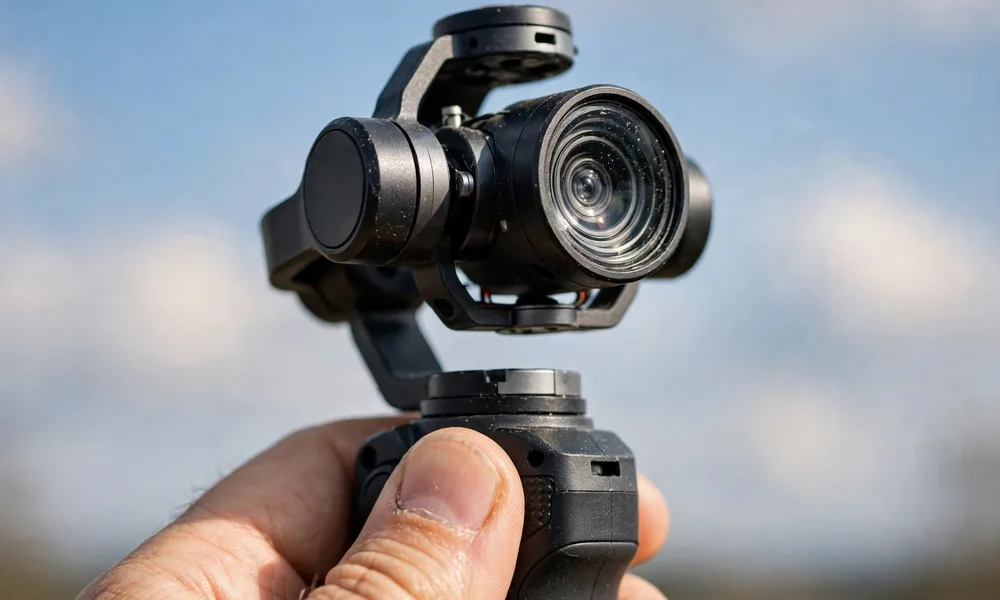
The gimbal is what makes all of that usable. A three-axis mechanical gimbal floats the camera on motors that counteract the drone’s pitch, roll and yaw hundreds of times a second, and a good one holds the horizon level even in a gust. Electronic stabilisation crops the frame to smooth the rest, but it can never match a mechanical gimbal, because cropping throws away the edges of the image. When the gimbal, the sensor and the lens are built to cinema standards, the price climbs steeply, which is why why a luxury cinema camera is so expensive reads like a companion piece to this one.
Range, Battery and the Rare Fact
Transmission range is quoted as ten to twenty kilometres, but that figure is measured in perfect conditions with a clear line of sight. In a real city or over a forest the usable range is far shorter, and the number that matters is the strength of the live feed at a few hundred metres, where the pilot is framing the shot. A strong link means a sharp preview with no freezing, which is what lets the pilot trust what they see.
Battery life shapes every specification around it. A bigger sensor, a brighter screen and a stronger transmitter all draw power, and the flight time of a luxury drone, usually thirty to forty minutes, is the budget those systems share. Engineers trade grams obsessively, because every extra gram of camera is a gram that cannot be battery.
One rare fact sums up the engineering: the gimbal on a top luxury drone camera can keep the lens steady while the drone itself tilts twenty degrees into a gust, so precisely that the horizon in the footage does not move at all. The motors correct hundreds of times a second, guided by gyroscopes that sense movement before the eye could catch it. It is invisible in the finished shot, which is exactly the point.
What the Specs Mean for You
Start with the sensor, because it sets the ceiling for everything else. A one-inch sensor or larger, with strong dynamic range, gives clean footage at dawn and dusk, when aerial images look their best. Then check the video specification for 10-bit colour and a high bitrate, because those two numbers decide how much you can do with the footage after you land.
Treat the megapixel count and the headline transmission range as secondary. A big pixel count on a small sensor is marketing, and a twenty-kilometre range is a laboratory figure you will never use. The gimbal and the lens quality decide whether your footage looks professional, and neither has a single headline number. Read the sheet for the sensor, the colour depth and the gimbal, and the numbers will start to make sense.