On a calm stretch of water at first light, a rider stands on a board that seems to float above the sea. There is no wake behind it, no engine roar, only a thin silver strut slicing the water and a quiet hum. The board rises as it gathers speed, lifts clear of the surface, and glides on a wing hidden below, as if the water had turned to glass. The spec sheet is the only place where that magic is written down in plain numbers.
A luxury electric hydrofoil, often called an e-foil, is a board with a mast and a winged foil underneath, driven by an electric motor and a propeller, and steered by the rider shifting their weight. Its figures describe the board, the battery, the motor, the foil and the ride itself, and each one changes how the board feels on the water. This is what they mean.

The Spec Sheet, Line by Line
Read an e-foil spec sheet from the board down: size and weight, then battery and motor, then the foil wing, and finally speed, range and ride time. The numbers only make sense together, since a bigger wing lifts sooner but drags more at speed.
Board length, width and weight
The board is listed by length and width, usually 1.4 to 1.7 metres long and 60 to 75 centimetres wide, shaped like a long surfboard with a flat deck. A longer board is steadier for a beginner, while a shorter one turns faster for a skilled rider. Board weight is listed separately, often 8 to 12 kilograms for a carbon-fibre shell, before the battery and mast are fitted. The deck carries grip pads and a hatch for the battery, and the sheet notes the rider weight limit, commonly 100 to 120 kilograms.
Battery capacity, voltage and weight
The battery is the heaviest part of the board, and its capacity is listed in watt-hours, usually 1,500 to 2,500 watt-hours for a luxury e-foil. That is roughly the energy of a large laptop battery multiplied many times over, sealed in a waterproof case that slides into the board. Voltage is listed alongside, often 48 to 60 volts, and the battery weight is typically 10 to 15 kilograms. The sheet gives the charge cycles it is rated for, often around 1,000, and the time it takes to charge, usually two to three hours.
Motor power and propeller
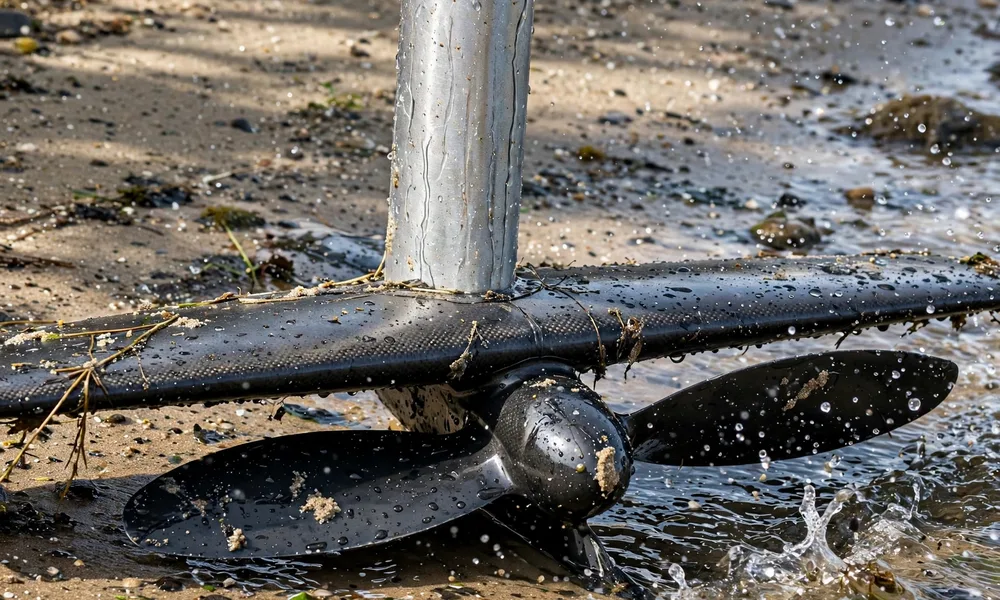
Motor power is listed in watts or kilowatts, and a luxury e-foil usually carries 3 to 6 kilowatts, driving a small propeller at the base of the mast. The motor is sealed against salt water and cooled by the water it runs in, and the sheet notes whether it is a direct-drive unit or a geared one. The propeller is listed by diameter and blade count, often two or three blades, and by whether it has a guard, which matters for safety when a rider falls. The build behind these parts, from carbon moulding to sealed battery, is what how a luxury electric hydrofoil is made describes.

Foil wing size and takeoff speed
The foil wing is the part that does the flying, and its size is listed in square centimetres, usually 1,000 to 1,500 for a beginner wing and 700 to 1,000 for a fast wing. A bigger wing lifts at a lower speed, so a beginner can rise onto the foil at 8 to 10 kilometres per hour, while a small wing needs 15 or more. The mast length is listed too, often 75 to 90 centimetres, which sets how high the board rides above the water and how much chop it can clear. The sheet also lists the wing material, usually carbon fibre, and the stabiliser wing at the back, which keeps the board level once it is flying.
Top speed, cruising speed and range
Top speed is the headline figure, usually 40 to 50 kilometres per hour for a luxury e-foil, though few riders hold that pace for long. Cruising speed is more useful, often 20 to 30 kilometres per hour, the pace at which the board glides with little effort and the battery lasts. Range is listed in kilometres or minutes, typically 20 to 35 kilometres or about 60 to 90 minutes of riding, depending on rider weight and speed. The sheet lists range at cruising speed, since going flat out can halve it, and it notes the reserve the controller holds back so the rider can always limp home.
Ride time, charging and controls
The last figures describe the session itself. Ride time is usually 60 to 120 minutes on a full charge, and the sheet notes how that time changes with rider weight and wing size. Charging time is two to three hours from a standard socket, and some sheets list a fast-charge option that halves it. The controller is listed by type, usually a handheld remote with a trigger, and the sheet notes its range, battery life and whether it floats if dropped. It also lists the safety features: an automatic cut-off when the rider falls, a speed limiter for beginners, and a waterproof rating for the electronics. The price of this kind of machine is a story in itself, as why a luxury electric surfboard is so expensive shows, while the wider family is covered in how a luxury hydrofoil is made.
| Specification | Typical luxury electric hydrofoil |
|---|---|
| Board size | 1.4 to 1.7 metres long, 60 to 75 centimetres wide |
| Board weight | 8 to 12 kilograms, carbon fibre, rider limit 100 to 120 kg |
| Battery capacity | 1,500 to 2,500 watt-hours, 48 to 60 volts |
| Battery weight and charge | 10 to 15 kilograms, two to three hours to charge |
| Motor power | 3 to 6 kilowatts, sealed, water-cooled, two or three blades |
| Foil wing size | 1,000 to 1,500 sq cm beginner, 700 to 1,000 sq cm fast |
| Mast length | 75 to 90 centimetres above the water |
| Top and cruising speed | 40 to 50 km/h top, 20 to 30 km/h cruising |
| Range and ride time | 20 to 35 kilometres, 60 to 120 minutes per charge |
A luxury electric hydrofoil costs an estimate of $8,000 to $18,000, depending on the board size, battery capacity and the standard of the carbon fibre. The price covers the board, battery, mast, foil wings, motor and remote controller, plus a bag and a charger. A beginner package with a large wing and a standard battery sits at the lower end, while a pro package with a small fast wing, a large battery and a second wing set sits at the top. Owners often buy a spare wing or a second battery, so a session never ends early.
Here is a rare fact worth knowing. The hydrofoil was first proved in 1906, when the Italian inventor Enrico Forlanini fitted a ladder of small wings to a boat and drove it across Lake Maggiore at 68 kilometres per hour, faster than any boat of its day. The wings lifted the hull clear of the water, just as an e-foil does now, but the engine of the time was too heavy and too thirsty to make it practical. It took more than a century of light materials and electric motors to shrink that idea onto a board a single rider can carry. A modern e-foil is Forlanini’s 1906 machine, finally small enough to stand on.


