The gardener picked up the blower with one hand, pressed a button, and a pile of wet leaves that had resisted a rake all morning slid across the terrace in a neat line. There was no pull cord, no petrol smell, and no cloud of blue smoke drifting toward the house. The only sound was a clean rush of air, and when he let go of the trigger, the garden went quiet again. It looked like a simple tool, but the spec sheet told a different story about motors, batteries, and airflow.
Luxury electric leaf blowers are built for estates, hotels, and yachts, where noise, fumes, and weight matter as much as power. The numbers that decide whether one is worth its price are not the ones on the box in big print, but the quieter figures underneath: air volume, air speed, battery runtime, and how the tool feels after an hour of use. This guide explains each one.
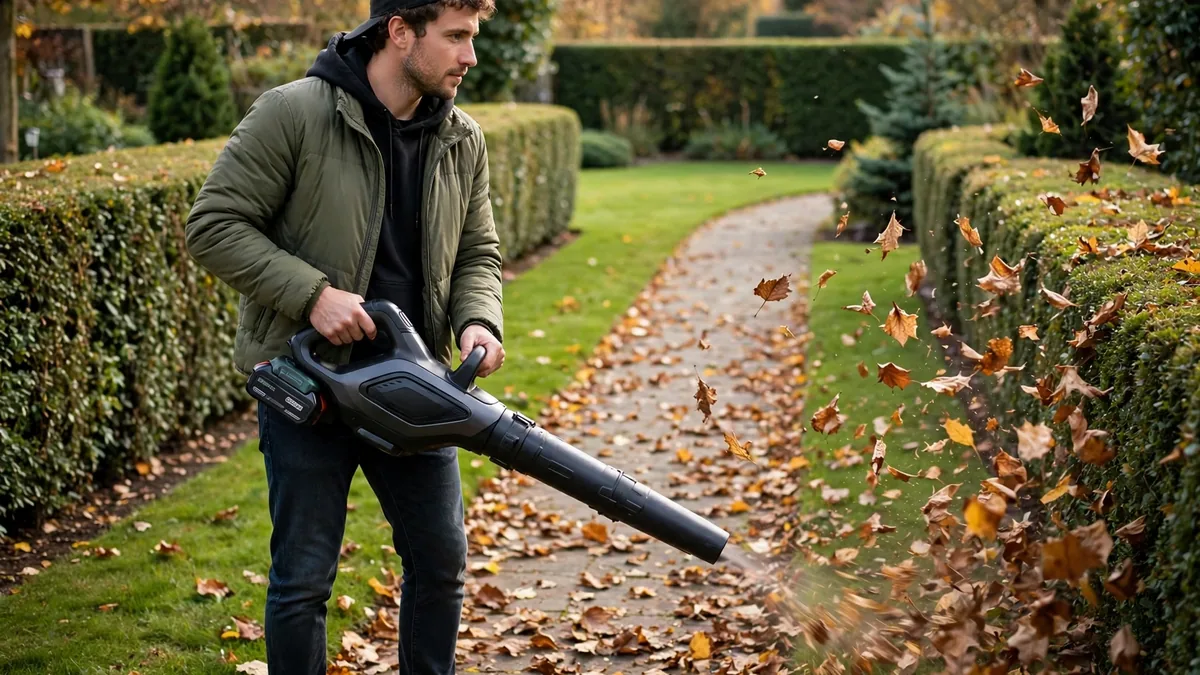
How It Works
1. A brushless motor spins a fan
Inside the blower, a brushless electric motor spins a fan at very high speed, often 20,000 revolutions per minute or more. Brushless motors have no carbon brushes to wear out, so they last longer, run cooler, and deliver more power for their size than the brushed motors in cheap tools. The motor sits in the body of the blower, and its shaft drives the fan directly, which keeps the tool compact and balanced.
2. The fan moves a volume of air
Air volume is the most important number on a leaf blower, and it is measured in cubic feet per minute or cubic metres per hour. Luxury electric blowers usually move 500 to 800 cubic feet per minute, which is enough to shift wet leaves, gravel dust, and grass clippings without scattering them everywhere. Volume is what actually moves a pile: a blower with high volume and moderate speed will clear a terrace faster than one with a narrow, fast jet that only cuts a thin line through the leaves. How the tool is built around that fan is shown in how a luxury electric leaf blower is made, from motor to nozzle.
3. Air speed gives the jet its bite
Air speed is measured in miles per hour or kilometres per hour at the nozzle, and luxury blowers usually reach 150 to 200 miles per hour. Speed matters for stuck-on debris: wet leaves glued to stone, mud on a path, or leaves wedged in a gutter need a fast jet to lift them. But speed alone is misleading, because a very fast, very narrow jet moves little air overall, and it can blow soil out of planters and gravel off paths. The best blowers balance speed and volume, and many let the user switch between a wide, gentle flow and a narrow, powerful jet.
4. The battery sets the working day
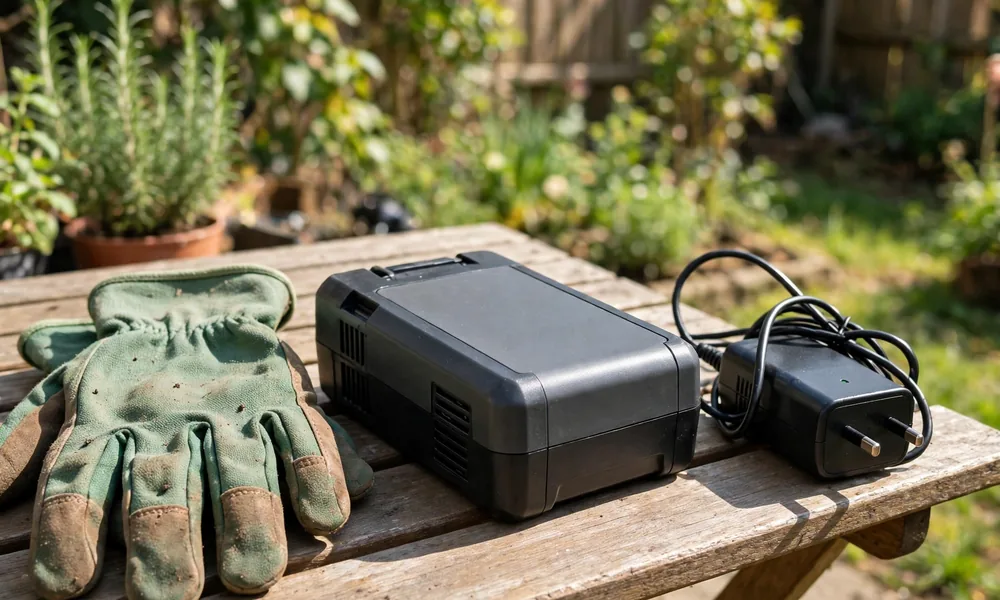
Most luxury blowers run on a removable lithium-ion battery, usually 36 to 56 volts, and runtime on a single charge is typically 30 to 60 minutes at full power, or up to two hours on a low setting. Battery capacity is measured in amp-hours, and a 5 amp-hour pack stores roughly twice the energy of a 2.5 amp-hour pack, though it also weighs more. The same battery often fits other tools from the same maker, which is a quiet saving for an estate that buys into one system.
5. The nozzle shapes the airflow
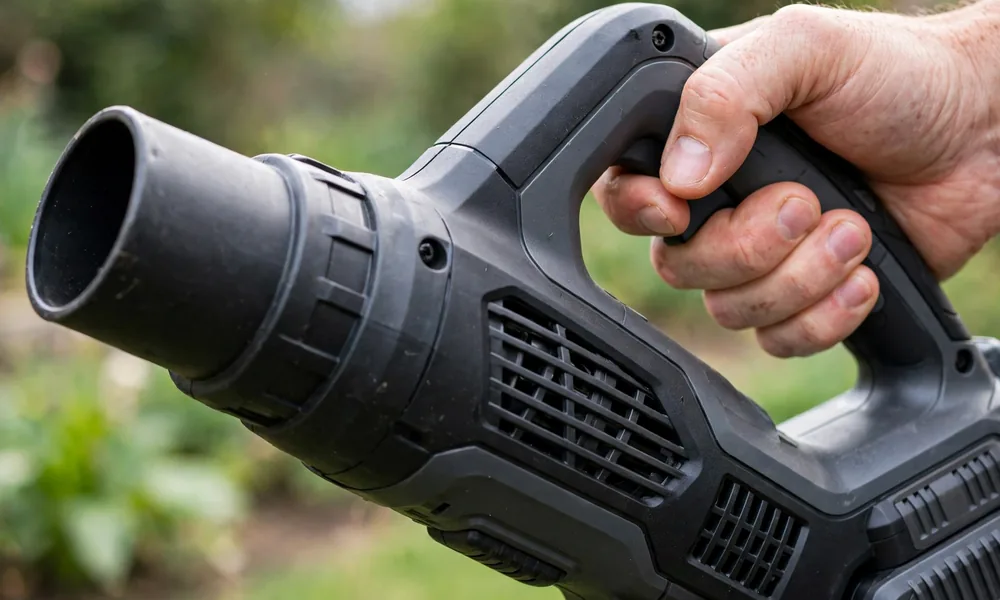
The nozzle is the part the user notices least and the engineers obsess over most. A flat, wide nozzle spreads the air into a broad sheet that herds leaves in one direction, while a round, tapered nozzle concentrates the flow for stubborn spots. Some luxury blowers come with two or three interchangeable nozzles, and the best ones are designed so the air leaves the nozzle smoothly, without turbulence that wastes energy.
6. Controls and balance decide comfort
A blower that is powerful but painful to hold will not be used, so luxury models are balanced around the handle, with the battery acting as a counterweight to the motor. Weight is usually 2.5 to 4 kilograms including the battery, and the handle is angled so the wrist stays neutral during a long sweep. Variable speed triggers let the user feather the airflow around flower beds, and a cruise control lock holds a steady speed without squeezing the trigger.
7. Noise and weather sealing finish the job
Noise is measured in decibels, and luxury electric blowers typically run at 58 to 65 decibels at the operator’s ear, quiet enough to use early in the morning near guest rooms without complaints. Petrol blowers often exceed 75 decibels, which is why many hotels and marinas have banned them. Weather sealing matters too: a good blower keeps working in drizzle, and its battery compartment is sealed against dust and spray. The tool is stored indoors, the battery is removed, and there is no fuel to drain before winter, which is why estates are switching whole fleets to electric.
Specs at a Glance
| Specification | Typical figure | What it means |
|---|---|---|
| Air volume | 500–800 CFM | How much air the blower moves; the main clearing figure |
| Air speed | 150–200 mph | Speed of the jet at the nozzle |
| Motor type | Brushless | Longer life, cooler running, more power for its size |
| Battery voltage | 36–56 V | Electrical pressure of the battery system |
| Battery capacity | 4–8 Ah | Energy stored; more means longer runtime |
| Runtime | 30–60 min | Working time at full power on one charge |
| Noise level | 58–65 dB | Sound at the operator’s ear |
| Weight | 2.5–4 kg | Weight including the battery |
| Charge time | 45–90 min | Time to refill a flat battery on a fast charger |
| Speed settings | Variable + boost | Control over airflow for delicate and stubborn jobs |
What It Costs
A luxury electric leaf blower typically costs an estimated $400 to $900 for the tool with one battery and a fast charger, with spare batteries adding an estimated $100 to $200 each. Those are estimates, and prices rise for models built for professional crews, with metal housings, weather sealing, and longer warranties. Running costs are small: a full charge costs only a few cents of electricity, and there is no petrol, no oil, and no spark plug to replace. Over five years, an electric blower usually costs far less to run than a petrol equivalent, even before counting the time saved on maintenance. The same battery often powers other garden tools, and luxury electric string trimmer specs explained shows how one battery system can cover a whole garden. A related tool with the same quiet, battery-first design is covered in how a luxury electric hedge trimmer works.
A Rare Fact
Some luxury estates now use electric blowers to clear leaves from yacht decks and superyacht tenders, because a petrol blower’s fumes would stain the paint and its noise would carry across the whole marina. The blower is wiped down, stored in a locker beside the tender, and charged from the yacht’s own power, which makes it one of the few garden tools that has found a second life at sea. The leaves are different, but the job is exactly the same.


