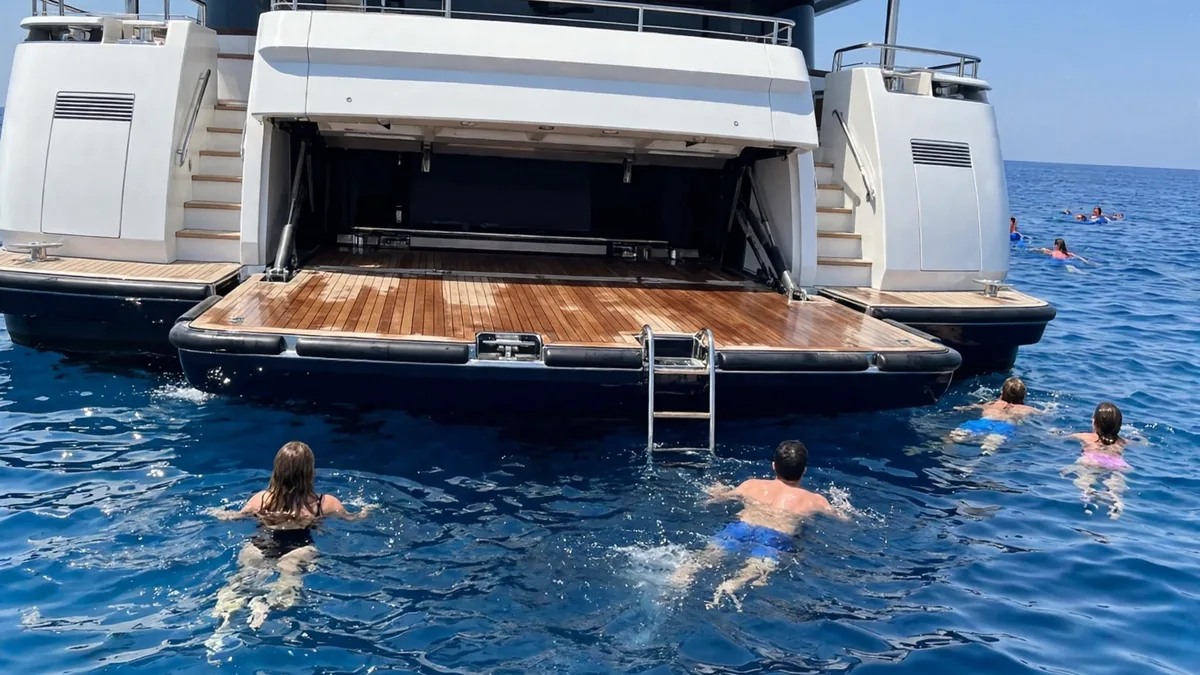
The platform slid down from the stern of the ship until it touched the water, and then it kept going, sinking a little below the surface so the swimmers could step straight off it into the sea. A few minutes earlier it had been a flat wall at the back of the ship, invisible to anyone who did not know it was there. Now it was a private beach, complete with ladders, handrails, and a shower. The guests applauded, and the captain smiled, because the platform had just done something that looks simple and is anything but.
A luxury ship swim platform is one of the most expensive single features on a large vessel, and the price surprises almost everyone who first hears it. It is not a deck and a ladder. It is a moving structure, a hydraulic system, a watertight seal, and a piece of naval architecture that must survive the open sea. This article explains where the money goes.
How It Is Made
1. The stern is designed around the platform
A swim platform cannot be added to a ship as an afterthought. Naval architects design the stern around it from the first drawings, shaping the hull so the platform fits flush when raised and sits stable when lowered. The transom, the flat wall at the back of the ship, is built with a large opening, and the structure around that opening must be stronger than a normal stern to carry the loads of the platform and the people on it.
2. The platform itself is a engineered deck
The platform is a deck of teak or synthetic planking over a marine-grade aluminium or stainless steel frame, and it must support dozens of people, tenders, and jet skis without flexing. It is built to resist salt water, sun, and constant wetting, and its surface is finished to stay grippy when wet, because a slippery platform above open water is a serious hazard. The platform’s own specifications show how much engineering goes into a flat deck, and luxury yacht swim platform specs, explained covers the numbers in detail.
3. Hydraulics raise and lower it
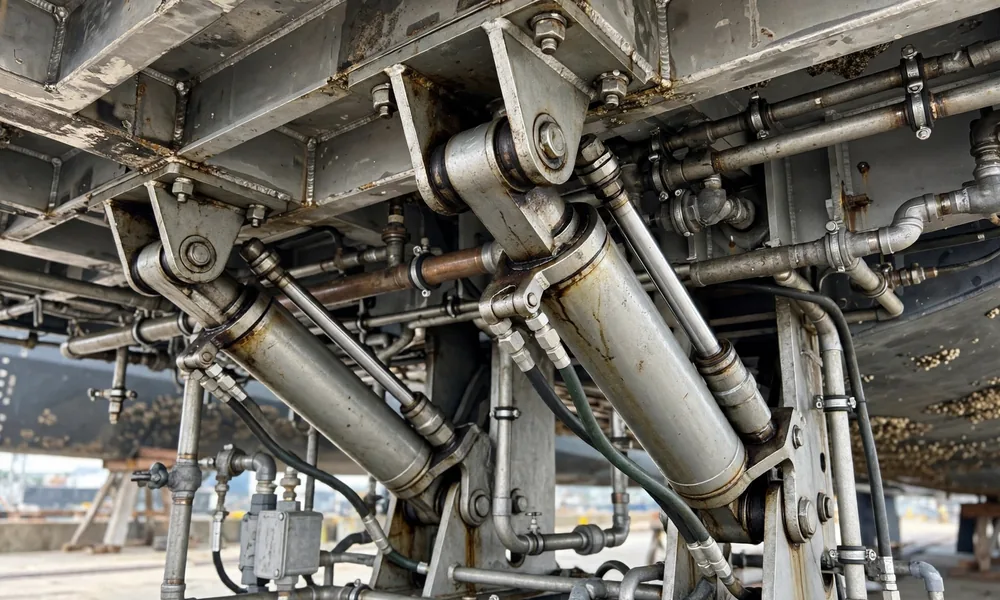
Hydraulic rams, powered by the ship’s own systems, raise the platform to seal the stern and lower it to the water, and they must do it smoothly, in waves, with people standing on it. The rams are sized with a large safety margin, and the system has locks that hold the platform in place even if pressure is lost. If the hydraulics fail, the platform must still be recoverable by hand or by a backup pump, because a platform stuck down in rough weather is a danger to the ship.
4. Seals keep the sea out
When the platform is raised, it must seal against the stern like a door, because any gap lets water into the ship. Engineers fit heavy rubber seals around the opening, and the platform is pulled tight against them by the hydraulics. The seal is checked and replaced on a strict schedule, and the compartment behind it is fitted with alarms that warn the bridge if water gets in. This is the least glamorous part of the platform and one of the most important: a leak at the stern, low in the hull, can become a serious problem very quickly.
5. Ladders, rails, and showers are built in
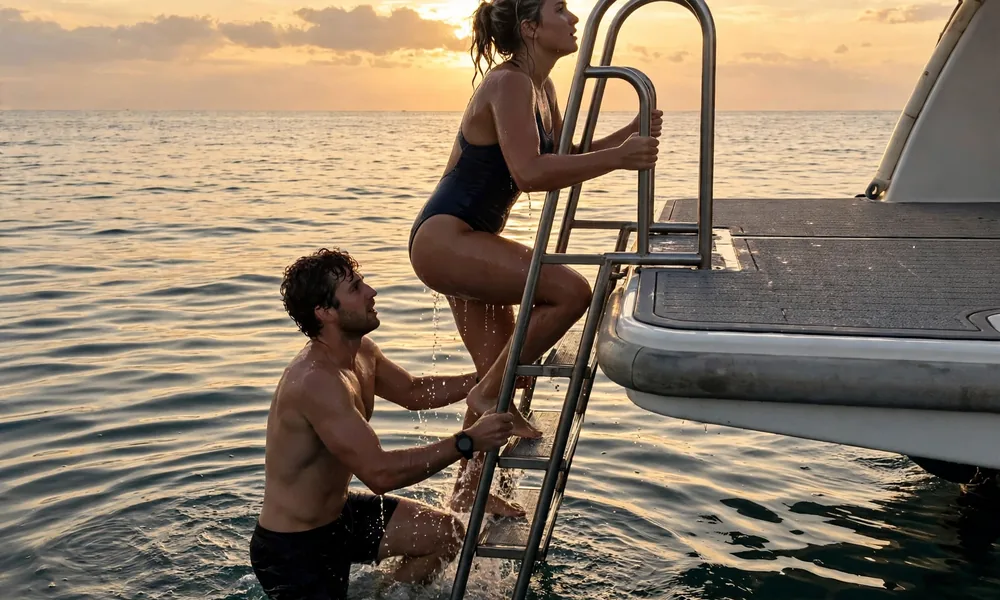
A swim platform is also a piece of guest furniture. Ladders fold out of the deck so swimmers can climb back aboard, handrails are set at exactly the right height, and freshwater showers rinse off salt before guests step inside. Every fitting is marine grade, which means it costs several times more than the same fitting on land, because it must survive salt, sun, and constant use by bare feet.
6. The platform is tested at sea
Before a ship is handed over, the platform is tested in real conditions: raised and lowered dozens of times, loaded with weights, and used in waves to check that it does not slam or flex. Engineers watch for leaks, listen for creaks, and measure how the stern behaves with the platform down. Sea trials are the last step in a long chain, and they are where small problems become visible. The stern itself carries much of this load, and the back wall of a yacht does more than you think explains the structure the platform hangs from.
7. Crew and maintenance keep it working
Once the ship is in service, the platform needs constant care. The crew washes it after every use, checks the seals and hinges, and greases the bearings on a schedule set by the yard. The hydraulic fluid is tested, the teak is cleaned and oiled, and the whole mechanism is inspected at every refit. A neglected platform becomes stiff, leaky, and dangerous, so owners budget for its upkeep as part of running the ship, not as an optional extra.
Specs at a Glance
| Specification | Typical figure | What it means |
|---|---|---|
| Platform size | 15–40 sq m | Usable deck area when lowered |
| Load capacity | 2,000–5,000 kg | Weight of people and equipment it can carry |
| Lowering depth | 0.5–1 m below water | How far it sinks for easy access to the sea |
| Hydraulic power | 15–40 kW | Power driving the raising and lowering rams |
| Frame material | Marine aluminium | Light, strong, and resistant to salt water |
| Deck finish | Teak or synthetic | Non-slip surface that survives sun and salt |
| Raise/lower time | 60–120 seconds | Time to move between stowed and deployed |
| Seal type | Compression rubber | Watertight seal against the stern when raised |
| Design life | 25+ years | Expected service life with proper maintenance |
| Certification | Class approved | Checked by a marine classification society |
What It Costs
A luxury ship swim platform typically adds an estimated $500,000 to $2 million to the cost of a large vessel, depending on size, materials, and complexity, and that figure covers design, engineering, hydraulics, and installation, not just the deck itself. Those are estimates, because every platform is custom-built for one ship, and the price is buried inside the overall build cost rather than listed separately. The platform also adds running costs: maintenance, seal replacement, and hydraulic servicing can run to an estimated $20,000 to $50,000 a year on a large ship. The hull it is attached to is itself a major cost, and luxury yacht hull specs, explained simply shows how the structure around the platform is specified. For all that money, the platform buys something no other feature can: direct, private access to the sea from the ship itself.
A Rare Fact
On some large ships, the swim platform is strong enough to launch and recover a small tender or a jet ski, and the crew uses it as a garage door to the sea. The tender is winched onto the platform, the platform rises, and the boat is stored inside the stern, dry and out of sight. It is a reminder that the platform is not a luxury extra at all in the eyes of the crew: it is a working piece of the ship that happens to make swimming easier too.


