A luxury electric moped looks simple at first glance. It has two wheels, a seat, a handlebar and a quiet motor, and it seems like the kind of machine anyone could understand in a minute. But the difference between a cheap moped and a truly good one hides in the numbers on its spec sheet, in figures for battery size, motor power, range and charging that most buyers skim past without really reading.
Those numbers decide how far you can ride, how fast the moped climbs a hill, how long the battery will last and how much the machine will cost you over the years. Learn to read them properly and the spec sheet stops being a wall of jargon. It becomes a clear picture of what the moped can do, and what it cannot.
How It Works
Step 1: The battery stores the energy
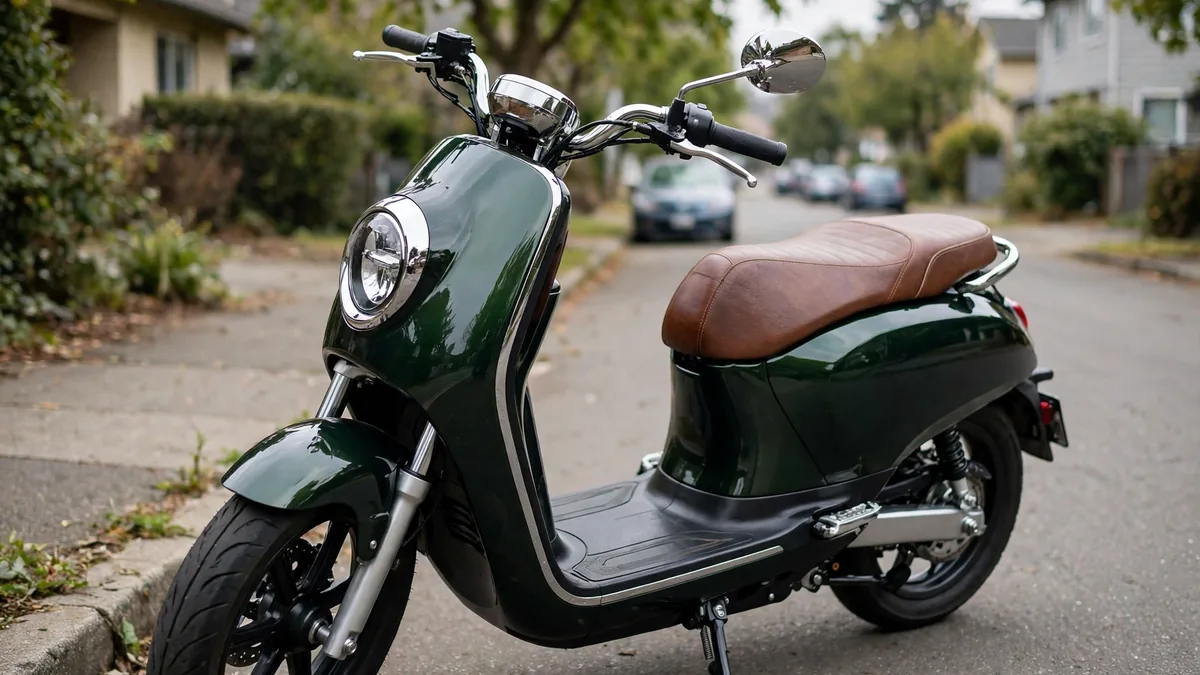
Everything starts with the battery, usually a lithium pack hidden low in the body of the moped, under the floor or beneath the seat. Its size is measured in kilowatt-hours, and a bigger number means more energy stored, which usually means more range. A luxury moped might carry between two and four kilowatt-hours, enough for a long ride across a city and back.
The battery is made of many small cells packed together, cooled by air or by a liquid system, and watched by a small computer that keeps every cell balanced. If one cell charges faster than the rest, the computer slows it down, because an unbalanced pack ages quickly and loses range.
Step 2: The motor turns energy into motion
The motor sits in the rear wheel hub or beside it, connected by a belt or a chain. Its power is measured in watts, and a luxury moped usually offers between three and eight kilowatts. More power means quicker acceleration and an easier climb up a steep hill, but it also drains the battery faster when you use it hard.
Step 3: The controller manages the power
Between the battery and the motor sits the controller, a small box of electronics that decides how much power flows when you twist the throttle. It smooths the delivery so the moped pulls away gently instead of jerking forward, and it protects the motor from overheating by cutting power if the temperature climbs too high.
The controller also runs regenerative braking, which turns the motor into a generator when you slow down, feeding a little energy back into the battery. It never recovers much, perhaps a tenth of the energy used, but on a city ride full of stops and starts it adds up, and it saves wear on the brake pads at the same time.
Step 4: The chassis carries the weight
The frame of a luxury moped is usually steel or aluminium, shaped to hold the heavy battery low down, which keeps the centre of gravity near the ground. That low weight makes the moped feel stable and easy to handle, even for a new rider, and it stops the machine feeling top-heavy when the battery is full.
Suspension matters just as much. Good forks at the front and a shock absorber at the rear soak up potholes and rough roads, and the difference shows on a long ride, when a cheap moped shakes your hands numb and a good one glides over the same road without complaint.
Step 5: The brakes and tyres keep you safe
Most luxury mopeds use disc brakes on both wheels, often with a system that stops the wheels locking when you brake hard. The brakes must work in rain, because a moped is ridden in all weather, and the pads and discs are sized generously so they stay cool on a long downhill run.
Tyres are wider than they look, with a tread pattern made to grip wet tarmac. A good tyre gives the rider confidence in a corner, and the makers test them on wet roads again and again, because a moped that slides in the rain is a moped no one trusts, whatever its battery size says on paper.
Step 6: The dashboard and charging complete the picture
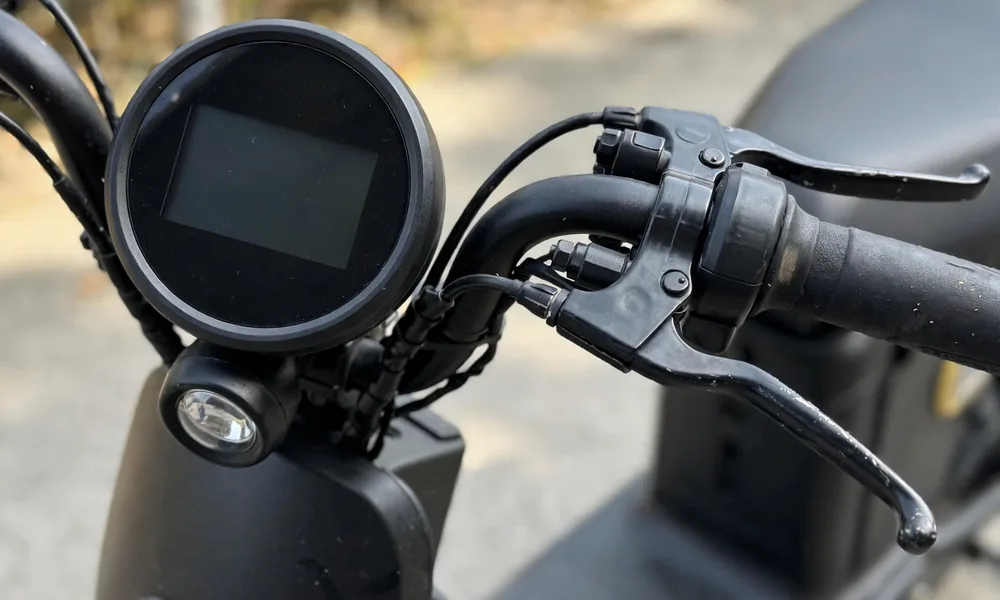
The dashboard is the rider’s window into the machine, showing speed, battery level and range remaining. On a luxury moped it is a bright screen that stays readable in sunlight, and it warns the rider early when the battery runs low, instead of leaving them guessing on a busy road.
Charging is the last number that matters. A standard wall socket might take four or five hours, while a fast charger can fill the battery in under two. The spec sheet lists both, and a buyer who rides every day should care about the fast figure, because it decides whether the moped is ready again by morning or still charging at noon.
| Spec | Detail |
|---|---|
| Battery | Lithium pack, usually 2 to 4 kilowatt-hours, mounted low in the frame |
| Motor | Hub or belt-driven motor, usually 3 to 8 kilowatts of power |
| Range | Around 60 to 120 miles per charge, less in cold weather or at high speed |
| Top speed | Usually 50 to 70 miles per hour, set by the motor and local rules |
| Charging | Four to five hours from a wall socket, under two with a fast charger |
| Brakes | Disc brakes on both wheels, often with anti-lock braking |
| Weight | Around 90 to 130 kilograms, much of it the battery pack |
The hardest number to read honestly is range, because it is measured in gentle test conditions that no real rider ever meets. Cold weather, hills, a heavy rider and a fast road all cut the range, sometimes by a third, so a wise buyer knocks a quarter off the headline figure and asks whether the moped still goes far enough. The battery size in kilowatt-hours is the honest number, and it is the one to compare between machines.
What One Costs
A luxury electric moped typically costs an estimated 6,000 to 15,000 dollars, set mostly by the battery size, the motor power, the quality of the suspension and the finish of the bodywork. A smaller city moped sits near the bottom, while a long-range model with a big battery and fast charging costs far more. The same careful engineering runs through other electric machines, and the way a luxury electric commuter bike’s specs are explained shows how a lighter machine balances the same numbers, while the way a luxury electric fat bike’s specs are explained covers a machine built for rough ground instead of city streets.
A Rare Fact
Some luxury electric mopeds can be charged from an ordinary household socket with no special equipment at all, and a few carry a battery that slides out like a suitcase, so the owner can carry it indoors and charge it in a flat. The battery weighs as much as a heavy bag of shopping, and owners who live upstairs learn to love the handle more than any other feature on the machine.

A luxury electric moped is really a set of numbers that must agree with each other: a battery big enough for the range, a motor strong enough for the hills, a controller smooth enough for the rider, and brakes good enough for the rain. Read the spec sheet that way and the right machine picks itself. The same balance of numbers shapes every electric ride, and the way a luxury electric commuter bike is made shows how those same parts come together in a lighter, pedal-assisted machine.