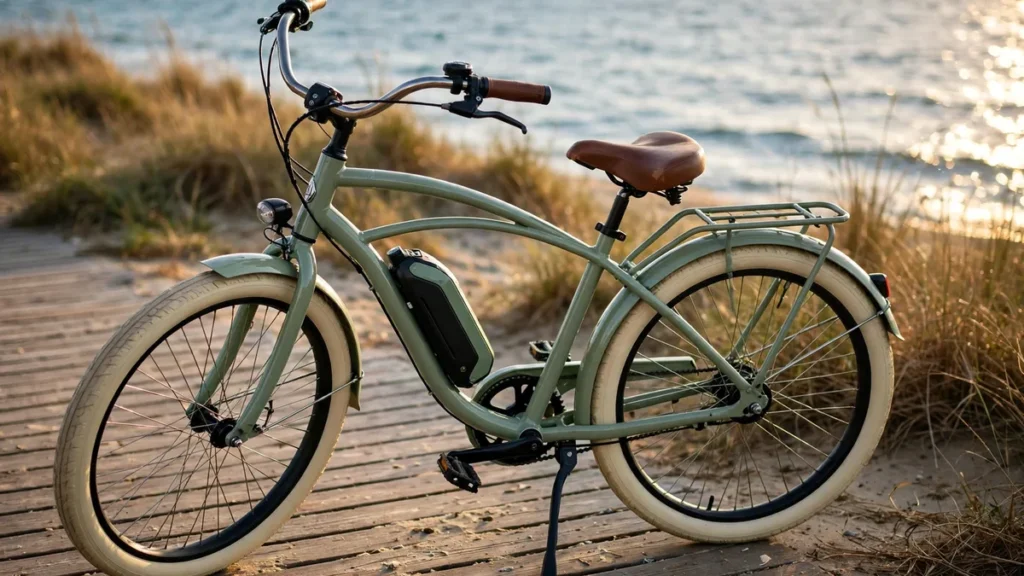
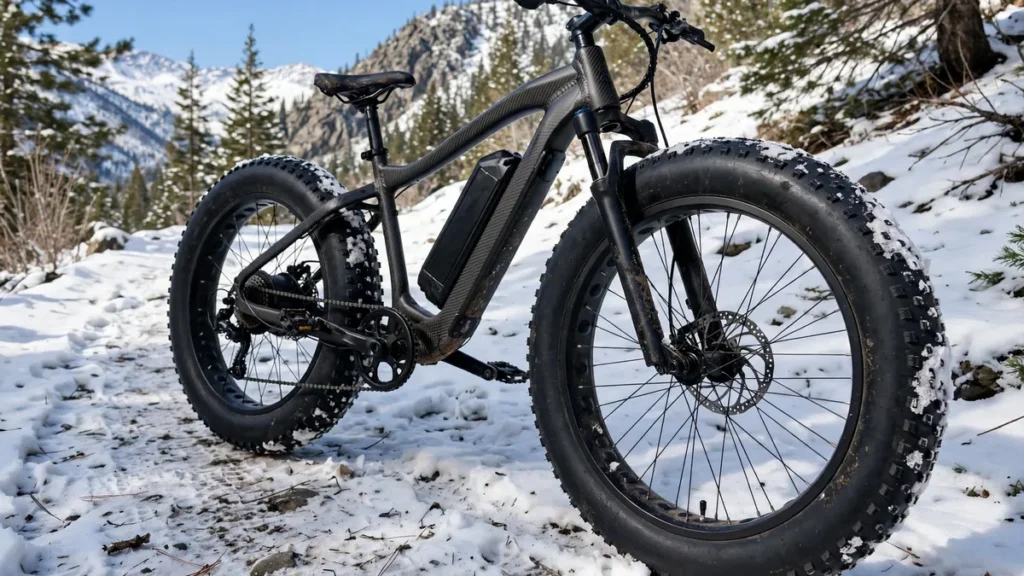
Every weekday morning, in cities all over the world, the same quiet race takes place. Cars sit bumper to bumper at the lights while a rider on a slim electric bike slips past them, arrives at the office unhurried and unruffled, and locks up in less time than it takes the drivers to find a parking space. The luxury electric commuter bike is built for exactly that journey, and it is a very different machine from the electric mountain bikes and fat bikes that share its motor technology. It is not built for trails or for show. It is built to be ridden every day, in all weather, by someone who has somewhere to be, and its spec sheet is a list of the small, practical decisions that make that possible.
The commuter’s numbers are less dramatic than a hypercar’s, and that is the point. Nobody needs a commuter bike to do 45 kilometres per hour through city traffic, and nobody wants to arrive at work soaked in sweat. What the numbers should show is reliability: a motor that starts instantly in the rain, a battery that covers a week’s riding without a daily charge, brakes that stop the bike on a wet road, and a drivetrain that does not need attention every month. Reading the spec sheet of a luxury commuter is less about chasing the biggest figures and more about checking that the quiet ones, the ones that decide whether the bike works on a dark February morning, are all in place.

Motor, Battery and the Shape of a Week
The motor on a luxury commuter is usually a mid-drive unit rated at 250 watts, with torque of 50 to 85 newton-metres, and that modest rating is deliberate. City riding is a series of short bursts: away from the lights, up a short hill, through a gap in the traffic, and a motor that delivers its push smoothly and quietly matters far more than one that chases a big headline number. Hub motors appear on some commuters, and they are cheaper and simpler, but the mid-drive has become the luxury standard because it works through the gears, climbing better and feeling more natural, and because it keeps the weight in the middle of the bike where it belongs.
Batteries on luxury commuters run from 400 to 700 watt-hours, and the figure that matters is not the headline range but the realistic weekly range. A typical commute of 15 kilometres each way uses roughly a third of a 500 watt-hour battery, so a rider can manage three days without charging, and the spec sheet’s claimed range of 80 to 140 kilometres is best read as a fair-weather figure with a light rider. The better commuters hide the battery inside the down tube, which protects it from rain and theft and keeps the bike looking like an ordinary bicycle, and the best of them charge in three to four hours, so an overnight charge is more than enough.
The Spec Table, in Plain Numbers
| Specification | Typical luxury commuter | What it means |
|---|---|---|
| Motor power | 250 watts | Legal limit in most cities |
| Motor torque | 50 to 85 newton-metres | Pull away from traffic lights |
| Battery capacity | 400 to 700 watt-hours | Days between charges |
| Claimed range | 80 to 140 kilometres | Best case, fair weather |
| Top assisted speed | 25 kilometres per hour | Legal limit in most cities |
| Weight | 19 to 25 kilograms | Carrying up office stairs |
| Drivetrain | Belt drive or 11-speed chain | Clean, quiet, low maintenance |
| Brakes | Hydraulic disc brakes | Stopping safely in the rain |
| Tyres | 35 to 50 millimetres, puncture-proof | Comfort and fewer flat tyres |
| Extras | Lights, mudguards, rack, lock | Ready to ride from day one |

The Belt, the Brakes and the Daily Details
The drivetrain is where a luxury commuter earns its keep, and the spec sheet usually offers two choices: a chain or a belt. A belt drive runs silently, never needs oil, and lasts three or four times as long as a chain, which means no black grease on office clothes and no monthly cleaning ritual. It costs more upfront and it needs a frame built for it, but for a daily rider the belt is the single most practical luxury on the bike. Chains are cheaper and easier to repair anywhere, and an 11-speed chain setup gives a wider range of gears, yet the belt has quietly become the mark of a commuter designed by people who actually commute.
Brakes are hydraulic discs on every serious luxury commuter, and the spec sheet should say so plainly. In dry weather any brake works, but in rain, with a wet road and a rider in a hurry, only a hydraulic disc stops the bike quickly and predictably, and that is when it matters. The tyres, usually 35 to 50 millimetres wide with a puncture-resistant layer, are the other half of the safety story: wide enough to smooth out potholes and tram tracks, tough enough that a flat tyre does not ruin a morning. Integrated lights, mudguards, a rear rack and a built-in lock round out the specification, and a commuter that ships without them is not really a commuter at all, whatever the price.
What a Luxury Electric Commuter Bike Costs
Prices are estimates, labelled as such, because the specification moves the price more than the brand does. A good electric commuter with a mid-drive motor and a 400 watt-hour battery costs roughly $3,000 to $4,500, while a luxury model with a belt drive, a 700 watt-hour battery, integrated lights and electronic gears costs roughly $5,500 to $8,500. The most expensive commuters, with carbon frames, automatic gear shifting and built-in tracking, can reach $10,000 or more, though the gains over a mid-range luxury model are small.

One Rare Fact Worth Knowing
Here is the rare fact that surprises even regular riders: the electric commuter bike is one of the fastest ways through a city, not just one of the cheapest. Studies of urban journeys have repeatedly found that an electric bike beats a car door to door on trips under eight kilometres, because the bike never queues, never circles for parking and never waits at a second set of lights behind a bus. The motor does not make the rider faster than a racing cyclist; it makes the average rider faster than the traffic, and it does so while the rider arrives calm, dry and on time. The commuter’s real rival was never another bicycle. It was the car, and on the morning journey, the bicycle wins.
Read the spec sheet in this order and it will serve you well: drivetrain before motor power, battery size before claimed range, brake type before weight, and the list of included extras before the price, because a commuter that needs hundreds of dollars of accessories is not the bargain it looks like. Compare two commuters of the same motor power and the numbers will show you which one is built for daily reliability and which one is built for a showroom. The slim frame looks ordinary at the bike rack, a quiet machine among flashier ones, but its spec sheet holds a serious engineering argument, and the folding bike’s spec sheet plays the same game in a different key, trading a full frame for one that packs away. A luxury electric fat bike’s spec sheet shows what happens when the same motor meets very different tyres, while a luxury electric cruiser’s spec sheet shows the same technology tuned for comfort instead of speed.