The living room was dark except for the television, and on the screen a mountain road wound through rain while the car on it threw up spray with every corner. The boy on the sofa did not touch the controller for a moment, because the picture was so sharp he could see the gravel on the verge and the clouds moving over the hills, and when he finally pressed the stick the car answered at once, without a stutter or a smear.
That box is a luxury gaming console, and its spec sheet is a list of numbers that decide whether a game looks like a film or like a cartoon, whether it runs smoothly or stutters at the worst moment, and whether it will still be worth playing in five years. This guide explains those numbers in plain English, one system at a time, so the sheet reads like a description of a machine instead of a puzzle.

The processor and graphics: the brain and the painter
The first numbers describe the processor, the chip that runs the game, and the graphics unit, the chip that draws it. A luxury console uses a custom chip that combines the two, with eight processor cores and a graphics unit measured in teraflops, a count of how many trillions of calculations it can make each second. A figure around ten to twelve teraflops is typical at the top end, and it is what lets the console draw a busy city street, with traffic, reflections and weather, sixty times a second. The guide to how a luxury gaming console works follows what those chips do while a game is running, and why a console with a slower chip feels different even when the television is the same.
Memory: how much the console can hold in its head
The next number is the memory, usually sixteen gigabytes of fast GDDR6, shared between the processor and the graphics unit. Memory is the console’s working space, and the game keeps the textures, the models and the world it is drawing right now in it, so more memory means bigger worlds, sharper textures and fewer pauses while the console fetches something from storage.
Storage: the solid-state drive and the loading screen
The next number is the storage, a solid-state drive of about one terabyte, and the speed at which it can read, measured in gigabytes per second. An old console used a spinning hard drive and made the player wait a minute while a level loaded, but a modern solid-state drive reads so fast that a game can jump from a menu to a city street in a few seconds, and can stream new parts of the world in as the player moves without a loading screen at all.
Resolution and frame rate: how sharp and how smooth
The next numbers are the resolution and the frame rate, and they belong together, because a console can draw a sharper picture or a smoother one, but not always both at once. Resolution is the count of pixels, usually 3840 by 2160, which the industry calls 4K, and frame rate is how many pictures the console draws each second, usually sixty, sometimes a hundred and twenty. The guide to luxury gaming PC specs, explained sets out the same trade for a different machine, where a high frame rate matters more than a sharper picture, and the lesson is the same: the number that matters is the one the eye can see, and a smooth sixty frames a second beats a sharper picture that stutters.
Ray tracing and upscaling: light and clever shortcuts
The next terms on the sheet are ray tracing and upscaling, and they sound like marketing until they are explained. Ray tracing is a way of drawing light, so reflections in a puddle show the buildings around it and shadows fall the way they do in a real room, and it costs a great deal of processing power, so consoles use it sparingly, on reflections and shadows rather than on everything.
Cooling, power and sound: the quiet part of the spec sheet
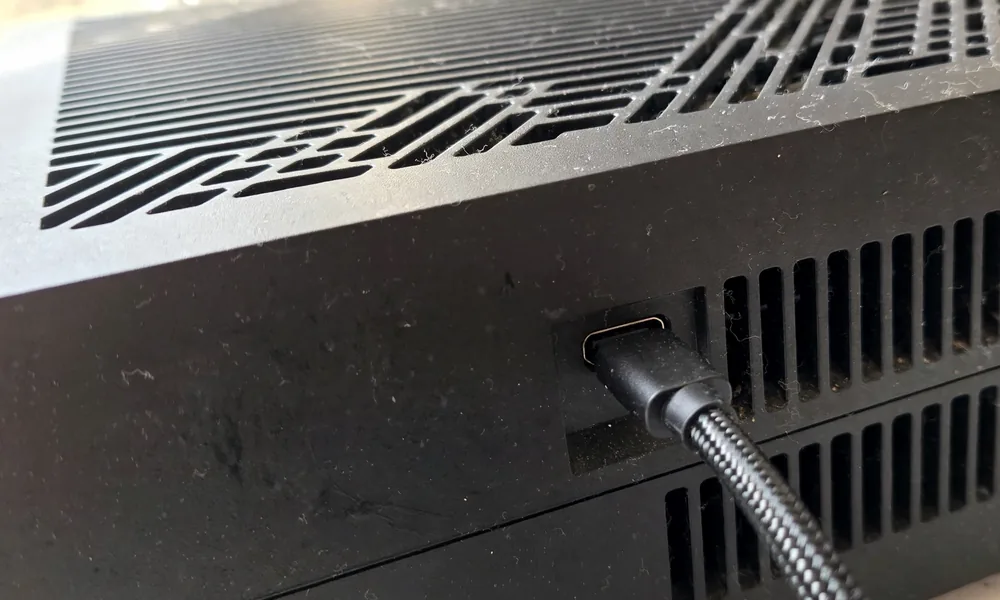
The last numbers describe cooling and power, and they are the ones the owner notices every evening. A luxury console draws around two hundred watts at full load, and it sheds that heat with a large fan and a vapour chamber, a flat sealed plate that spreads heat across the chip, so the console stays quiet while the game gets busy. The sheet lists the noise in decibels, and the best consoles stay quiet enough that the player hears the game instead of the fan, which is the whole point of a machine that sits in a living room rather than a server cupboard. The guide to how a luxury gaming chair is made shows how the chair beside it is built, because a quiet console deserves a seat that is just as carefully made.
The spec sheet at a glance
| Specification | Typical luxury figure | What it tells you |
|---|---|---|
| Processor and graphics | Eight cores, around 10 to 12 teraflops | How fast the game runs and how rich it looks |
| Memory | About 16 gigabytes of fast GDDR6 | How much of the world the console holds at once |
| Storage | About 1 terabyte solid-state drive | How fast games load and how many fit |
| Resolution | 4K, 3840 by 2160 pixels | How sharp the picture is on a big television |
| Frame rate | 60 frames a second, 120 in some games | How smooth the motion feels |
| Ray tracing | Hardware support for reflections and shadows | How real the light looks |
| Cooling and power | Around 200 watts, vapour chamber and large fan | How quiet the console stays in a living room |
| Controller | Wireless, haptic feedback, adaptive triggers | How the game feels in the hands |

What it costs
A luxury gaming console typically costs an estimated $500 to $700, depending on the model, the storage and whether it has a disc drive. The estimate covers the console alone, not the television, the extra controller or the games, which are a real part of the cost, and which the owner buys one at a time over the years the console sits under the television.
A rare fact
One detail few players ever learn is that the chip inside a luxury console is more powerful than the computers that guided the first spacecraft, by a margin so large it is hard to picture, and yet it spends most of its power drawing reflections in puddles and the fur on a digital animal. The console is not a computer that happens to play games, it is a computer built for one job, and the spec sheet is a list of how well it does that job.
Read the sheet in that order, processor first, then memory, storage, resolution, light and cooling, and the numbers stop looking like a code and start looking like a description of a machine. The best consoles are not the ones with the biggest single number, but the ones whose numbers agree with each other, a chip the cooling can keep quiet, a drive the games can fill, and a picture the television can show.


