The captain pointed at the bridge ahead and did not slow down. From the sun deck it looked far too low, a stone arch barely higher than the ship’s top deck, and the passengers around the pool exchanged the nervous glance of people who have just realised their hotel is about to hit something. Then the wheelhouse sank, the railings folded, the umbrellas came down, and the whole ship seemed to duck. It slid under the bridge with a metre to spare, and the applause from the deck was entirely sincere.
That is the life of a luxury river cruise ship. It is a floating hotel that must also be a precision instrument, shaped by the rivers it sails: shallow water, narrow locks, low bridges and tight bends, all while carrying a hundred or more guests in comfort. Its spec sheet is a record of those compromises, and every number in it is there because a river demanded it.
This guide reads that spec sheet in plain English, so you can tell what each figure means for your cruise.
How to Read a River Cruise Ship Spec Sheet
Length and beam: built to fit the river
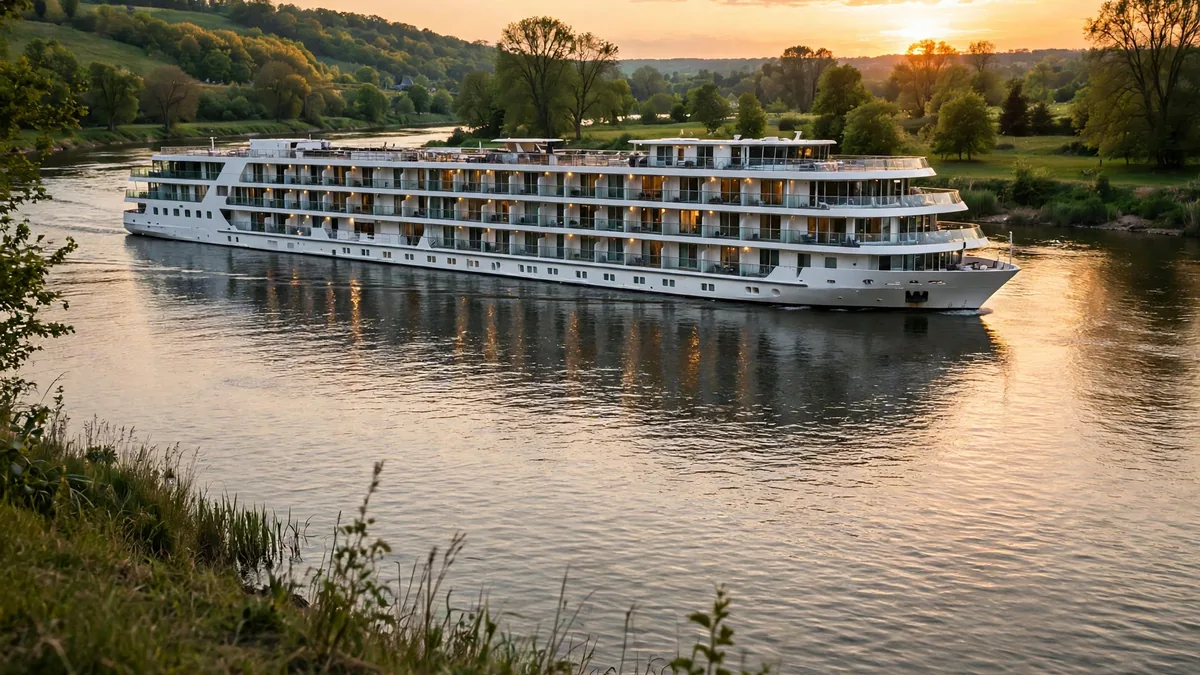
A luxury river cruise ship is usually 110 to 135 metres long and about 11.5 metres wide, and those two numbers are set by the locks it must pass through. On Europe’s main rivers the locks are built to a standard size, so ships are designed to fit them with only centimetres to spare, which is why so many river ships look alike in outline. A longer ship carries more cabins, but it is also harder to turn in a narrow river, so the length is a careful balance between capacity and manoeuvrability.
Draft: the shallow-water problem
The draft is how deep the hull sits in the water, and for a river cruise ship it is usually only 1.5 to 2 metres, which is remarkably shallow for a vessel of its size. A shallow draft lets the ship sail in low water in late summer, when rivers fall and ocean-going ships would run aground, but it also limits how much weight the ship can carry and how much machinery fits below deck.
Passenger capacity and cabins: hotel arithmetic
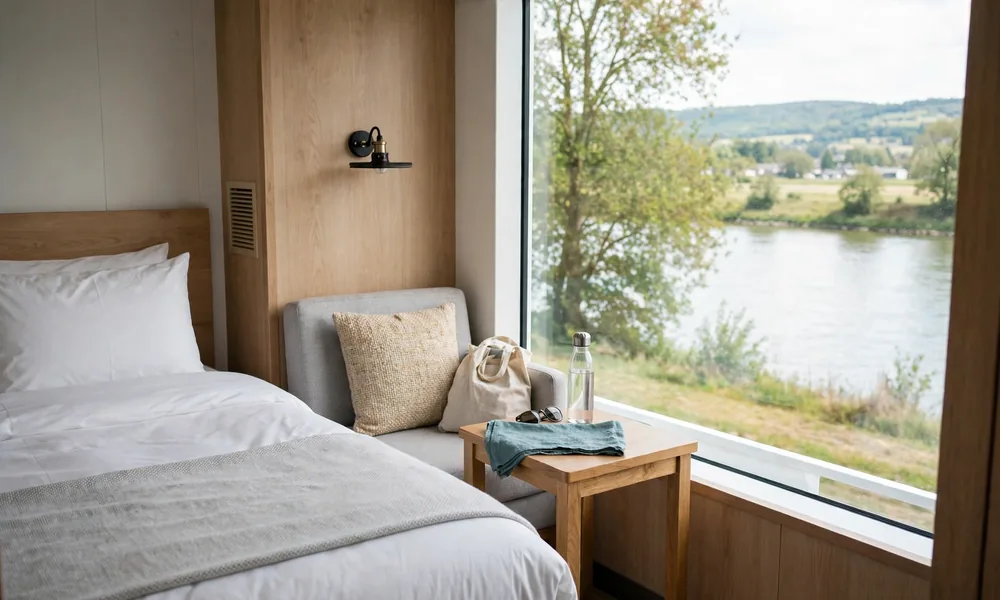
Most luxury river ships carry 100 to 200 passengers in 50 to 100 cabins, and the ratio of crew to guests is usually about one crew member for every three passengers. That is a far higher level of service than a large ocean liner, and it is possible because the ship is small and the distances are short. The cabins themselves are usually 15 to 25 square metres, with a large window or a French balcony, and the biggest suites can reach 40 square metres or more. The cabin count matters because it sets the feel of the ship: a 150-passenger ship feels like a country house hotel, with the same faces at dinner every night, while a larger ship starts to feel like a resort. As our guide to how a luxury river cruise ship works explains, the whole ship is organised around that small, sociable scale.
Speed and engines: slow water, quiet power
A river cruise ship cruises at about 10 to 15 kilometres per hour, which is roughly cycling speed, because rivers are not built for rushing. The engines are usually diesel, driving propellers through gearboxes, and newer ships add hybrid or battery systems that let them run silently in port and through towns at night. The power figure, often around 1,000 to 2,000 kilowatts, sounds large until you remember the ship weighs thousands of tonnes and must push against the river current.
Air draft and folding decks: ducking under bridges
The air draft is the ship’s height above the water, and on a river cruise ship it is usually around 6 to 7 metres with everything folded down. Bridges on the Danube, the Rhine and the Seine are often lower than that, so the wheelhouse is built to lower on hydraulic rams, the railings fold flat, and the sun deck furniture is packed away before each bridge. The captain times the approach carefully, because the river level changes with rain and snowmelt, and a bridge that cleared by a metre yesterday may clear by only half a metre today.
Amenities and deck space: the hotel on top
Above the cabins, the ship carries the parts that make it feel like a hotel: a restaurant, a lounge with a bar, a small library, a fitness room and a sun deck with a pool or a hot tub. The deck space per passenger is generous by cruise standards, because the ship is not trying to pack in thousands of guests, and the top deck is where most passengers spend their afternoons watching the riverbanks pass. The restaurant usually seats everyone at once, which means the kitchen must serve 150 identical meals in a single sitting, a logistical feat that depends on the galley being directly below the dining room. The ocean-going comparison, in our guide to luxury cruise ship specs explained, shows how much bigger the sea-going ships are, and how much of their space goes to things a river ship simply does not need.
Luxury River Cruise Ship Specs
| Specification | Typical range |
|---|---|
| Length | About 110 to 135 metres |
| Beam (width) | About 11.5 metres, lock-sized |
| Draft | About 1.5 to 2 metres |
| Passenger capacity | About 100 to 200 passengers |
| Cabins | About 50 to 100, mostly 15 to 25 square metres |
| Crew to guest ratio | About one crew member per three guests |
| Cruising speed | About 10 to 15 kilometres per hour |
| Engine power | About 1,000 to 2,000 kilowatts |
| Air draft (folded) | About 6 to 7 metres above the water |
What Does a Luxury River Cruise Cost?
A luxury river cruise typically costs an estimated 300 to 700 dollars per person per day, with week-long sailings costing an estimated 2,500 to 6,000 dollars per person depending on the cabin and the river. Suites with full balconies sit at the top of that range, while lower-deck cabins with small windows cost the least. The fare usually includes meals, excursions and drinks, so the daily figure is closer to an all-in price than it looks, and the ship itself costs an estimated 20 to 40 million dollars to build, which is why the fares stay high, as our guide to why a luxury river cruise ship is so expensive explains.

A Rare Fact
The longest river cruise ships are built in sections and welded together in a dry dock, but they are designed from the start to be cut apart again: some ships have been lengthened by cutting the hull in half, inserting a new middle section, and welding it back together while the ship is still in service between seasons. A ship that left the yard at 110 metres can return a few years later at 135 metres, with a dozen new cabins, which is the nautical equivalent of adding an extension to a house without moving out.


