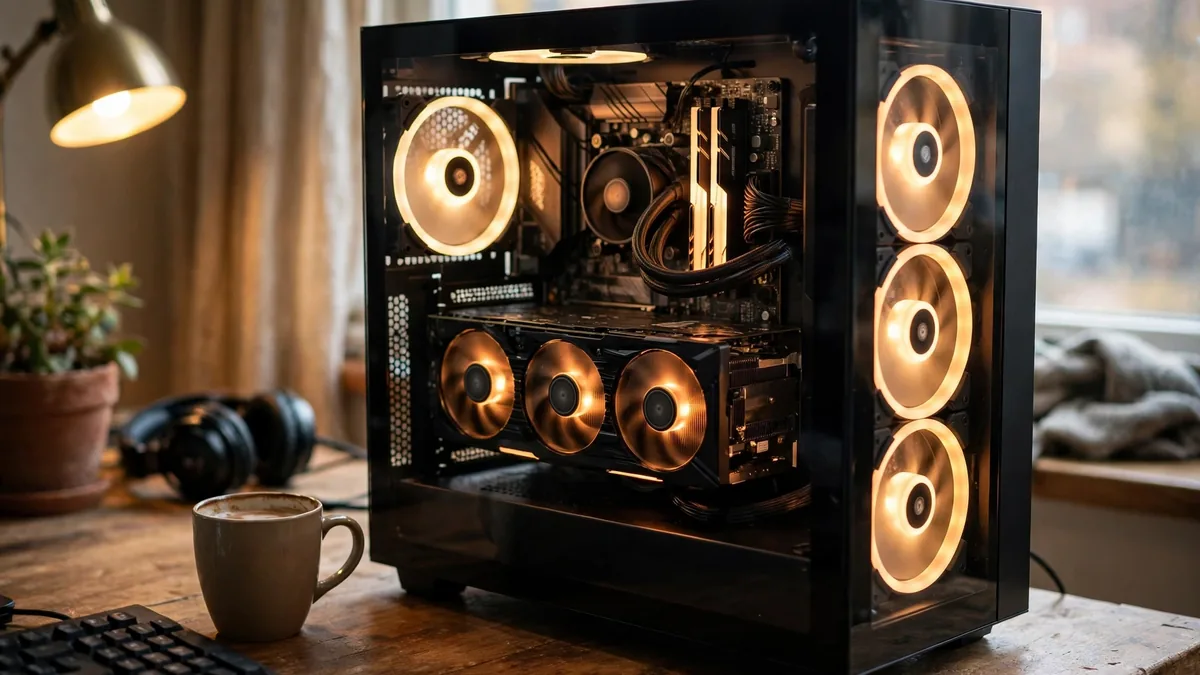
The box arrives, the side panel comes off, and inside sits a machine that looks more like a small piece of architecture than a computer. There are fans, pipes, lights and a graphics card the size of a brick, and on the desk beside it lies a spec sheet full of numbers that seem designed to confuse. The numbers are not the problem, though. The problem is that nobody has explained what each one does when a game is actually running.
This guide explains a luxury gaming PC spec sheet in plain English, number by number, so you can judge a machine by what it will do for you, not by how impressive its sheet looks.
The spec sheet at a glance
| Specification | Typical luxury figure | What it tells you |
|---|---|---|
| Graphics card | High-end GPU, 16 to 24 GB memory | How well games run, and at what detail |
| Processor | 8 to 16 cores, roughly 5 GHz boost | How fast the machine thinks, loads and streams |
| Memory | 32 to 64 GB, fast DDR5 | How much the machine can hold ready at once |
| Storage | 2 to 4 TB NVMe SSD | How many games fit, and how fast they load |
| Cooling | Liquid cooling, several large fans | How quiet it stays under load |
| Power supply | 850 to 1,200 watts, high efficiency | Whether it can feed the parts at full load |
| Display output | 4K at high refresh, or 1440p at very high refresh | What monitor the machine can really drive |
The graphics card: the part that draws the game
The graphics card, or GPU, is the most important part of a gaming PC, and it is where most of the money goes. It draws every frame of the game: the world, the characters, the light and the shadows, millions of times a second. A luxury card carries 16 to 24 gigabytes of its own memory, which it uses to hold textures, the detailed skins that make a stone wall look like stone and a jacket look like cloth. The guide to how a gaming GPU works follows the card from the inside, and the memory in this section is what lets it hold a whole detailed world ready at once, instead of fetching pieces of it late.
The processor: the brain behind the picture
Behind the graphics card sits the processor, or CPU, which does everything the graphics card does not. It runs the game logic, moves the characters, works out the physics and talks to the storage, the network and the rest of the machine. A luxury processor has 8 to 16 cores, which are like separate workers inside one chip, and it can boost to roughly 5 gigahertz when a single task needs speed. A fast processor will not make a slow graphics card faster, though, and the balance between the two is what decides whether a machine feels smooth or stutters at the worst moment.
Memory and storage: what is ready, and what is waiting
Memory, or RAM, is the desk the machine works on. A luxury gaming PC carries 32 to 64 gigabytes of fast DDR5 memory, which is far more than a game alone needs, but the extra room matters when a browser, a chat app and a stream are running beside it. Storage is the filing cabinet, and a luxury machine uses NVMe solid-state drives of 2 to 4 terabytes, which load a game in seconds rather than minutes. The guide to the gaming GPU specs, explained sets out the graphics numbers in more detail, and the storage in this section is what decides whether a player waits for a loading screen or is already playing.
Cooling and the power supply: the parts nobody sees
A powerful gaming PC makes a great deal of heat, and cooling is what keeps it fast. Luxury machines use liquid cooling, with a pump, a radiator and large fans, to carry heat away from the processor and the graphics card quietly. When cooling fails, the parts slow themselves down to protect themselves, so a machine with poor cooling is a fast machine that is never allowed to be fast. The guide to cooling and sustained performance explains why a machine that stays cool stays quick. The power supply matters just as much: a unit of 850 to 1,200 watts, with a high efficiency rating, feeds every part steadily at full load, and a cheap one can cause crashes that look like a software fault.

Frame rate and resolution: the two numbers that fight each other
Frame rate and resolution are the two numbers every gamer quotes, and they fight each other. Resolution is how many pixels make up the picture, and frame rate is how many pictures the machine draws each second. A luxury PC can drive 4K at a high refresh rate, or 1440p at a very high refresh rate, but pushing both to the maximum at once is the hardest job a graphics card can be given. A higher frame rate makes a game feel smoother and more responsive, especially in a fast competitive game, while a higher resolution makes it look sharper and more detailed. The right balance depends on the games played: a competitive shooter rewards frame rate, and a slow, beautiful adventure rewards resolution.
What the numbers mean in a real game
Put together, the sheet tells a simple story. The graphics card decides how good the game looks and how smoothly it runs, the processor decides how busy the world can be, the memory decides how much can be kept ready, the storage decides how fast it loads, and the cooling and power supply decide whether the whole machine can keep doing it for hours. A luxury PC is not the one with the biggest number in every row. It is the one where no single part holds the rest back, where the cooling keeps the speed the sheet promises, and where the machine is quiet enough that the player forgets it is there. That balance is what the price buys, more than any single headline figure.
What it costs
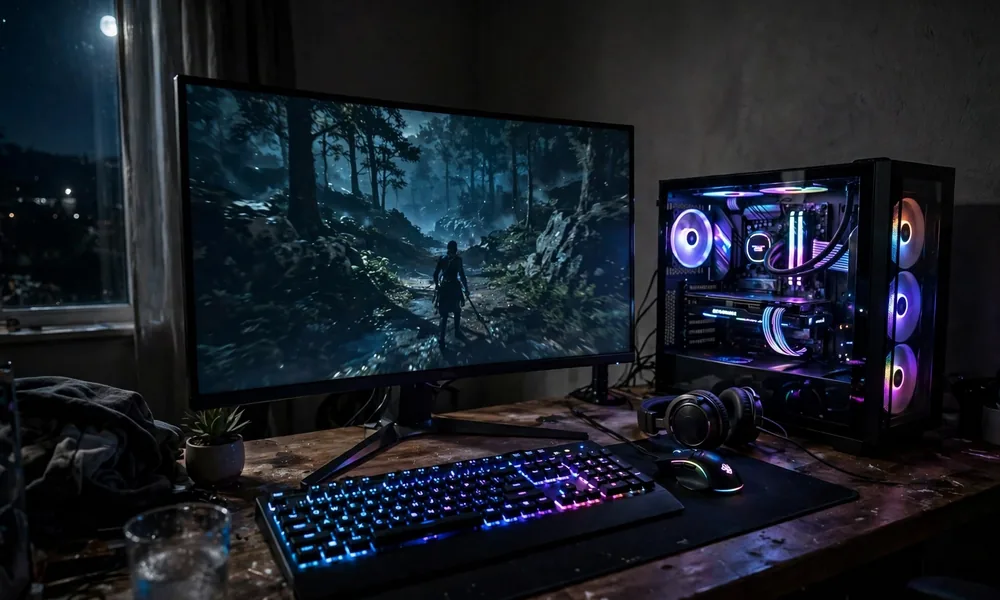
A luxury gaming PC typically costs an estimated $3,000 to $7,000, depending on its graphics card, its processor and its cooling, with the most extreme builds going higher. The estimate covers the machine alone, not the monitor, the keyboard or the games. Most of the price is in the graphics card, which can cost more than the rest of the machine put together, and in the cooling and the case, which are what let the expensive parts run at full speed without throttling.
A rare fact
One detail few buyers ever learn is that a graphics card can slow itself down on purpose when it gets too hot, a behaviour called throttling, and a luxury PC is often built around avoiding it. The makers test the machine in a warm room, not a cold one, and size the cooling so that the card holds its full speed even after hours of play. A machine that is fast for ten minutes and slow for the rest of the evening is not a luxury machine, whatever its spec sheet says.


