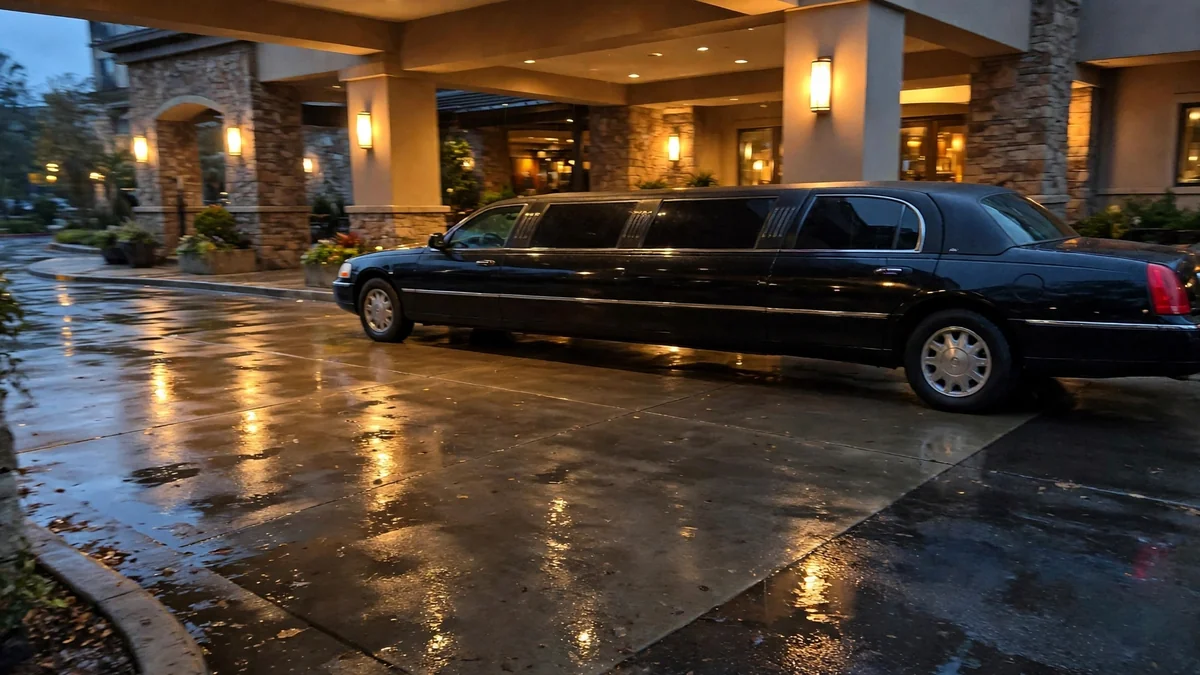
The rain had just stopped over the hotel forecourt when the long black car glided to the kerb. The chauffeur stepped out, opened the rear door, and the passenger sank into a seat that felt more like a small lounge than a place in a car. The door closed with a soft, heavy thunk, the cabin went quiet, and the city outside seemed to fade behind thick glass. That feeling of calm is not an accident. It is engineered, number by number, into a machine that is longer, heavier, and far more carefully built than an ordinary saloon.
A luxury limousine is usually a stretched version of an already expensive car, lengthened so the rear passengers gain legroom, privacy, and room to work or relax. But the spec sheet of such a car can look confusing at first glance. Wheelbase, torque, kerb weight, and boot volume all sit side by side, and few of them mean much without context. This guide explains what each number really tells you, and how to read the whole sheet the way an engineer would.
The Specs That Decide a Limousine
Start with the wheelbase, the distance between the front and rear axles. In a limousine this is the most important single number, because almost every extra centimetre of wheelbase becomes rear legroom. A standard luxury saloon might have a wheelbase near three metres, while a stretched limousine pushes it toward three and a half metres or more. The overall length follows, often reaching five and a half to six and a half metres, and that length is what gives the car its presence and its turning circle, which is usually wide enough that tight city streets need planning.
Next come power and torque, and here torque matters more than horsepower. Torque is the twisting force that moves a heavy car smoothly from a standstill, and a limousine needs plenty of it because it carries extra weight and expects to accelerate without drama. A strong petrol or diesel engine in this class often produces around 450 to 900 newton metres of torque, while power figures of 300 to 570 horsepower are common. The result is not a sports car sprint but a calm, effortless pull, with zero to 100 kilometres per hour typically taking five to seven seconds despite the bulk.
Weight is the number that explains many of the others. A luxury limousine usually weighs between 2,400 and 3,000 kilograms once fuel, passengers, and equipment are counted, and that mass has to be managed by the suspension, the brakes, and the tyres. Air suspension is almost universal in this class, because it can raise or lower the body, soften bumps, and keep the cabin level when the car corners or brakes. Engineers also tune the suspension for silence, adding sound-deadening material and laminated glass so the cabin stays near the quiet of a library at cruising speed.
Then look at the cabin numbers, because a limousine is judged from the back seat. Rear legroom is rarely printed directly, so use the wheelbase and the seat count as a guide, and check the boot volume, which usually runs from 400 to 550 litres. A partition, a fridge, fold-down tables, and rear screens all add weight and complexity, and each one is a reason the spec sheet lists so many small features. Even the fuel tank size matters, because a car built for long, unhurried journeys should cover long distances between stops, and a large tank pairs with a relaxed cruising range.
Finally, check the figures that describe how the car behaves rather than how fast it goes. The turning circle, the braking distance, and the fuel consumption all shape daily use. A limousine that drinks heavily is expensive to run, while one with a huge turning circle is hard to park outside a hotel. None of these numbers is glamorous, yet together they decide whether the car feels graceful in real life or merely looks impressive in a photograph. The same thinking applies to other luxury cars, where comfort figures matter as much as speed.
How to Read the Spec Sheet in Seven Steps
- Read the wheelbase first, because it sets the rear legroom and the whole character of the car.
- Compare torque before horsepower, since torque is what moves a heavy car smoothly and quietly.
- Check the kerb weight, and ask what the suspension and brakes do to manage it.
- Look at the zero to 100 time only as a smoothness check, not as a race result.
- Note the boot volume and the seat count, because both limit what the car can carry in practice.
- Read the fuel consumption and tank size together to work out the real cruising range.
- Finish with the turning circle and the cabin noise figure, which decide how the car feels in a city.

A Typical Luxury Limousine, Side by Side
| Specification | Typical figure |
|---|---|
| Overall length | 5.6 to 6.4 metres |
| Wheelbase | 3.3 to 3.8 metres |
| Engine size | 3.0 to 6.75 litres |
| Power | 300 to 570 horsepower |
| Torque | 450 to 900 newton metres |
| Zero to 100 km/h | 5 to 7 seconds |
| Top speed | 210 to 250 km/h, usually limited |
| Kerb weight | 2,400 to 3,000 kilograms |
| Seats | Four to eight passengers |
| Boot volume | 400 to 550 litres |
| Fuel consumption | 8 to 12 litres per 100 km, combined |
What One Costs
Prices vary widely, because a limousine can be a factory long-wheelbase model or a fully hand-finished stretched car built by a specialist coachbuilder. A factory long-wheelbase luxury saloon typically costs an estimated $150,000 to $350,000, depending on the brand, the engine, and the level of rear-seat equipment. A stretched car, cut in half and lengthened by hand, usually starts at an estimated $250,000 and can pass $600,000 once bespoke interiors, armour, entertainment systems, and hand-stitched leather are added. Running costs are high as well, with tyres, brakes, and servicing all priced for a heavy, low-volume machine, and insurance follows the same pattern.
The price also reflects how few of these cars are made. A coachbuilder may complete only a handful each year, with craftspeople spending weeks on a single interior, fitting wood veneer, stitching leather by hand, and testing every switch and screen. That slow, careful work is invisible on the spec sheet, but it is the reason two cars with similar numbers can feel so different, and why the cheapest way to judge a limousine is still to sit in the back seat. A related kind of specialist engineering appears in amphibious cars, where a small production run also pushes the price far above an ordinary vehicle.

A Rare Fact Worth Knowing
The stretched limousine was born in the United States in 1928, when a coachbuilder in Fort Smith, Arkansas, cut a Cadillac in half and lengthened it to carry a band and its instruments. Big bands were travelling from town to town, and they needed a car that could hold musicians, instruments, and luggage in one trip. The idea caught on with hotels, film studios, and heads of state, and the long, quiet car that once carried a dance band became the symbol of arrival it still is today. When you read a modern spec sheet, you are reading the descendant of that practical, stretched Cadillac, refined over nearly a century into a machine where every extra centimetre exists to serve the passenger in the back, a tradition of rare and costly vehicles that still shapes how they are built.


