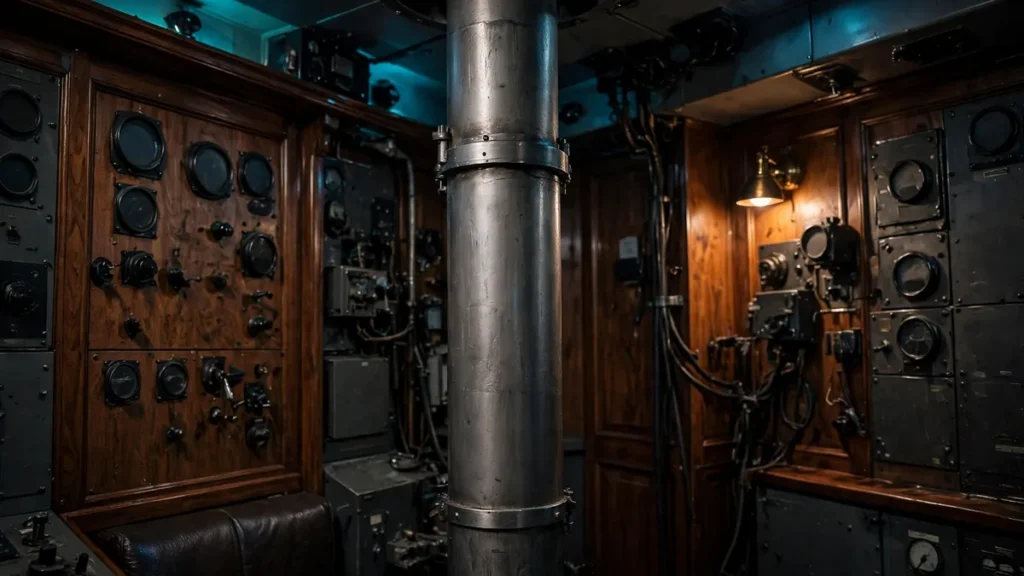
Picture a superyacht crossing a rough stretch of open water at dinner time. The waves are rolling in from the side, the hull is leaning one way and then the other, and yet the glasses on the table barely move, the soup stays in its bowl, and the guests carry on talking as if the sea had calmed down just for them. Nothing about the weather has changed. What has changed is happening deep below the waterline, where a heavy steel wheel is spinning so fast that it refuses to tip over, and in refusing, it holds the whole ship steady.
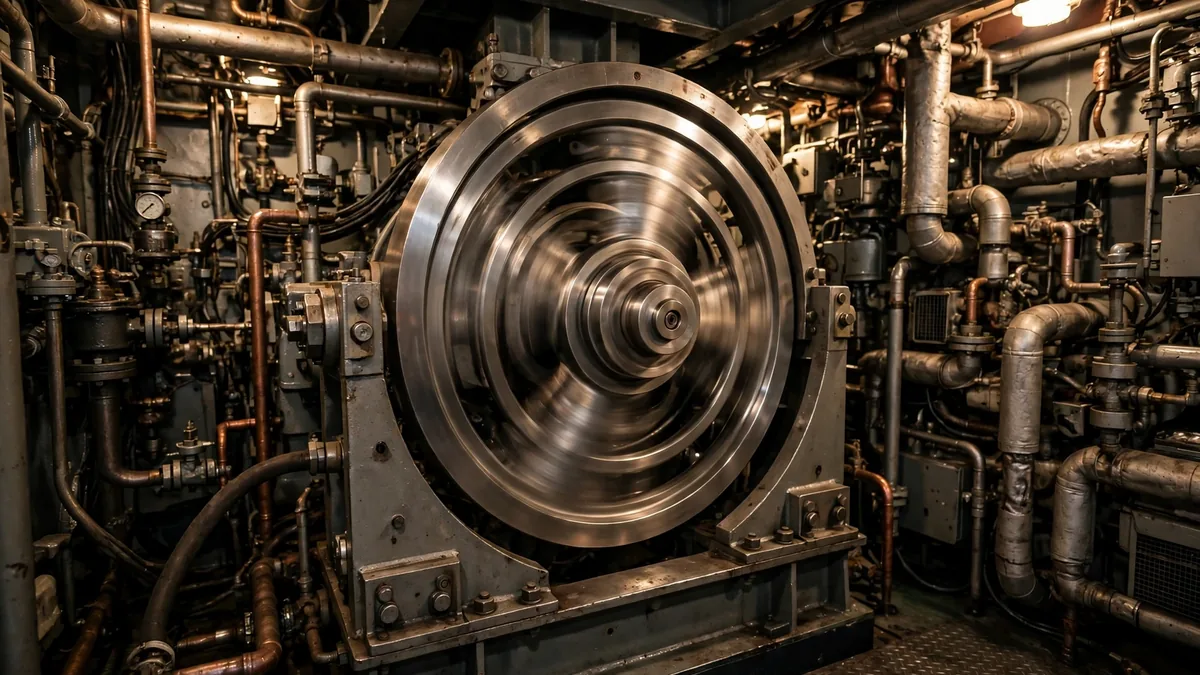
That wheel is the heart of a ship gyroscope, one of the quietest and most remarkable machines on a luxury vessel. It does not push the ship forward and it does not steer it. It simply resists change, and that resistance is turned into calm. On a large yacht the system can cut rolling by more than half, turning a miserable crossing into a comfortable one, and on a ship it can mean the difference between a voyage people remember fondly and one they never want to repeat.
How It Works
Step 1: A heavy wheel spins at high speed
At the centre of the system sits a flywheel, a thick disc of steel that can weigh several tonnes on a large ship. An electric motor spins it up to thousands of revolutions per minute, and once it is spinning it holds an enormous amount of energy in its rotation. A spinning wheel has a stubborn property: it wants to keep pointing in the same direction, and it resists any force that tries to tilt its axis. That stubbornness is the whole trick, because the sea is constantly trying to tilt the ship, and the wheel is constantly refusing to go along with it.
Step 2: The wheel is mounted in a frame that lets it lean
The flywheel is not bolted rigidly to the hull. It sits inside a gimbal frame, a set of pivots that lets the wheel tilt from side to side while it keeps spinning. When a wave rolls the ship, the hull moves around the wheel rather than forcing the wheel to move with it, and the gimbal absorbs that motion. The frame is built from heavy machined steel and rides on precision bearings, because it must carry tonnes of spinning metal while moving smoothly under load, day after day, in salt air and vibration.

Step 3: The tilt creates a force that fights the roll
Here is where the physics turns into comfort. When the gimbal tilts, the spinning wheel produces a powerful twisting force at right angles to the tilt, a phenomenon called precession. Engineers arrange the geometry so that this force pushes directly against the roll of the ship, lifting the side that is dipping and holding the side that is rising. The faster the wheel spins and the heavier it is, the stronger the correcting force, which is why luxury systems use such massive flywheels and spin them so fast.
Step 4: Sensors watch the sea and control the tilt
A gyroscope left to itself would help, but a controlled one helps far more. Motion sensors mounted around the ship measure the roll angle, the roll speed and the period of the waves many times per second, and a control computer uses that data to drive the gimbal actively. Instead of waiting for the roll to happen, the system leans the wheel into the coming wave, so the correcting force arrives at exactly the right moment. The computer learns the rhythm of the sea as it works, adjusting its timing as the waves change, so the correction stays accurate even when the weather is shifting. The result is a ride that feels almost unnaturally calm, even when the sea state is rough.
Step 5: The unit is cooled, sealed and kept in balance
Spinning tonnes of steel at high speed generates heat and vibration, so the unit is sealed inside a protective housing and cooled by oil or by a dedicated cooling circuit. The flywheel is balanced to extraordinary precision, because even a tiny imbalance at thousands of revolutions per minute would shake the whole compartment. Technicians check the bearings, the seals and the balance on a strict schedule, and the housing is built to contain the wheel safely even in the unlikely event of a failure.
Step 6: The system works at anchor as well as under way
Unlike fin stabilizers, which need water flowing past the hull to work, a gyroscope works even when the ship is standing still. That matters enormously on a luxury yacht, because guests spend much of their time at anchor in a bay, where the swell can still rock the boat all night. The gyroscope keeps working through the night, drawing power from the generators, so the crew can sleep and the guests can wake up rested. When the ship gets under way again, the system simply keeps spinning and keeps correcting.

Specifications
| Flywheel weight | 1,000 to 8,000 kilograms | Heavier wheels give stronger roll resistance on larger ships. |
| Spin speed | 3,000 to 10,000 revolutions per minute | High speed stores the energy that fights the roll. |
| Roll reduction | 50 to 80 percent | The most noticeable benefit for everyone on board. |
| Power draw | 5 to 30 kilowatts while running | Mostly used to keep the wheel spinning against friction. |
| Spin-up time | 30 to 60 minutes to full speed | The crew starts the system well before leaving port. |
| Housing | Sealed steel, oil or liquid cooled | Protects the wheel and keeps it running quietly. |
| Works at anchor | Yes, at zero speed | A key advantage over fin stabilizers. |
What It Costs
A luxury ship gyroscope system costs an estimated $150,000 to $600,000 installed, depending on the size of the vessel and the weight of the flywheel, with the largest systems for big superyachts costing more. Those are estimates, not quotes, and they cover the flywheel, the gimbal frame, the control electronics and the installation below deck. The price reflects precision machining, careful balancing and the sheer mass of steel involved. It works alongside the rest of the navigation equipment, as how a luxury ship radar works explains, and the full numbers behind the system are laid out in luxury ship radar specs explained.
A Rare Fact
Here is a detail most people never guess. The same spinning-wheel principle that steadies a superyacht was once used to keep early ships on course before modern autopilots existed, and the gyroscopic compass that came out of that work still guides vessels today. A gyroscope does not care about magnetic north or satellites, it simply remembers the direction it was pointed in, and that memory is so reliable that engineers trusted it to steer ships through fog and darkness. The modern stabilizer is a descendant of that idea, turned from navigation into comfort, and it shares its deck with other heavy deck machinery, as how a luxury yacht anchor winch works shows. What has not changed is the core of the idea itself: a spinning wheel that remembers where it was pointing, and refuses to be moved, is still one of the most reliable machines ever put to sea.