Look up from the deck and the tallest thing you will see is the mast, a steel tower that carries the ship’s eyes and ears high above the top deck. From the dock it looks like a simple pole. Every mast has a height, a weight, a wind rating and a list of the equipment it must carry, and each figure is a promise about what the ship can see, hear and survive in bad weather.
The mast is the one part of the ship that has to be tall, light and strong all at once: tall so the radar sees further, light so the ship rolls less, and strong because the wind at the top of a sixty metre tower pulls with a force that would tear a weaker structure apart.
This guide walks through the figures on a mast specification sheet and explains what each one means in plain language, so the next time you see a mast in a brochure you will know what you are looking at.

Luxury Ship Mast Specs at a Glance
Before the detail, here are the headline numbers for a typical mast. A smaller ship sits at the modest end of each range, while the largest ships push further, but the pattern of a tall tower carrying a heavy load of electronics stays the same.
| Specification | Typical 50 m Ship | Typical 80 m Ship | Typical 120 m Ship |
|---|---|---|---|
| Height above the waterline | 30–40 metres | 40–50 metres | 50–60 metres |
| Mast weight | 15–25 tonnes | 25–45 tonnes | 45–80 tonnes |
| Equipment carried aloft | 2–4 tonnes | 4–7 tonnes | 7–12 tonnes |
| Design wind speed | 45 metres per second | 50 metres per second | 55 metres per second |
| Radar scanners | 2 scanners | 2–3 scanners | 3–4 scanners |
| Sway at the top, in a gale | Under 1.5 metres | Under 2 metres | Under 2.5 metres |
Height and Weight: The Tallest Trade-Off
Height is the first number on the sheet, and it is measured from the waterline to the top of the mast, not from the deck. On a 50 metre ship the mast usually stands 30 to 40 metres above the water, and on a 120 metre ship it can reach 50 to 60 metres. Taller means a further horizon for the radar, which is why the mast is the tallest thing on the ship.
Weight is the counterweight to height, and the sheet lists the weight of the mast itself and of everything bolted to it. A mast on a smaller ship weighs 15 to 25 tonnes, and on the largest it can reach 45 to 80 tonnes, with another 2 to 12 tonnes of radar, antennas and lights on top. The why a luxury ship mast costs a fortune guide explains where the money for all that steel and equipment goes, but the specification sheet is where the weight itself is recorded, because a heavy mast high above the water makes the whole ship less stable.
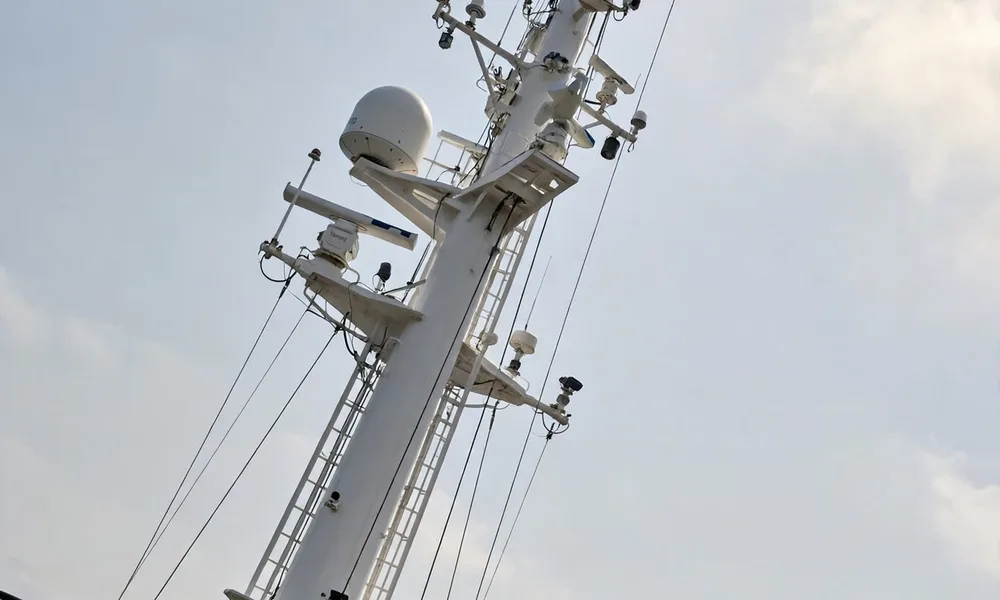
Radar and Antennas: What the Mast Carries
The second group of figures on the sheet lists what the mast carries, and the most important items are the radar scanners. A luxury ship usually carries two radar scanners, and the largest ships carry three or four, each one a precision instrument that must pick out a small boat in heavy rain from miles away while the ship rolls beneath it. The sheet records the weight of each scanner, because a heavy scanner at the very top pulls hardest on the mast.
Below the radar sit the satellite communication antennas, some a metre or more across, which keep the ship connected to the internet and to the company’s offices ashore. Then come the smaller items, and they add up: navigation lights, foghorns, anemometers that measure the wind, and radio aerials, each one wired down through the mast in armoured cables. The sheet lists them all, because the mast must carry every one of them at once.
Wind, Sway and the Dampers Inside
The wind rating is the figure that decides whether the mast survives a storm. The sheet gives a design wind speed, usually 45 to 55 metres per second, which is the strongest wind the mast is built to stand in without damage. The designers calculate the force on every scanner, antenna and square metre of steel before deciding how thick the steel must be.
Sway is the second storm figure, and it is the one that surprises people most. A tall mast bends in the wind, and the top of a sixty metre mast can move a metre or two in a gale, which the sheet records as a limit, usually under 2.5 metres on the largest ships. The movement must be kept small, so many masts carry tuned dampers inside, heavy weights that move against the sway and cancel it out. The luxury ship helm specifications describe how the ship is steered at sea, but it is the mast that gives the bridge the picture it steers by.
Materials, Lightning and Looking After It
The last figures on the sheet cover the material of the mast and how it is protected. Most luxury ship masts are built from steel plate, welded into a tapered tube, wider at the base than the top, and the sheet lists the plate thickness at each level. Some newer masts use aluminium for the upper sections, which saves weight where it matters most, though aluminium needs more care in salt air.
Lightning is the risk nobody forgets, because the mast is the tallest conductor on the ship. The sheet records the protection: a copper path from the top of the mast down to the hull, so a strike runs safely into the sea instead of through the radar and the wiring. The crew inspect it every year, climbing the tower to check the welds, the cables and the fittings that hold the scanners in place.

A Rare Fact About the Luxury Ship Mast
Here is a detail that surprises people who have never looked closely at a mast. The very top often carries a small anemometer, a set of cups that spins in the wind and measures its speed, and the bridge trusts that little spinning device more than any forecast. The wind at the top of the mast is the wind the ship is actually sailing in, not the wind on a sheltered deck, and on a ship where a single gust can push a thousand tonnes sideways, that small instrument is one of the most trusted pieces of equipment aboard.
What the Specs Mean for You
If you are buying, chartering or touring a luxury ship, the mast sheet tells you how far the ship can see and how well it will stand up in a storm. A tall mast with a generous wind rating, a sway limit that keeps the radar steady, and a sensible weight all point to a ship built by people who expect bad weather and planned for it.
If the numbers are vague, or the mast carries more equipment than its weight suggests it should, ask questions. A good mast is tall, light and strong, and honest about what it carries. The luxury ship stern specifications cover the fittings at the back of the ship, but you can read the mast’s quality in the figures before you ever step aboard.


