Look up from the deck of a luxury ship and the tallest thing you will see is the mast. From the dockside it looks like a simple pole, a piece of steel that any workshop could make, but the price tag tells a different story. A mast for a large luxury ship is estimated to cost anywhere from two to eight million dollars, depending on its size, its equipment, and the yard that builds it, and when you understand what it has to do, the number starts to make sense.
The mast is not a decoration. It is the ship’s eyes, ears and voice, and it has to work perfectly in the worst weather the ocean can produce, while holding tonnes of delicate electronics steady enough to track a coastline ten miles away.
This article explains where the money goes, from the steel and the engineering to the radar, the antennas, and the testing that proves the whole assembly will not come down in a gale.
Height, Weight and the Engineering Problem
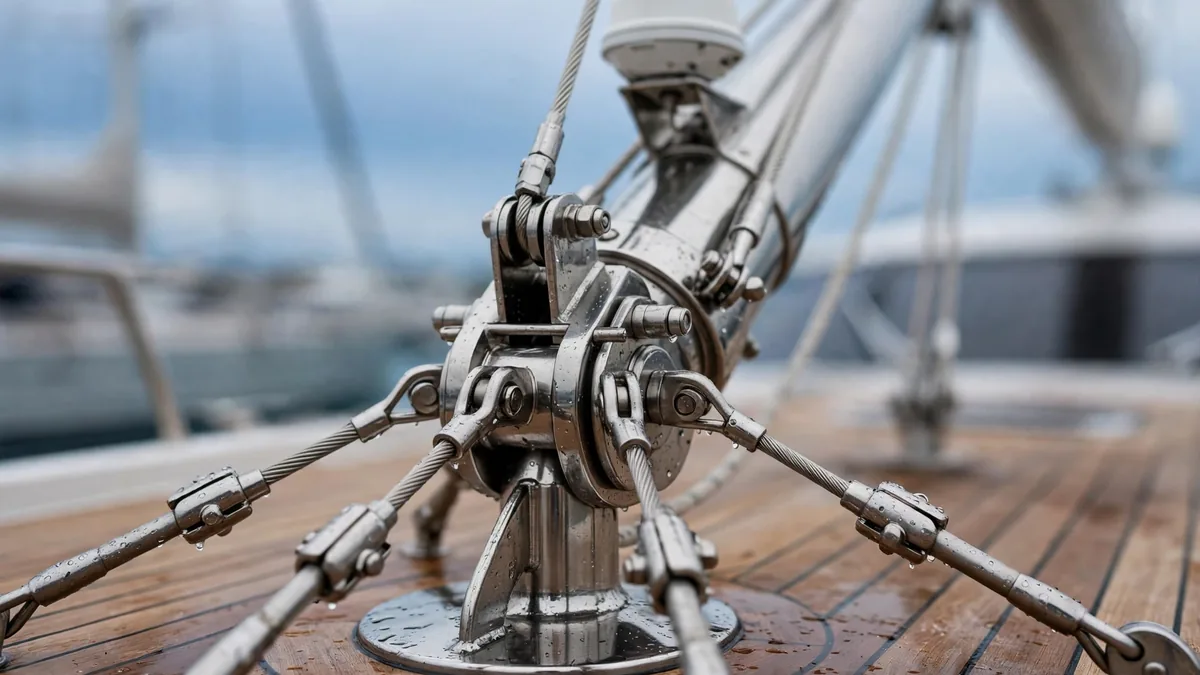
The first cost driver is the simplest one: the mast is tall, and tall things are hard to build. A mast on a large luxury ship can stand forty to sixty metres above the water, and it has to carry its own weight plus the weight of everything bolted to it, while bending in the wind without snapping or shaking itself apart.
The engineering is where the first serious money goes. It is modelled in a computer, tested against wind loads calculated for the worst storm the ship is expected to meet, and checked for resonance, the tendency of a tall structure to sway in rhythm with the wind until the movement grows out of control. Engineers add dampers inside the mast, tuned masses that move against the sway and cancel it, and those dampers are custom made, tested, and fitted one at a time. The same obsession with height, weight and careful engineering runs through the rest of the ship, and the specification of a yacht helipad shows another structure where every kilogram and every millimetre is fought over.
Radar, Antennas and the Electronics Aloft
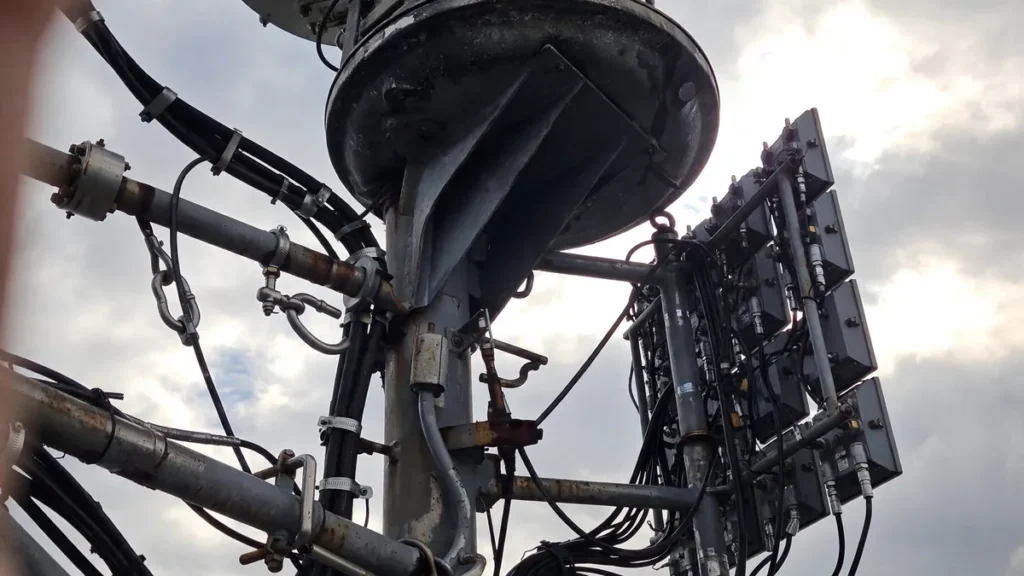
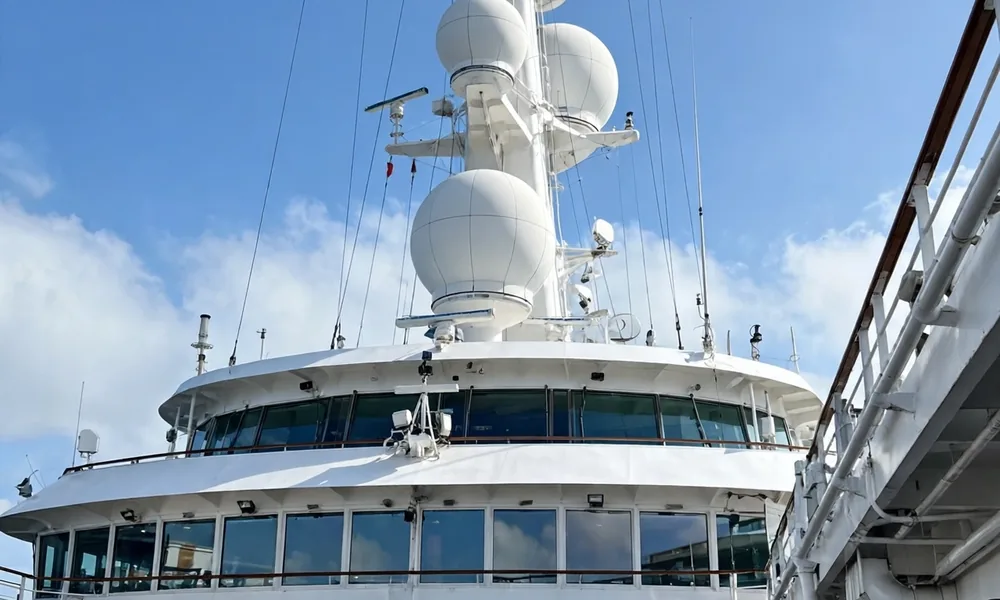
The second cost driver is what the mast carries, and the most expensive item is the radar. A luxury ship carries more than one radar system, and the scanners mounted on the mast are precision instruments, built to pick out a small boat in heavy rain at a distance of miles, while the ship rolls and pitches beneath them.
A single marine radar scanner of this class is estimated to cost between two hundred thousand and five hundred thousand dollars, and a large ship carries two or three of them, plus the processing units below decks that turn the raw signal into the picture on the bridge. A modern ship carries satellite communication antennas, some of them a metre or more across, that keep the ship connected to the internet and to the company’s offices around the world. Each one is a precision device, stabilised against the ship’s motion so it can hold its aim at a satellite thousands of kilometres away, and each one costs an estimated fifty thousand to two hundred thousand dollars. Then there are the smaller items, and they add up: navigation lights, foghorns, anemometers, automatic identification system antennas, and radio aerials, each one marine rated, each one wired down through the mast in cables armoured against salt and vibration.

Installation, Testing and the Cost of Failure
The third cost driver is the installation, and it is the one people forget. It is built in sections, lifted into place by a crane that can cost tens of thousands of dollars a day to hire, and welded to the ship’s structure by specialists who work at height, in weather, with the ship itself moving gently in its berth. The alignment has to be exact, because a mast that leans even slightly will throw the radar picture off, and the welds are inspected as they are made, because a flaw at the base of a sixty-metre lever arm is a disaster waiting for a storm.
Once the mast is up, the testing begins. The radar is calibrated against known targets, the satellite antennas are aimed and locked, and the whole assembly is checked for vibration while the ship runs at full speed. If the mast shakes at a particular engine speed, the dampers are adjusted, and if an antenna loses its lock when the ship rolls, the stabiliser is retuned. The final cost driver is the simplest to explain and the hardest to argue with: the cost of failure. If a mast comes down at sea, the ship loses its radar, its satellite link, and its navigation lights all at once, and it becomes a blind vessel in the dark. The same logic, that safety is worth more than savings, drives the most expensive systems on a ship, and why a luxury yacht submarine costs so much shows what happens when that logic is applied to a vessel that has to survive under the water as well as on it.
The Price, in Plain Terms
Put the pieces together and the numbers look like this. The steel structure and its coatings are estimated at five hundred thousand to one and a half million dollars. Installation, calibration and sea trials are estimated at three hundred thousand to one million dollars. The total for a large luxury ship mast lands, by most estimates, between two and eight million dollars, and on the very largest ships it can go higher.
Those are estimated figures, and they move with the yard, the equipment chosen, and the year, but the shape of the bill does not change. It is a lot of money for something that looks like a pole, but it is not a pole. It is the ship’s senses, mounted as high as physics allows, and built to survive anything the sea can throw at it.
A Rare Fact About the Mast
Here is a detail that surprises even people who work at sea. The mast of a large luxury ship is so tall that it has to be designed to fold or be removed, because otherwise the ship cannot pass under some bridges. On certain rivers and canals, the crew lowers the top section of the mast, sometimes by crane and sometimes on a hinge built into the structure, and the ship slips under a bridge with centimetres to spare.
What the Price Means for You
For a passenger, the price of the mast is invisible, and that is the point. You will never see the dampers inside it, the radar calibration, or the weld inspections, but you will feel their absence if they were not there. A mast that works means a ship that knows where it is, can see the weather coming, and can stay in touch with the world, even in the middle of an ocean in a storm. The next time you look up at a ship’s mast, remember what it carries and what it costs. The same care runs through the ship from end to end, and how a carbon fibre hull is specified shows the same philosophy at work below the waterline, where weight and strength are traded with the same ruthlessness.