Watch a luxury submarine slip beneath the surface and the movement looks effortless. The vessel tips forward by a few degrees, the water closes over the deck, and within a minute the whole craft is gone. Guests on board feel almost nothing, just a gentle tilt and the quiet hum of the motors.
A dive plane spec sheet is the paper version of that quiet manoeuvre. It lists the size of the planes, how far they can turn, how fast they move, and the depth at which they stop working well. This is what each number means, and which ones matter most.

The Spec Sheet, Line by Line
Plane size and where they sit
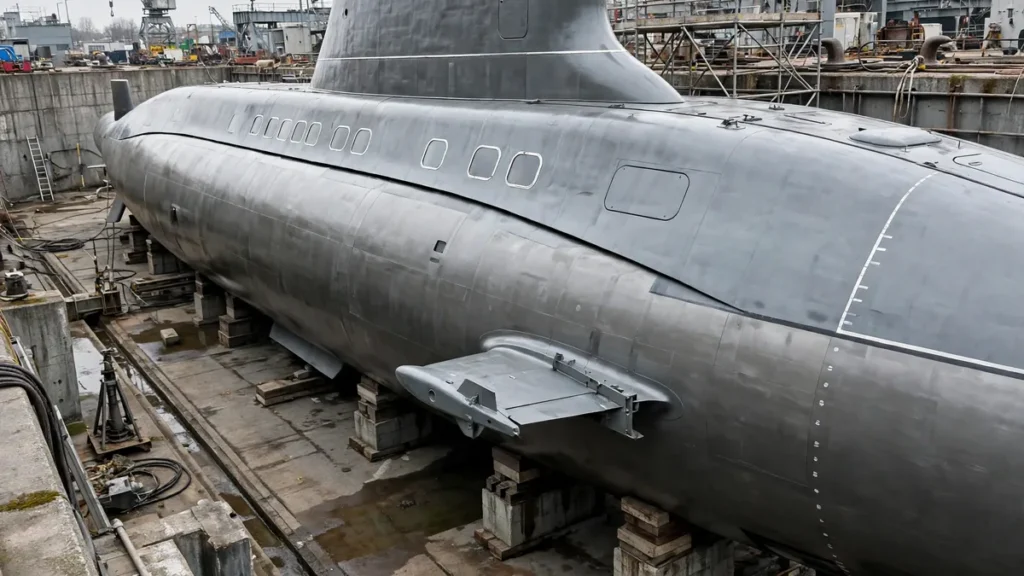
The first figures on any dive plane spec sheet describe the planes themselves. Dive planes come in pairs, and on a luxury submarine they usually sit near the bow, on the sail, or at the stern, depending on the design. The spec sheet lists their span and area, because a bigger plane produces more force at a given speed, and a smaller plane responds faster but needs more angle to do the same job.
Angle range and rate of movement
Every dive plane has a limit to how far it can turn, and the spec sheet states it in degrees. A typical luxury submarine plane can move about 25 to 35 degrees in each direction from level, and the number matters because a plane at full angle produces far more force than one at a small angle, but it also creates more drag and more noise. The crew rarely uses the full range; the spec sheet lists it as the edge of the envelope, not the everyday setting.
Hydraulics and the power behind the planes
The force that moves a dive plane comes from hydraulics, and the spec sheet lists the pressure and the size of the rams. Water pressure grows with depth, so the rams must be strong enough to hold a plane steady against the flow at the submarine’s deepest operating depth. The spec sheet states the maximum working pressure and the force each ram can deliver, and those numbers are what keep a plane from being pushed back to level by the water rushing past it.
Redundancy is built into the system, and the spec sheet says how. Most luxury submarines carry two independent hydraulic circuits, so a leak in one does not leave the crew without depth control. Some also carry a manual or electric backup that can move the planes slowly if the hydraulics fail altogether. The spec sheet lists the backup’s speed and range, because a backup that can only hold the planes level is very different from one that can still dive the boat. The same care with a single moving part runs through the way a luxury submarine periscope is made, where a slender tube must work perfectly under the same pressure.

Speed limits and the depth envelope
Depth is the other half of the envelope. The spec sheet states the submarine’s operating depth and the maximum depth for the planes, because water density and pressure change the way a plane behaves. A plane that is crisp and responsive near the surface can feel heavy and sluggish at depth, and the control system compensates by changing how much it moves for a given input. The numbers in this section are the reason luxury submarines dive slowly and deliberately, rather than plunging like a stone.
Controls, sensors and automatic depth keeping
Automatic depth keeping is the feature the guests notice most, even if they never see it. The system reads the depth gauge, compares it with the ordered depth, and nudges the planes a degree at a time to hold the boat steady. The spec sheet lists the accuracy it can achieve, often within half a metre, and the speed at which it can correct a disturbance. That steadiness is what lets guests stand by a viewport at depth without feeling the boat rise and fall beneath them, and the way a luxury submarine hatch works shows the same obsession with sealing and safety in another part of the vessel.
Materials, bearings and maintenance
The planes themselves are built from marine-grade steel or composite, and the spec sheet lists the material and the corrosion protection. The hinge pins and bearings take the full load of the water, and their size and material are specified because a worn bearing lets a plane wobble, and a wobbling plane is noisy, inefficient and hard to control. The spec sheet also gives the inspection interval, usually measured in dive hours, after which the bearings are checked and the seals replaced.
| Spec | Detail |
|---|---|
| Plane position | Bow, sail or stern pairs, sometimes bow and stern together |
| Plane area | About 1 to 3 square metres per plane on a luxury submarine |
| Angle range | About 25 to 35 degrees each way from level |
| Movement rate | About 5 to 10 degrees per second, driven by hydraulic rams |
| Effective speed band | Roughly 2 to 8 knots, with little authority below 2 knots |
| Depth keeping | Automatic hold within about half a metre of the ordered depth |
| Hydraulics | Dual circuits with a slow electric or manual backup |
The figure most people misunderstand is the plane area, because a bigger plane is not automatically a better one. A large plane gives more force but also more drag, more noise and a heavier hinge, while a smaller plane is quicker and quieter but needs more angle to do the same work. That is why the spec sheet lists area alongside angle range and speed, and why the designers balance all three instead of maximising any one of them.
What One Costs
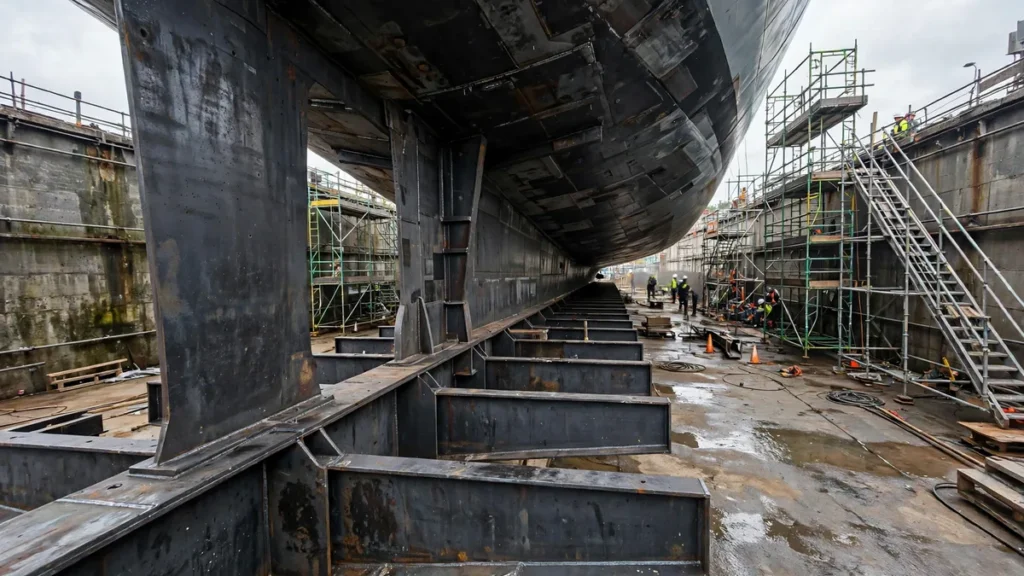
A pair of dive planes with their hydraulics, controls and sensors typically costs an estimated 250,000 to 800,000 dollars on a luxury submarine, set mostly by size, material and how much redundancy is built in. The planes themselves are the cheap part; the hydraulic rams, the position sensors and the autopilot that drives them cost far more than the steel. A full replacement during a refit, with the boat in dry dock and the bearings and seals renewed, can push the estimated total past one million dollars. The listening system that works alongside the planes is priced the same way, and the reason why luxury submarine sonar is so expensive explains how another quiet, precise system earns its price.
A Rare Fact
The earliest submarines had no dive planes at all. Their crews dived by flooding tanks and letting the boat sink, then used the propeller and rudder to steer, which meant they could go down but could not easily choose how fast or how level. The first working dive planes appeared in the late nineteenth century, and they changed submarines from sinking boats into flying machines that could climb and dive through the water at will.

A dive plane spec sheet looks like a list of angles and areas, yet it is really a description of how a submarine flies underwater. Every degree of movement, every hydraulic ram and every sensor exists to turn a small push of water into a smooth, controlled change of depth. When the boat holds her depth within half a metre while the guests watch a reef drift past the viewport, the numbers on the sheet have done their job.