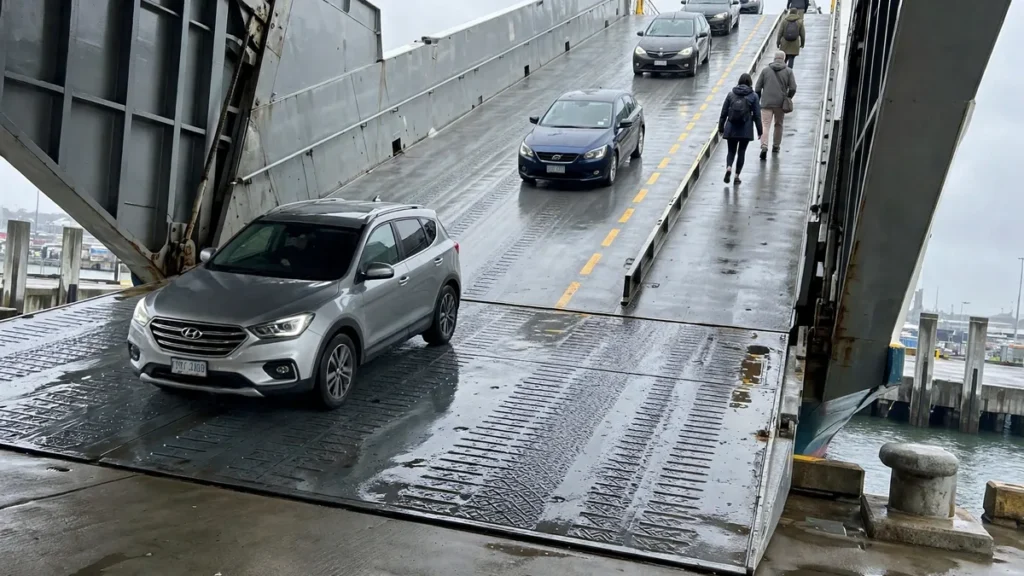
Watch a luxury ferry come into port and the show begins before anyone steps ashore. The great steel door at the bow or the stern swings slowly down, hinges groaning, until it meets the concrete quay with a dull thud. Cars roll off in a neat line, foot passengers follow, and within minutes a floating hotel has turned into a car park with a view. That moving door is the ferry ramp, and it is one of the hardest-working pieces of engineering on any ship.
A ferry ramp is a bridge, a door and a watertight seal all at once. When it is raised, it closes the opening in the hull and keeps the sea out. When it is lowered, it becomes the road that vehicles drive across, carrying the weight of coaches, lorries and cars over a gap of open water. It has to do both jobs perfectly, in rain and wind, several times a day, for decades.
On a luxury ferry the ramp has an extra job: it must be quiet, smooth and safe enough for guests who expect a hotel, not a building site. There can be no jolts, no sudden drops and no slippery steel underfoot, even when the deck is wet and the ship is moving gently against its moorings. That is why the ramp is built like a bridge and finished like a floor.
This is how a luxury ferry ramp works, what its numbers mean, and why a slab of steel on hinges deserves far more respect than it usually gets.

How It Works
1. The ramp as a bridge
When a ferry ramp is lowered, it spans the gap between the ship and the shore, and it must carry everything that crosses it. The deck of the ramp is built from thick steel plate stiffened by deep beams underneath, like the deck of a road bridge, so that it bends only a tiny amount under a fully loaded coach. Anti-slip paint and raised tread patterns give tyres and shoes grip even when the steel is wet with sea spray.
2. Hinges that carry tonnes
The whole ramp hangs from a row of massive hinges along its top edge. Each hinge is a steel pin the thickness of a man’s arm, running through a set of lugs welded to the hull and to the ramp, and the pins are greased and inspected regularly, because they carry the full weight of the ramp plus every vehicle on it.
When the ramp is closed, the hinges hold it tight against the hull. When it is open, they let it swing down in a smooth arc until its far end rests on the quay. The way a luxury ferry ramp is made shows how these hinges are built and fitted, and how much of the ramp’s strength comes from a few well-made pins doing a very simple job.
3. Hydraulics that lift the load
No crew could lift a ramp by hand, so hydraulics do the heavy work. Two or more large hydraulic cylinders, one on each side of the ramp, push and pull it through its arc, powered by pumps in the ship’s machinery spaces. The system is sized with a generous margin, so that the ramp can still be raised even if one cylinder fails.
The hydraulics are also the ramp’s brakes. They hold it steady while vehicles cross, so it does not bounce or sag, and they lower it gently onto the quay instead of letting it fall. The way a luxury ferry ramp works in daily service depends on these cylinders, and the crew test them at every departure, watching the ramp rise smoothly before the ship leaves the berth.
4. Sealing the hull when the ramp is shut
A ferry ramp is also a door, and when it is shut it must keep the sea out. Around the edge of the opening sits a heavy rubber seal, and when the ramp closes, hydraulic dogs clamp it tight against the seal, squeezing the rubber until the joint is watertight. In heavy weather, waves can strike the bow with enormous force, and the seal is the only thing between the sea and the vehicle deck.
5. Load limits and safety checks
Every ramp has a rated load, and the crew must respect it. The rating is usually given as the maximum weight of a single axle, because a heavy lorry puts far more load on a small patch of ramp than a row of cars does. Axle loads of 10 to 15 tonnes are common on large ferries, and anything heavier needs special permission and a careful crossing.
6. The ramp and the ship around it
The ramp does not work alone. It connects to the vehicle decks inside the ship, to the mooring system that holds the vessel still against the quay, and to the bridge, where the captain watches the loading. The crew on the ramp talk to the bridge by radio, and nothing moves until everyone agrees the ship is secure.
The bridge itself is the nerve centre for the whole operation, and the layout of a luxury ship bridge shows how the captain keeps the ramp, the engines and the moorings under control from one place. When the last car is aboard and the ramp rises, the ferry is a sealed ship again, ready for the open sea.

Key Specifications
| Specification | Typical figure | What it means |
|---|---|---|
| Ramp width | 7 to 12 metres | Wide enough for two lanes of cars, with room for foot passengers at the side. |
| Ramp length | 10 to 20 metres | Long enough to bridge the gap to the quay even when the tide is low. |
| Maximum axle load | 10 to 15 tonnes | The heaviest single axle the ramp is rated to carry safely. |
| Ramp weight | 30 to 80 tonnes | A slab of stiffened steel plate, heavy enough to need hydraulics to move it. |
| Hydraulic cylinders | 2 to 4, one each side | Lift and hold the ramp, with redundancy so one failure does not strand it. |
| Deck surface | Anti-slip steel with raised tread | Gives tyres and shoes grip in rain and sea spray. |
| Seal type | Rubber gasket with hydraulic clamps | Squeezes tight when the ramp closes, keeping the vehicle deck watertight. |
What It Costs
A ferry ramp is a custom piece of engineering, so its price is an estimate built from steel, hydraulics and fitting. On a large luxury ferry, a new bow ramp can cost an estimated $1 million to $3 million, depending on its size, its load rating and the complexity of its sealing system.

A Rare Fact
Ferry ramps have a famous and tragic history. In 1987, the ferry Herald of Free Enterprise capsized just outside Zeebrugge harbour with the loss of 193 lives, and the inquiry found that the bow doors had been left open as the ship sailed. The sea flooded the vehicle deck, the ship rolled over, and the disaster changed ferry design around the world. Since then, ramps have been fitted with warning lights on the bridge, cameras so the captain can see the doors, and interlocks that make it far harder to sail with a door open.
That is why, on a modern luxury ferry, you will see a small green light on the bridge when the ramp is properly closed and locked. It is a tiny detail, born of a terrible lesson, and it is checked before every single departure.