The bridge of a superyacht is the one room where luxury gives way to work. Everywhere else on the yacht is built for comfort, but the bridge is built for seeing, deciding and steering, and it shows. The room is mostly glass, the console is covered in screens and dials, and the captain sits in the middle of it all with a wheel that looks old-fashioned and a set of instruments that are anything but. It is the most important room on the ship, and the least decorated.
What makes a bridge work is not glamour but numbers: how high it sits above the water, how thick its glass is, how far its radar can see, and how many screens the watchkeeper can read at a glance. Here is what the figures mean, and why each one decides how safely the yacht is driven.

Luxury Yacht Bridge Specs at a Glance
Before the detail, here are the headline numbers for a typical luxury yacht bridge. A smaller yacht will sit at the modest end of each range, with fewer screens and a lower bridge, while a superyacht bridge pushes further, but the pattern of a high, wide, glass-walled room full of instruments stays the same.
| Specification | Typical figure | Why it matters |
|---|---|---|
| Bridge height above water | 8 to 15 metres | Seeing over the bow and the decks |
| Window glass thickness | 15 to 25 millimetres | Strong, laminated, and clear |
| Navigation screens | 4 to 8 screens, 19 to 24 inches | Charts, radar and engine data at a glance |
| Radar range | Up to 48 nautical miles | Seeing traffic long before it arrives |
| Steering positions | Centre helm plus wing stations | Docking from either side of the ship |
| Autopilot | Full course and track keeping | Holding a line for hours at a time |
| Visibility arc | 225 degrees or more | Almost all-round vision from the helm |
| Bridge consoles | 2 to 3 seated positions | Captain and watchkeeper side by side |
Glass, Height and the View Ahead
The most important number on a bridge is its height above the water, usually 8 to 15 metres on a luxury yacht, and it decides what the captain can see. From that height the bow is visible, the water ahead is clear for hundreds of metres, and the crew on the foredeck can be watched while they handle the anchor. The height is a compromise, and on a superyacht it is usually set so the captain can see the waterline at the bow from the helm seat without standing.
The glass is just as carefully specified, at 15 to 25 millimetres thick, laminated in layers so a wave strike or a flying object cannot shatter it into the room. The glass wraps around the front and sides of the room to give a view of 225 degrees or more, so the watchkeeper can see the sea on both sides without turning, and the frames are kept slim so the view is broken by as little metal as possible.
Radar, Charts and the Screens That Never Sleep
Below the windows sits the console, and on a modern bridge it is mostly screens: usually 4 to 8 of them, each 19 to 24 inches across, showing charts, radar, depth, engine data and the weather. The radar is the most important of these, with a range of up to 48 nautical miles, which lets the watchkeeper see other ships, rain squalls and the coastline long before they matter, and spot small boats that the eye would miss in the dark. The chart screen shows the yacht’s position on an electronic map, with hazards marked and the planned route drawn as a line, and it updates constantly as the ship moves.
The screens are built to be read in bright sunlight and in total darkness, which is harder than it sounds. In daylight they must be bright enough to beat the sun reflecting off the sea, and at night they switch to a red or dimmed mode that keeps the watchkeeper’s night vision, because a bright white screen would blind the captain to the dark water outside for minutes afterwards.
The Helm: Steering a Small Ship by Hand
The wheel is the part of the bridge that looks like history, and it still matters. A luxury yacht helm is usually a polished wooden wheel driving a hydraulic or electronic steering system, and it gives the captain a direct feel for the rudder that no button can match. The throttle levers sit beside it, often in pairs for twin engines, and the whole console is arranged so the captain can steer, change speed and watch the screens without moving from the chair.
Docking is where the bridge earns its keep, and that is why most yachts have wing stations: small control points on either side of the bridge, or out on the bridge wings, where the captain can stand with a clear view down the side of the hull and steer with a smaller wheel and thruster controls. From there the captain can see the gap between the hull and the quay, judge the wind, and ease a hundred-tonne yacht into a berth with centimetres to spare. The bridge also holds the radios, the alarms and the emergency controls, all within arm’s reach, because when something goes wrong at sea, the time to find a switch is measured in seconds.
A Rare Fact About the Luxury Yacht Bridge
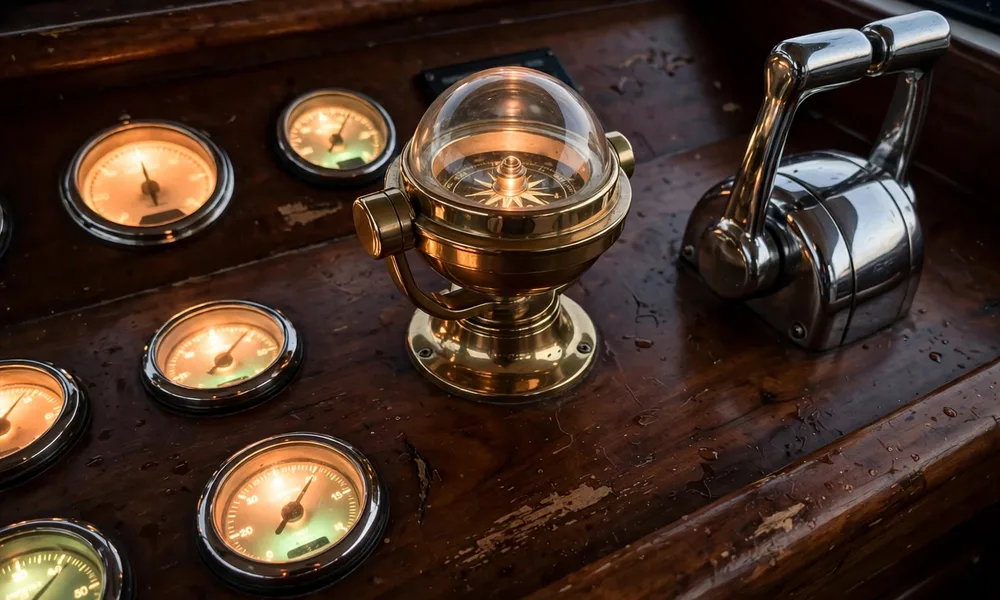
The word bridge comes from the days of paddle steamers, when the captain stood on a narrow walkway, or bridge, that crossed the ship between the two paddle boxes, because that was the only place high enough to see over them. The walkway is long gone, but the name stayed, and so did the idea: the bridge is still the highest working room on the ship, still the place where the captain stands to see. On the largest yachts the bridge still keeps one old habit, a brass compass mounted where the captain can see it without looking at a screen, because a compass needs no power, never crashes, and has been guiding ships home for a thousand years.

What the Specs Mean for You
If you ever visit a yacht bridge, stand at the helm and look forward first, because that is the view the whole room was built around, and check how much of the bow you can see without standing on tiptoe. Then look at the screens and notice how calm they are: a good bridge shows the captain exactly what matters and hides the rest, with no flashing lights and no clutter. At night, notice the darkness of the room itself, because the best bridges are kept dim on purpose, so the captain’s eyes stay ready for the black water outside.
The bridge is the working heart of the yacht, and its numbers make sense once you see what it must do: see far, steer precisely, and keep working through the night. The same thinking runs through the rest of the ship, from the way a bridge works day after day at sea, to the way a ship bridge is made into the hull, and the helm specifications that set the standard for steering. Read the figures, and the glass room at the top of the yacht stops being a mystery and starts being a very deliberate piece of design.