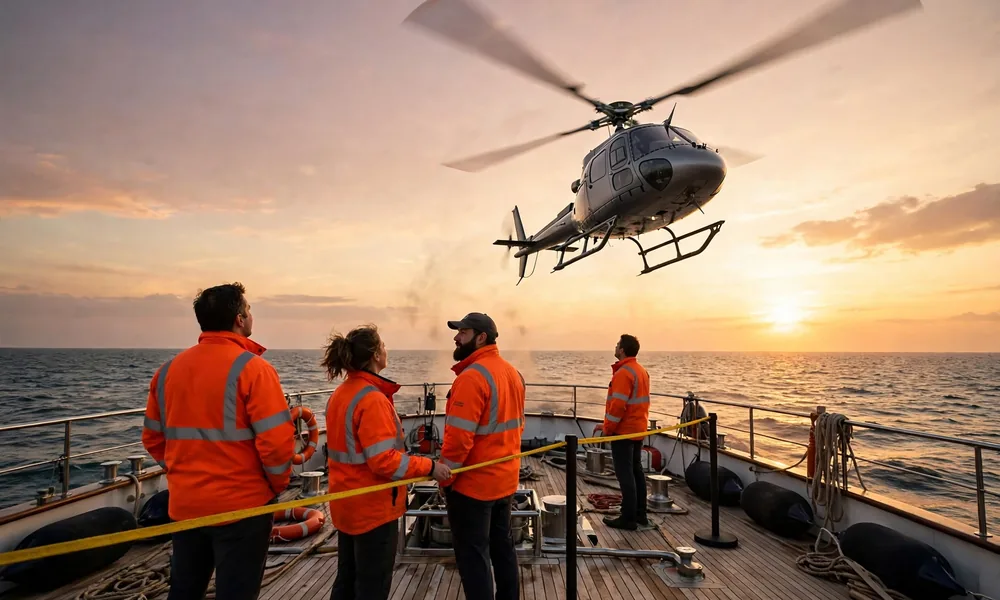
There is a particular thrill in watching a helicopter settle onto a yacht. The yacht is rolling gently, the sea is moving underneath it, and a machine the size of a small bus has to land on a circle of deck barely bigger than itself. The pilot makes it look easy, which is the whole point: the helipad is engineered so that a difficult landing feels routine.
A yacht helicopter pad spec sheet is the document that makes that possible. It lists the diameter of the landing circle, the weight the deck can carry, the strength of the tie-downs, the height of the safety net and the lights that guide the pilot in at night. Read it properly and you can tell whether a yacht is built for real helicopter operations or merely for the photograph of one. This is what each number means, and which ones matter most.

Specs Explained
The landing circle and its size
The first figure on any helipad spec sheet is the diameter of the touchdown circle, and it is set by the helicopter, not the yacht. A pad for a light helicopter needs a circle of about 13 metres across, while a pad for a medium helicopter needs closer to 18 metres, and the circle must be clear of rails, antennas and anything else the rotor blades could strike. The yacht is designed around that circle, not the other way round.
Weight limits and deck strength
Under the paint, the deck has to carry the helicopter, and the spec sheet lists the maximum take-off weight it is built for. A light helicopter weighs about 3 tonnes, a medium one about 6, and the deck is built with a safety margin above the largest machine it will ever carry, because a helicopter does not land gently every time. A hard landing can put twice the aircraft’s weight through the deck in a single instant.
The structure below the pad is part of the spec too. The deck is supported by extra beams and pillars that run down to the hull, and the sheet lists their size and spacing. On some yachts the helipad doubles as the roof of the tender garage, which means the deck below has to be strong enough for a helicopter above and a boat below at the same time.
Tie-downs and holding the aircraft still
Once the helicopter is down, it has to stay down. The spec sheet lists the number and strength of the tie-down points set into the deck, usually four or more, each rated to hold several tonnes. The helicopter is lashed to them with straps or chains, and the points are tested regularly, because a tie-down that has corroded in salt air is worse than no tie-down at all.
Safety nets and the edge of the deck
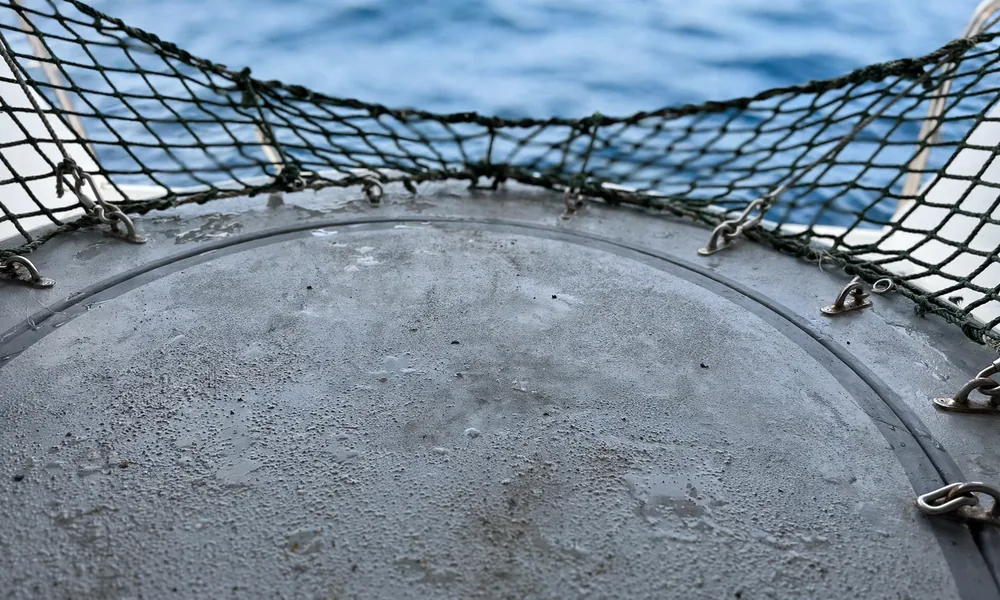
Around the edge of the pad runs a safety net, and the spec sheet lists its height, its mesh size and how far it slopes outwards. The net is there to catch a person who slips, not to stop a helicopter, and it is angled so that someone who falls lands in the net rather than on the deck or in the sea. The net must be strong enough to hold a person but light enough to be lowered when the pad is used for something else.
Many yacht helipads double as a sun deck or a party space when no helicopter is aboard, and the spec covers that too. The net folds away, the tie-down points sit flush with the deck, and the furniture comes out. A pad that cannot change roles is a pad that wastes a large part of the yacht for most of the year.
Lights, markings and night landings
A helipad that only works in daylight is only half a helipad, so the spec sheet lists the lighting in detail. The circle is ringed with green lights set flush into the deck, the approach path is marked with amber lights, and a floodlight washes the whole pad without blinding the pilot. Every light is dimmable, because a pilot’s night vision is ruined by a single light that is too bright.
The sheet also lists the wind indicator and the radio equipment, because the pilot needs to know the wind over the deck and to talk to the yacht before landing. A windsock on a yacht is a small thing, but it is mounted where the pilot can see it on approach, and its position is part of the specification.
Fire safety and fuel
The most serious numbers on the sheet are the fire safety ones. A helipad carries foam extinguishers, a fixed foam system under the deck, and a water supply rated in litres per minute, because a helicopter carries fuel and a fuel fire on a yacht deck is the emergency every crew trains for. The spec lists the capacity of the foam tanks and how fast they can be emptied.
| Item | Typical specification |
|---|---|
| Landing circle | About 13 metres for light helicopters, 18 metres for medium |
| Deck weight limit | Built for 3 to 6 tonnes, plus a safety margin for hard landings |
| Tie-down points | Four or more points, each rated for several tonnes |
| Safety net | Sloped net around the edge, sized to catch a falling person |
| Lighting | Green circle lights, amber approach lights, dimmable floods |
| Fire protection | Fixed foam system, extinguishers and a rated water supply |
| Wind indicator | Visible on approach, with radio contact to the yacht |
The figure most people misunderstand is the size of the landing circle, because a bigger circle is not always a better one. A circle built for a helicopter the yacht will never carry wastes deck space that could be a sun deck or a tender garage, and that is why the spec sheet starts with the aircraft, not the yacht, and sizes everything from there.
What One Costs
Fitting a helicopter pad to a large luxury yacht typically costs an estimated 2 to 8 million dollars, set mostly by the size of the pad, the strength of the deck below it and the fire and lighting systems around it. The steel and paint are the cheap part; the structure, the certification and the safety systems are where the money goes. The same thinking about measurements and trade-offs shapes the rest of the yacht, and the way a luxury yacht anchor’s specs are explained shows how another piece of deck gear is measured, while the way a luxury ship bridge’s specs are explained covers the room that talks the helicopter down.
A Rare Fact
The first yacht helipads were little more than a flat patch of deck with a painted circle, and pilots landed on them by eye with no lights, no nets and no fire system. The rules that now govern yacht helipads were written after a series of accidents in which helicopters slid, caught a skid on a rail or landed on a deck that could not take the weight, and every line on the modern spec sheet can be traced to a landing that went wrong.
A yacht helipad is not really about the helicopter, even though the helicopter is what lands on it. It is about the circle, the strength, the tie-downs and the fire system, and those numbers decide whether a landing is routine or a risk. The same care with a small, hard-working piece of deck runs through the whole yacht, and the way a luxury yacht tender works shows how the yacht’s other small boat earns its place on board.


