Silence used to be something you found, in a library or an empty field. Now it is something you wear. Put on a pair of modern noise-cancelling headphones on a roaring aeroplane and the engines fade to a whisper, the cabin hushes, and your music arrives as if the world had politely stepped aside. The trick is not just padding and good intentions: it is a system of microphones, chips and carefully chosen materials that listens to the noise around you and erases it with sound itself.
The idea is beautifully simple and fiendishly hard to execute. A microphone outside the earcup hears the noise coming toward you, a processor calculates the exact mirror image of that sound wave, and the driver plays the mirror image into your ear at precisely the right instant. Where the two waves meet, they cancel. The catch is timing: the anti-noise must arrive within microseconds, or it doubles the noise instead of erasing it. Every material in the headphones, from the magnets in the driver to the foam in the ear cushion, exists to buy those microseconds and protect them.
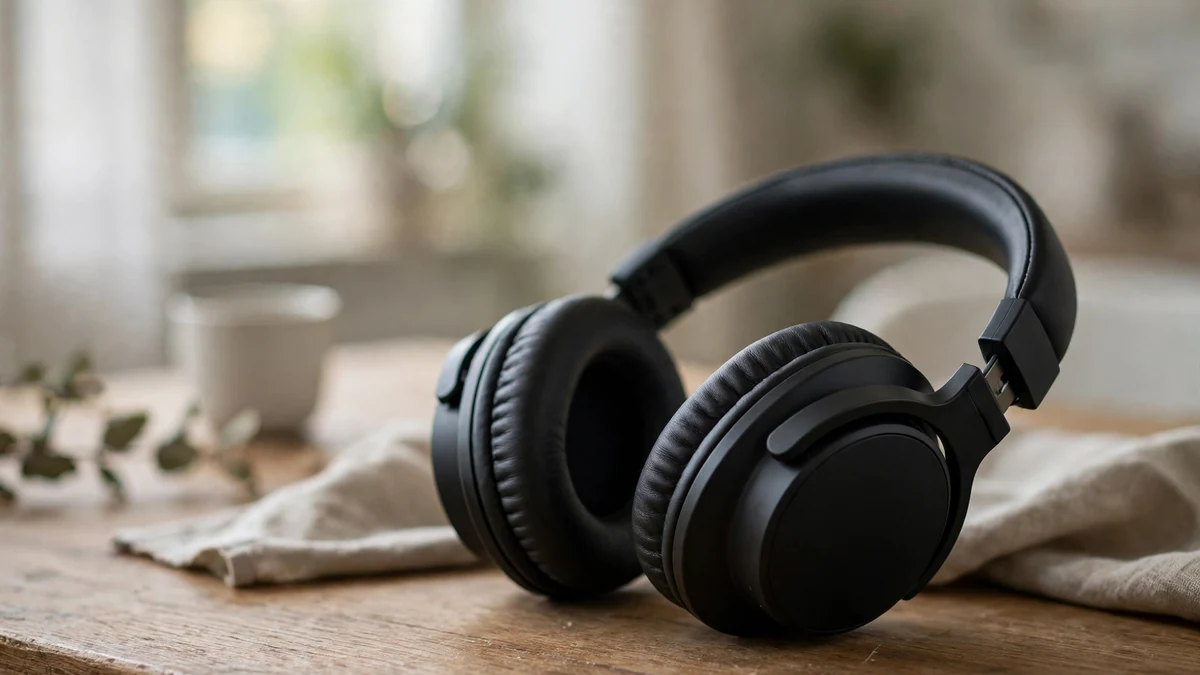
The Materials Behind the Headphones
The heart of the system is the driver, a miniature loudspeaker built around a diaphragm of beryllium-coated polymer, biocellulose or titanium, materials chosen because they are stiff enough to move as one piece yet light enough to stop instantly. Behind the diaphragm sits a neodymium magnet and a copper voice coil, the same pairing that drives tiny motors elsewhere in your gadgets. Around the driver, the earcup is a carefully tuned acoustic chamber, moulded from ABS plastic or aluminium, with vents and meshes that shape the airflow like the body of a musical instrument.
The microphones are MEMS devices, tiny silicon chips with a vibrating membrane etched into them, smaller than a grain of sand. Several sit on each earcup: feedforward microphones outside to hear the noise early, feedback microphones inside to check what actually reaches your ear, and voice microphones for calls. Their signals feed a dedicated noise-cancelling processor, a chip that runs its calculations thousands of times a second. The wireless link that carries your music is a Bluetooth system-on-chip, a piece of silicon engineering in the same world as the modem chips inside a 5G phone, while the driver itself shares its DNA with the miniature speakers in how a wireless earbuds driver is made.
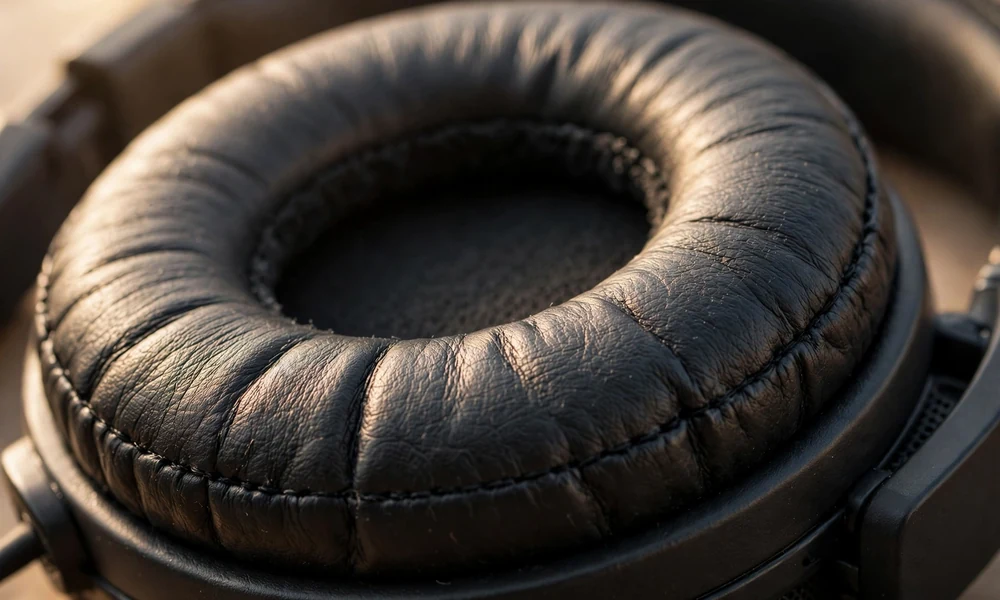
Then there is the passive half of the silence, the materials that block sound before the electronics ever get involved. The ear cushions are made of memory foam wrapped in protein leather or fabric, moulded to seal gently against the head without pressing hard enough to hurt. The foam is a viscoelastic polyurethane that softens with body heat and moulds itself to the shape of your ear, closing the tiny gaps where bass-heavy noise leaks in. Inside the cup, layers of acoustic felt and damping foam absorb reflections, so the sound that reaches you is clean rather than echoing around a plastic shell.
How They Are Made
A noise-cancelling headphone is assembled from hundreds of parts across several factories, then tuned like an instrument before it ships. The build runs through six main steps.
- Mould the earcups. ABS or aluminium housings are injection-moulded or machined, with acoustic vents and microphone ports formed to sub-millimetre tolerances.
- Build the drivers. Diaphragms are coated or grown, voice coils wound from copper wire, and magnets fitted, then each driver is tested for frequency response on a measurement rig.
- Mount the MEMS microphones. Silicon microphone chips are soldered onto flexible circuits and sealed into the earcup with acoustic mesh that keeps out dust while letting sound through.
- Fit the electronics. The noise-cancelling processor, Bluetooth chip, battery and buttons are mounted on a small circuit board and wired to the drivers and microphones.
- Attach the cushions. Memory foam is cut, wrapped in leather or fabric, and clipped onto the earcups, forming the seal that makes the passive isolation work.
- Tune and test. Each finished headphone is placed on an artificial ear in a soundproof chamber, played a sweep of test tones and noise, and its cancellation curve is measured and tuned in software.

Why These Materials Win
Beryllium and biocellulose win as diaphragm materials because their stiffness-to-weight ratio is extraordinary: the diaphragm moves as a single rigid piston instead of flexing and distorting the sound, and it stops the instant the signal stops. Neodymium wins again for the magnet, because a strong field means a powerful driver in a small cup. Memory foam wins for the cushions because it seals better than any rigid material and adapts to every head shape, and it is the passive seal that does the heavy lifting against high-frequency noise the electronics cannot cancel.
The failures are easy to hear. A cushion that hardens with age lets noise leak in around the edges, and no amount of processing can fix a broken seal. A microphone clogged with dust hears a muffled world and cancels the wrong sound. A driver whose diaphragm has warped plays a distorted mirror image that adds noise instead of removing it. That is why premium headphones are designed to be serviced, with replaceable cushions and cleanable microphone meshes, and why the frame materials matter too: the headband and yokes carry constant stress, and the metals chosen for them borrow from the same playbook as the titanium frame of a modern smartphone, where strength must come without weight.
Specifications
| Specification | Detail |
|---|---|
| Driver size | Typically 30 to 40 millimetres |
| Diaphragm | Beryllium-coated polymer, biocellulose or titanium |
| Magnet | Neodymium with copper voice coil |
| Microphones | Several MEMS microphones per earcup |
| Ear cushions | Viscoelastic memory foam in protein leather |
| Housing | ABS plastic or aluminium earcups |
| Noise reduction | Up to about 30 decibels of active cancellation |
| Battery life | Typically 30 hours or more with cancellation on |
Price
Flagship noise-cancelling headphones are a premium purchase, and the price reflects the precision inside them. Sony’s WH-1000XM5 launched at $399 and Apple’s AirPods Max at $549, and those prices buy not just drivers and foam but the years of acoustic research behind the cancellation algorithms. Replacement ear cushions, the part that wears out first, typically cost $20 to $40 a pair (estimate), and a worn cushion is the cheapest upgrade a headphone owner can make, restoring both comfort and silence in minutes. The electronics rarely fail; the foam almost always gives up first.
Rare Fact
Active noise cancellation works best on low, steady sounds like aeroplane engines and air conditioning, and far less well on sudden sounds like a slamming door, because the system needs a fraction of a millisecond to hear the noise, calculate its mirror image and play it back. The most advanced headphones now use artificial intelligence to recognise the type of noise and adjust their strategy in real time, and some can even let chosen sounds through, like a voice announcing your flight, while keeping everything else silent. The first noise-cancelling headphones were built for pilots in the 1970s, and the technology took nearly fifty years to shrink from a cockpit headset into something you can fold into a pocket.
That is the achievement of the noise-cancelling headphone: a machine that listens to the world faster than you can, and answers it with silence. It is built from magnets and foam, silicon and leather, and a piece of mathematics running thousands of times a second, all wrapped around your ears so that the loudest places on Earth can feel as quiet as an empty room.


