Imagine waking in a steel tube hundreds of metres below the surface, the lights out, the boat silent, and the only way out a round hatch above your head. That hatch is the submarine escape hatch, and it is one of the most serious pieces of engineering on the boat. It is designed for a moment every submariner trains for and hopes never comes: the moment the submarine cannot surface, and the crew must leave through the sea itself.

How a Submarine Escape Hatch Works
A submarine escape hatch is a pressure-tight door in the top of the hull that lets crew members leave a disabled submarine and rise to the surface. It sits above a small chamber called an escape trunk, which can be flooded and opened to the sea while the rest of the submarine stays dry. The hatch must seal perfectly against enormous water pressure, open reliably after months underwater, and be simple enough to operate in the dark, in the cold and in fear.
Step 1: The crew reaches the escape trunk
Escape begins in the trunk, a narrow vertical chamber with a ladder and room for one or two people at a time. The crew member climbs in wearing a survival suit, which gives buoyancy and air, and the lower hatch beneath them is closed and sealed. The trunk is the airlock of the submarine: it is the only space that can be opened to the sea without flooding the boat. Every submariner learns the route to the trunk blindfolded, because in a real emergency the boat may be dark, tilted and full of smoke.
Step 2: The lower hatch seals the boat
Before anything can flood, the lower hatch must be shut tight. It is a round steel door with a wheel handle driving locking dogs — heavy lugs that swing out and clamp the hatch against its seat — and a rubber seal that compresses to keep water out. The pressure hull of a submarine is built to resist the crushing force of the deep, and the hatch is part of it: it must be as strong as the steel around it. The crew checks the seal by feel and by sight, because a leak here would flood the compartment below.
Step 3: The trunk floods in a controlled way
With the lower hatch sealed, the crew opens a small flood valve and lets seawater into the trunk. The water rises slowly around them, compressing the air in the trunk until the pressure inside matches the sea outside. This is the delicate part: the flooding must be slow enough for the crew to equalise pressure in their ears and lungs, and the valve gives them control over the rate. The trunk is deliberately small, so it floods quickly, but the crew still has time to breathe, check their equipment and prepare to leave.
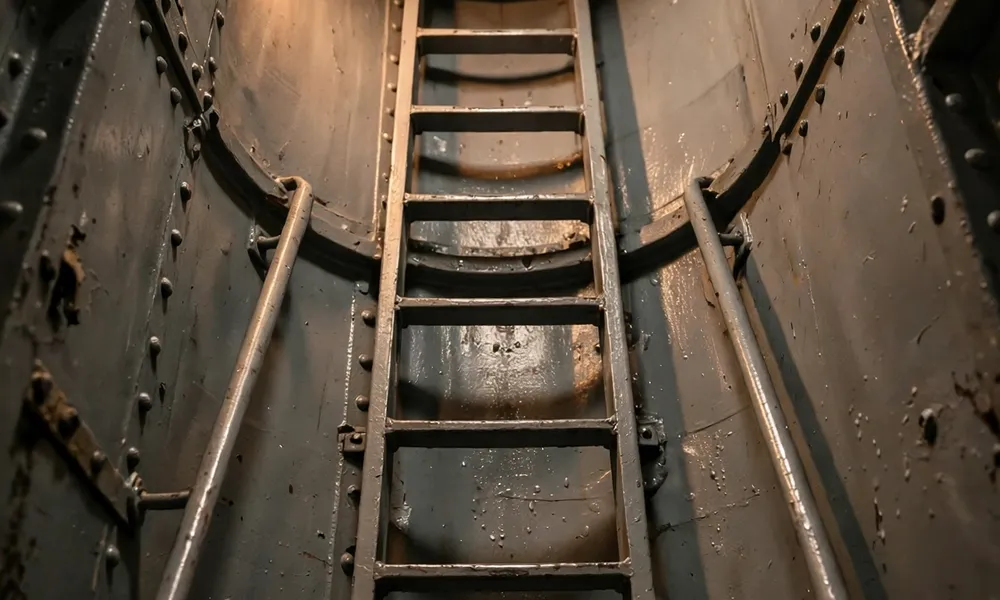
Step 4: The upper hatch opens to the sea
Once the pressure inside and outside the trunk is equal, the upper hatch can be opened. Its wheel handle turns freely now, because the water pressure that held it shut from outside is balanced by the pressure inside. The hatch swings upward and out, and the sea is suddenly above the crew member’s head. The hatch is hinged and weighted so it stays open while the crew leaves, and its seal is designed to survive hundreds of openings in training without losing its ability to hold back the ocean.
Step 5: The crew rises, one at a time
Escape is a slow, disciplined climb. The crew member pulls themselves out of the hatch and rises toward the surface, breathing out steadily, because the air in their lungs expands as the pressure falls and holding their breath would cause serious injury. The survival suit gives buoyancy and protects against the cold, and the crew are trained to rise at a controlled rate rather than racing for the surface. The ballast tanks of a submarine let a healthy boat rise on its own, but the escape hatch exists for the day the boat cannot, when the crew must make the journey themselves, one at a time.
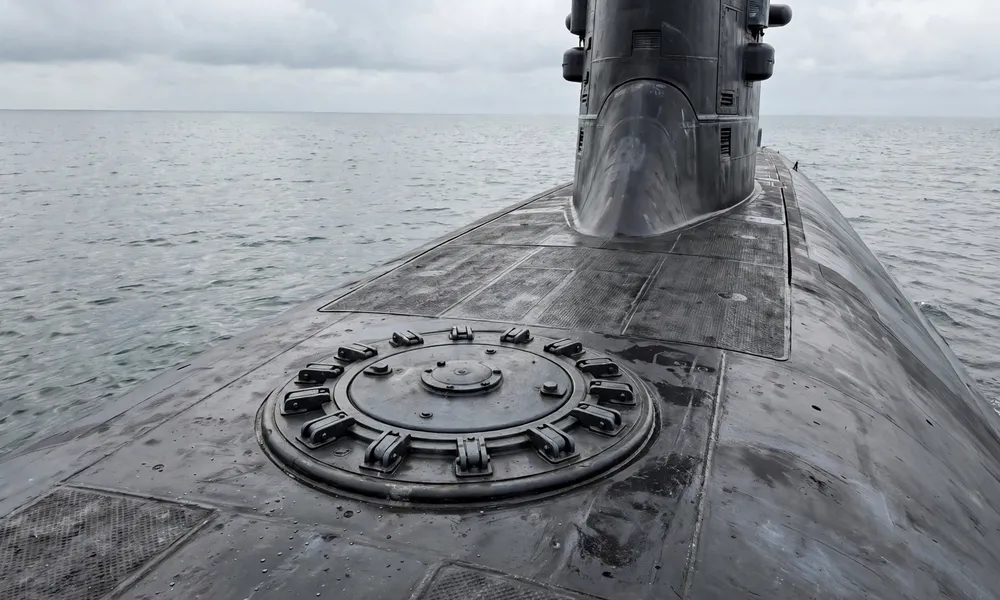
Step 6: The hatch closes and the trunk drains
After each person leaves, the upper hatch closes and the trunk drains so the next person can enter. A pump pushes the water out, the lower hatch opens, and the next crew member climbs in. It is slow work — a whole crew can take a long time to escape this way — but it is reliable, and reliability is what matters when there is no other way out. The hatch mechanism is kept simple on purpose, with no electronics that could fail, because the trunk must work after a fire, a flood or a power failure.
Step 7: Rescue and the surface wait above
The escape does not end at the surface. The crew member arrives wearing a bright survival suit, often with a light and a beacon, and waits for rescue boats or helicopters that have been alerted by the submarine’s distress signals. Modern navies also use rescue submersibles that dock onto the escape hatch from outside, so the crew can transfer into a rescue vessel without entering the water. The periscope of a submarine is the boat’s eye above the surface; the escape hatch is its last door, and both are maintained with the same care, because either may one day be the difference between life and death.
| Specification | Typical value |
|---|---|
| Location | Top of the hull, above the escape trunk |
| Hatch diameter | About 60 to 70 centimetres |
| Operation | Hand wheel driving locking dogs |
| Seal | Compressed rubber ring against a steel seat |
| Trunk capacity | One or two people at a time |
| Escape depth | Over 100 metres in many navies |
| Materials | High-strength steel, corrosion-resistant fittings |
Price is rarely discussed, because an escape hatch is not sold separately: it is part of a submarine that costs hundreds of millions or billions of dollars. Estimates put a single escape trunk and hatch assembly, with valves, seals and fittings, at roughly 500,000 to 2 million US dollars, depending on the boat’s size and depth rating. Those are estimates, not list prices. The cost is trivial beside the value of the lives it protects, which is why no navy builds a submarine without one, and why the hatch is inspected and tested more often than almost any other fitting on the boat.
A rare fact: submariners train for escape in a tower filled with water, climbing out of a mock trunk and rising to the surface again and again until the slow, steady breathing becomes automatic. The training is deliberately unglamorous — a wet, cold, repetitive climb — because the real thing is worse in every way, and only habit carries a person through it. The hatch itself is simple; the hard part is the person using it.
The submarine escape hatch works because it is an airlock in its purest form: a small chamber, two hatches, and a valve that lets the sea in slowly enough for a human to survive it. It has no engine, no computer and no power supply, and that is its strength. When everything else on the boat has failed, the hatch still works, because it was designed to be the last thing that needs to work.


