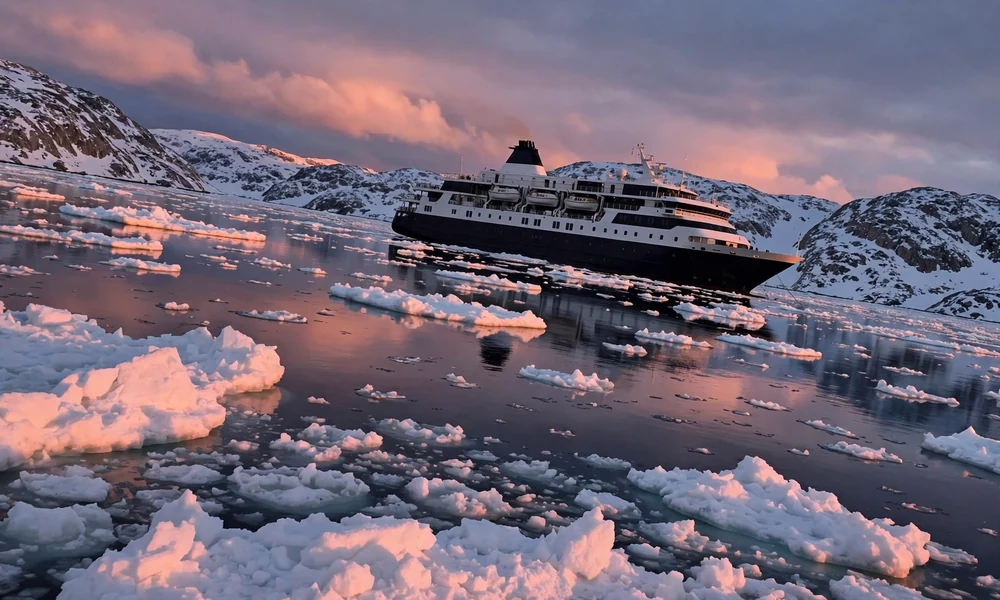
The ship stopped just short of the ice, and for a moment nobody on deck said anything. A wall of white rose out of grey water, gulls crying somewhere above it, and the expedition leader pointed at a crack in the floe where a seal had hauled itself out to sleep. Then the bow nudged forward and the ice parted with a slow grinding sound.
A polar cruise ship is not a floating hotel that happens to sail south. It is built to keep hundreds of people safe in waters where rescue is days away. Its specification sheet is the difference between a voyage and a rescue, and it is full of numbers that casual cruisers never think to ask about: ice class, gross tonnage, passenger capacity, fuel range, lifeboat capacity, and the number of expedition boats on board. This guide explains what those numbers mean, in plain language, so you can judge a polar ship before you book a berth on it.

The Specs That Decide What a Polar Cruise Ship Can Do
Start with ice class, because it decides where the ship is allowed to go. Ice class is a rating given by a classification society, and it describes how thick the ice is that a hull can safely push through. A PC6 ship handles medium first-year ice, covering most Antarctic Peninsula voyages, while PC5 handles thicker ice and a longer season. Ships with no polar ice class at all should not be anywhere near the ice, and any brochure that talks about polar cruising without naming the ice class is hiding the most important number on the sheet.
Gross tonnage comes next, and it is widely misunderstood. It is not a weight at all, but a measure of the ship’s internal volume, and it tells you how much space the vessel has for cabins, restaurants, lounges, and expedition equipment. A polar ship of around 10,000 gross tons is small by cruise standards, carrying perhaps 150 to 200 passengers, and it can slip into narrow bays that a big ship cannot enter. A 25,000-ton ship carries 400 or more passengers but cannot reach the smallest anchorages. Smaller is often better in polar waters, where the best landings happen in places a big ship cannot reach.
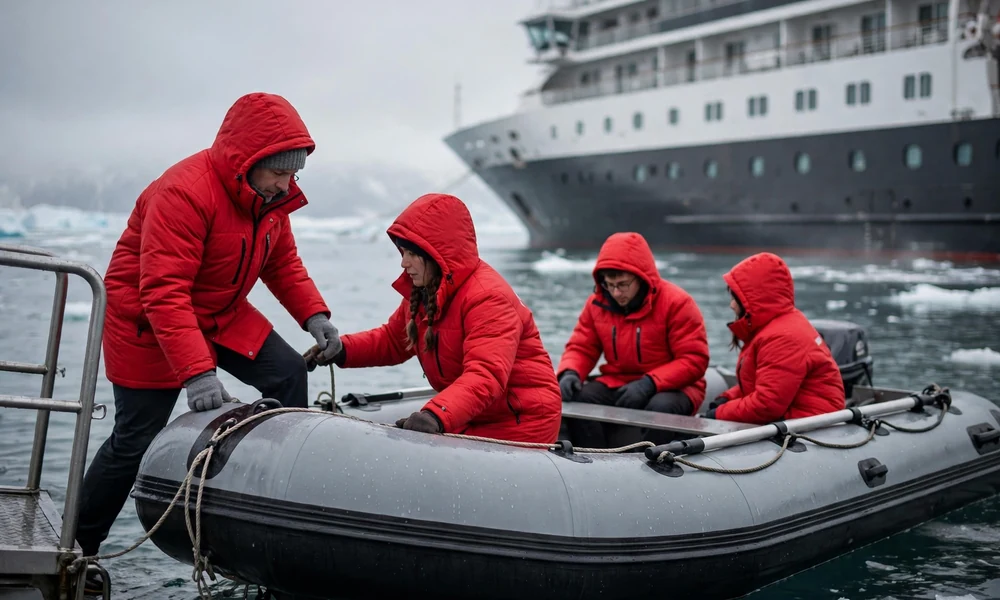
Passenger capacity matters more in the polar regions than anywhere else, because landing rules limit how many people can go ashore at once. In Antarctica, no more than 100 people may land at a single site at one time, so a ship carrying 200 passengers rotates two landing groups, while a ship carrying 500 needs five rotations and far more time. A smaller passenger count means more time ashore and less time waiting on board. It also means the ship’s Zodiacs can launch quickly; a good ship has one per eight to ten passengers.
Fuel range and endurance decide how far the ship can wander from port. A polar voyage can last three weeks without a refuelling stop, and the ship needs enough fuel for the journey, plus a reserve for bad weather and detours around heavy ice. The spec sheet should state the range in nautical miles at cruising speed, and a figure of 8,000 nautical miles or more is a healthy margin for an Antarctic voyage. Endurance also covers fresh water, which the ship makes from seawater.
Lifeboat and survival capacity is the number nobody wants to think about, and it is the one that matters most. A polar ship must carry survival craft for every person on board, plus a margin, and in polar waters the lifeboats themselves must be enclosed and heated. The spec sheet will state the total lifeboat capacity, and it should exceed the combined number of passengers and crew. Also check the crew count: a ratio near one crew member per passenger covers landings and emergencies together. The best cruise ship suites are comfortable, but in polar waters the safety numbers matter far more than the size of the balcony.
Finally, look at the propulsion and the stabilisers. Many modern polar ships use diesel-electric propulsion with azimuth thrusters, pods that can rotate to push the ship in any direction, which makes manoeuvring among ice floes far easier than a fixed propeller and rudder. A polar ship should also have an ice-strengthened bow and a dedicated ice pilot on board.
How to Read the Spec Sheet in Seven Steps
Step one is to find the ice class and write it down. If the ship has no ice class, or the brochure does not name one, treat that as a warning and look at another ship.
Step two is to check the gross tonnage and the passenger count together. Divide tonnage by passengers: a higher number means more space per person.
Step three is to count the expedition boats. Look for at least one Zodiac per ten passengers, and check how many guests each boat carries.
Step four is to read the fuel range and the voyage length side by side. The range should exceed the planned distance by a comfortable margin.
Step five is to check the lifeboat capacity against the total souls on board. The number should exceed passengers plus crew, and the lifeboats should be enclosed and suitable for polar conditions.
Step six is to look at the propulsion system. Diesel-electric power with azimuth thrusters is the modern standard for polar ships, and it gives the captain far more control among the ice than a conventional shaft and rudder.
Step seven is to ask about the expedition team. The best cruise ship restaurants matter less here than the quality of the guides, so ask how many expedition staff sail with the ship.
Polar Cruise Ship Specs at a Glance
| Specification | Typical Range | What It Decides |
|---|---|---|
| Ice class | PC5 to PC6 | Where the ship may safely sail |
| Gross tonnage | 8,000 to 25,000 | Space and comfort on board |
| Passengers | 150 to 500 | Time ashore per landing |
| Crew | 100 to 300 | Service and emergency cover |
| Expedition boats | 10 to 20 Zodiacs | Speed of landings |
| Fuel range | 8,000 to 12,000 nautical miles | Distance without refuelling |
| Cruising speed | 13 to 16 knots | Time between landing sites |
| Lifeboat capacity | 110 percent of souls on board | Safety margin in an emergency |
What a Polar Cruise Costs
Polar voyages are expensive, and every figure here is an estimate. A ten-day Antarctic Peninsula voyage on a small expedition ship typically costs an estimated $10,000 to $18,000 per person in a standard cabin, while a suite on a luxury polar ship can cost an estimated $25,000 to $45,000 per person. Longer voyages to the Ross Sea or the North Pole cost far more, with estimated prices from $30,000 to $70,000 per person. The price usually includes parkas, landings, and expedition staff. When you compare ships, remember that the cheapest berth on a big ship can mean the least time ashore, and the best luxury submarine experiences now offered on some polar ships show how far operators will go to justify the premium.
A Rare Fact Worth Knowing
The first purpose-built polar cruise ships were converted research vessels, and some of them are still sailing today. One of the most famous, a former Soviet ice-strengthened research ship, carried the first commercial tourists to the North Pole in 1991 and went on to make dozens of polar voyages. A few of the newest polar ships even carry small submarines and helicopters.