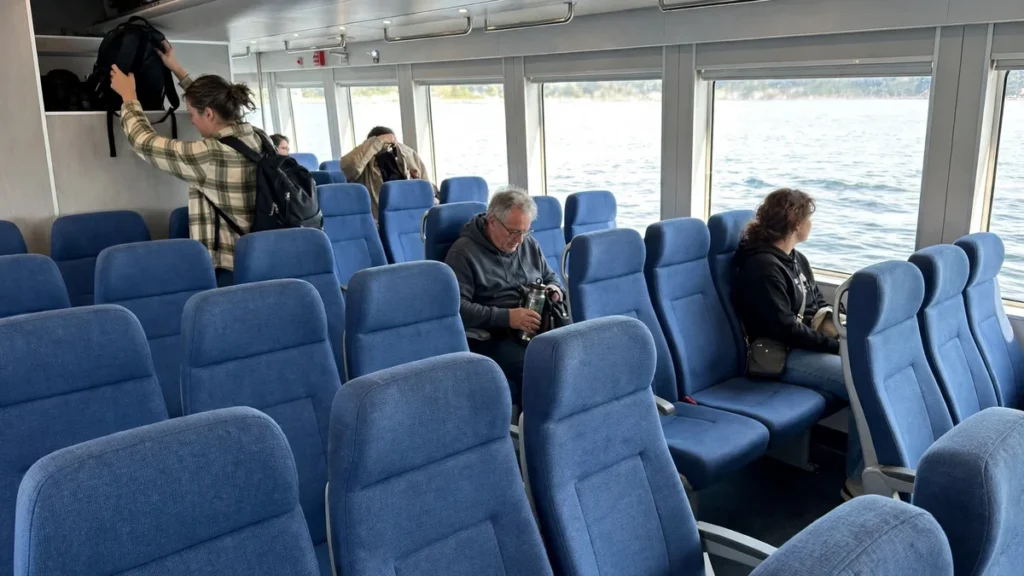
An electric ferry is quiet, and that quiet changes the passenger cabin completely. There is no diesel rumble under the floor, no vibration in the seats, and no exhaust smell at the stern. Designers can put the cabin where it suits passengers rather than where it hides the engine, and they can use bigger windows, lighter materials, and open layouts that would never work on a noisy diesel boat. The result is a new kind of ferry interior: brighter, calmer, and closer to a modern train than a traditional ship.
This ranking looks at eight electric ferries and judges their interiors on seating comfort, views, layout, accessibility, and how well the design uses the silence. A good electric ferry interior is not just a handsome room. It is one where a commuter can work, a family can sit together, and a passenger with limited mobility can move around easily, all while the boat glides quietly across the water.

1. Incat Hull 096 — the most ambitious electric ferry interior
The Incat Hull 096, the world’s largest battery-electric ship, takes the top place for sheer ambition. The Tasmanian-built ferry carries more than 2,000 passengers, and its interior is planned on the scale of a cruise ship: multiple lounges, a large main cabin with panoramic windows, restaurants, and open deck spaces. The layout separates quiet zones from family areas, and the seating is arranged so most passengers get a view.
2. Ellen E-ferry — the calmest passenger cabin
The Ellen, the Danish E-ferry that runs between the islands of Als and Ærø, earns second place for the calmest cabin on this list. The interior is simple and Scandinavian: light wood, pale fabrics, and wide windows that keep the sea in view from every seat. The seating is arranged in small groups rather than long rows, so families and friends can sit together, and there is a quiet lounge area for passengers who want to read. The ferry is fully electric, so the cabin stays silent throughout the crossing, and the lack of vibration makes the whole journey feel smoother. It is not the biggest or the flashiest interior here, but it is the most relaxing.
3. Ampere — the most practical car ferry interior
The Ampere, the world’s first fully electric car ferry, takes third place as the most practical car ferry interior. The Norwegian ferry carries 120 cars and 360 passengers, and its cabin is built for short crossings that people make every day. The seating is comfortable and durable, the windows are large, and the layout keeps the passenger areas separate from the car deck so the cabin stays clean and quiet. There is a small café area and good space for prams and luggage. The Ampere proved that an electric ferry could handle a busy commuter route, and its interior shows the same practical thinking: everything is where it should be, and nothing is wasted.
4. Medstraum — the brightest commuter cabin
Medstraum, the Norwegian electric fast ferry, earns fourth place for the brightest commuter cabin here. The interior is a single light-filled space with high windows, pale surfaces, and seating arranged to face forward, which suits the fast crossing and keeps motion sickness down. The seats are comfortable for the short journey, with good legroom and space for bags, and the cabin is easy to move through at both ends, which matters when the ferry turns around quickly. The fast ferry runs quietly at speed, and the cabin reflects that: it feels more like a modern train carriage than a boat, and regular passengers treat it that way.
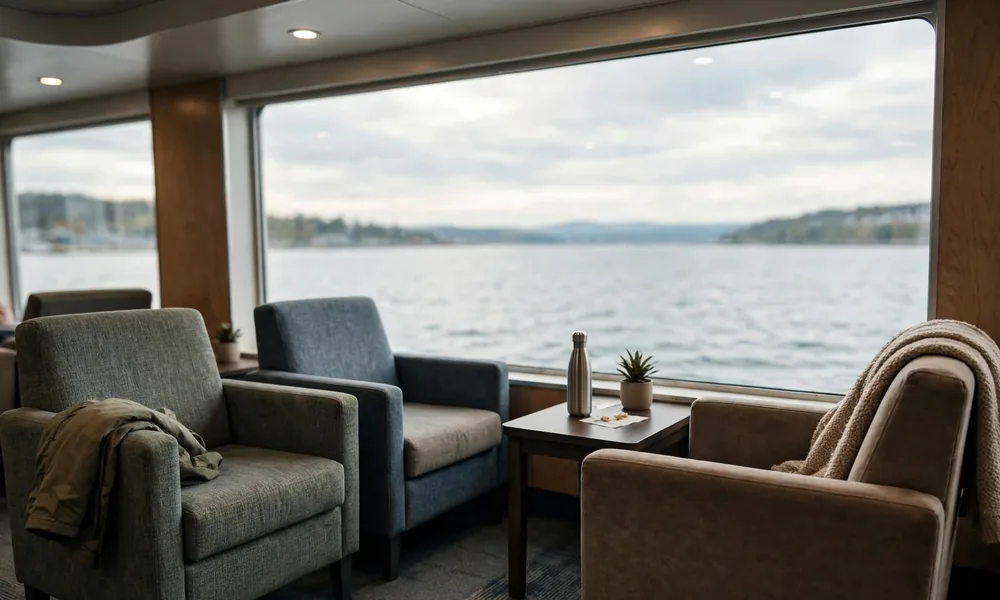
5. Candela P-12 — the smartest small ferry interior
The Candela P-12 takes fifth place as the smartest small ferry interior on this list. The foiling electric ferry carries thirty passengers in a single cabin with rows of comfortable seats, wide windows, and a low floor that makes boarding easy for everyone. The cabin is bright and plain, with durable fabrics and clear signage, and the foiling system keeps the ride level so passengers can read or work without being thrown around. The P-12 is designed for city waterways, where the ferry is part of the public transport network, and its interior shows that thinking: it is clean, accessible, and easy to use without instruction. It is the smallest cabin here, but also one of the most considered.
6. Tycho Brahe — the most comfortable converted ferry interior
Tycho Brahe, one of the battery ferries running between Helsingør and Helsingborg, earns sixth place as the most comfortable converted ferry interior. The ferry was converted from diesel to battery power, and its passenger areas were refreshed at the same time, with new seating, better lighting, and large windows along the sides. The cabin has several distinct areas: a main seating hall, a quieter lounge, and a café space, so passengers can choose how they travel. The crossing is short, but the interior makes it pleasant, and the conversion shows that an older ferry can gain a modern electric interior without being rebuilt from scratch.
7. Vision of the Fjords — the most scenic ferry interior
Vision of the Fjords, the hybrid-electric sightseeing ferry in Norway, takes seventh place for the most scenic interior on this list. The vessel was designed around its windows: the main cabin has panoramic glass on both sides, and the upper deck offers open-air viewing of the fjords. The interior is warm and simple, with wood panelling and comfortable seating arranged to face the scenery rather than the aisle. The ferry runs silently on electric power through the most sensitive parts of the fjord, so passengers can hear the waterfalls and the birds. It is a sightseeing boat first and a commuter second, and its interior is built entirely around the view.
8. Maid of the Mist — the most practical tour boat interior
Maid of the Mist closes the list with the most practical tour boat interior here. The famous Niagara Falls tour boats, the James V. Glynn and the Nikola Tesla, are fully electric, and their passenger areas are built for the job: open decks with good sightlines, sheltered lower cabins, and plenty of standing room for passengers in ponchos. The interior is tough and simple, with non-slip floors, clear walkways, and seating for those who want it. The boats run quietly up to the falls, which lets passengers hear the water properly for the first time. It is not a luxury cabin, but it is an honest one, and it proves electric power works for the hardest daily duty on the water.
The Takeaway
The best electric ferry interiors share one idea: the quiet drive lets the cabin open up to the water. The Incat Hull 096 leads on scale and ambition, the Ellen follows on calm, and the Ampere proves the concept works on a busy daily route. Whether the boat carries thirty passengers or two thousand, the winners give most seats a view, keep the layout simple, and let the silence do the work. The brands behind these boats are covered in our ranking of the best electric ferry brands ranked, and the batteries that power them in our guide to how electric ferry battery swapping works. For the smaller end of electric passenger travel, see our case for smaller electric ferries.