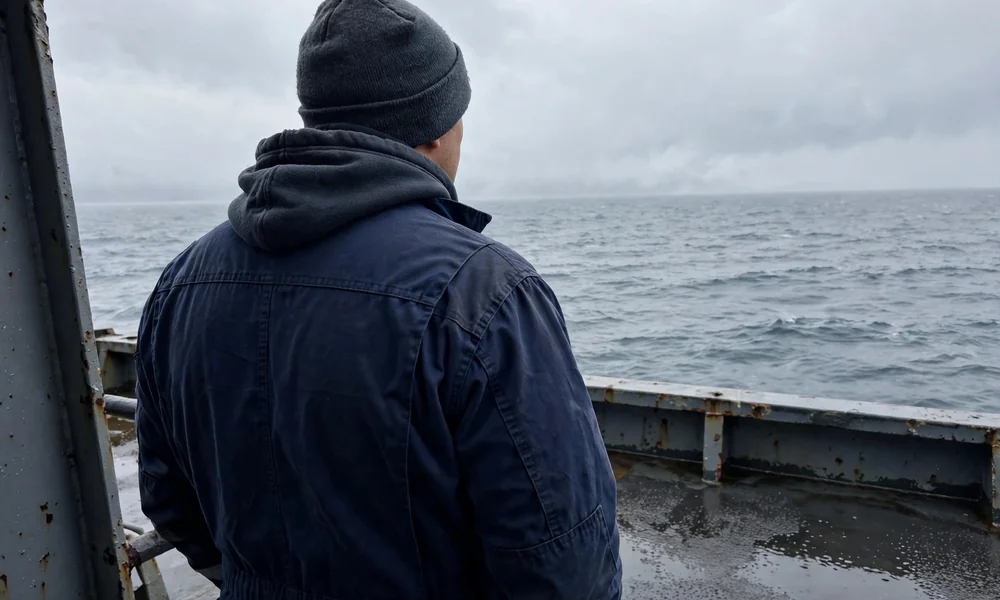
The ship of the future, we are told, will have no crew. It will cross oceans guided by sensors, steered by software, and watched from a control room hundreds of miles away. It will never get tired, never make a mistake, and never ask for a wage. It sounds like progress, and it is presented as inevitable.
This is the case against autonomous ships: not against automation, which has already made ships safer, but against the idea of removing the crew entirely and trusting a vessel to look after itself.

The Sea Does Not Follow a Script
A ship at sea faces conditions no road vehicle ever will. Weather changes in hours, waves arrive from directions no forecast predicted, and a floating object, a fishing boat, or a patch of ice can appear where nothing was expected. A human crew reads those signs together: the feel of the ship, the colour of the sky, the sound of the wind, the behaviour of other vessels. Software reads its sensors, and its sensors only tell it what they were designed to measure.
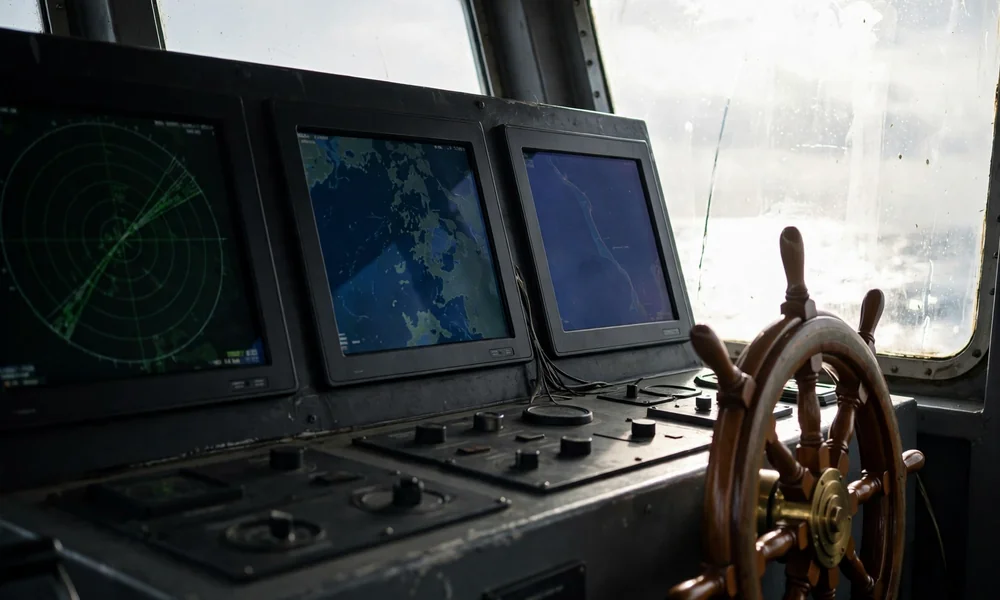
Automation is excellent at the routine, and the routine is most of a voyage. But a ship is judged not by its routine days but by its worst day, and on its worst day it needs people aboard. The bridge, where that judgement is exercised, is described in how a ship bridge works, where the instruments, the watchkeeping, and the decisions of the crew are shown working together rather than apart.
When Nobody Is There, Nobody Is Responsible
Responsibility is the question the crewless ship cannot answer. When a crewed ship has an accident, there is a captain, an owner, and a chain of decisions that can be examined. When a crewless ship has an accident, the chain dissolves into software, suppliers, and remote operators, each of whom can point at someone else. The law of the sea, built over centuries around the idea that a master is responsible for their vessel, has no clear place for a ship with no master.
That matters in practice, not just in theory. A ship that collides with another vessel, runs aground, or spills its cargo needs someone who can act immediately: to assess the damage, to call for help, to protect the crew of the other vessel, and to take the decisions that limit the harm. A remote operator, watching through cameras and sensors with a delay, cannot do that with the same speed or certainty as a person standing on the bridge.
There is also the duty to help others at sea. Ships are expected to go to the aid of vessels in distress, to take aboard survivors, and to respond to emergencies they did not cause. A crewless ship cannot take survivors aboard, cannot treat the injured, and cannot do the human work that the sea demands of every vessel that sails it. A ship that cannot help is a ship that has broken one of the oldest rules of the sea.
Machines Break, and the Sea Is Where They Break
Ships are machines that work in the hardest environment on earth. Salt water corrodes, vibration loosens, heat builds up, and parts that worked perfectly in port fail at sea. On a crewed ship, that is a daily reality: engineers inspect, repair, and improvise, keeping the vessel running with the tools and spares they have aboard. On a crewless ship, a failure that a person could fix in an hour becomes a crisis that no one can reach.
Sensors fail too. Radar, cameras, and satellite links are all affected by spray, fog, heavy rain, and rough weather, which are exactly the conditions in which a ship most needs to see clearly. A human lookout, standing on a bridge with eyes and ears, can still function when a camera is blinded by spray. The way radar and other sensors support that lookout is explained in how ship radar works, where the instruments are shown as aids to a watchkeeper, not as a replacement for one.
The Risks That Come With Remote Control
A crewless ship is a ship that depends on a connection to shore, and that connection is a vulnerability. Satellite links can be interrupted, signals can be jammed, and software can be attacked. A vessel that cannot be steered without its link is a vessel that can be stopped, misdirected, or held to ransom by anyone who can interfere with that link, and the sea offers no easy way to regain control.
Seamanship Is Knowledge, and It Is Being Lost
There is a longer argument against the crewless ship, and it is about knowledge. Seamanship is not a set of procedures. It is a body of practical knowledge built up over years at sea: how a ship behaves in a following sea, how a harbour current runs on a spring tide, how to read a sky that looks wrong. That knowledge lives in people, and it is passed from one generation of sailors to the next by working alongside them.
Remove the crew and that chain breaks. The people who know how ships actually behave at sea will stop going to sea, and the people who design the software will have no one left to learn from. The industry will be left with systems built on models of the sea rather than experience of it, and the gap between the model and the reality will only become visible when something goes wrong.
The Counter-Case: Human Error Is Real Too
The honest counter-case is that human beings make mistakes, and at sea those mistakes can be catastrophic. Fatigue, distraction, and poor judgement have caused collisions, groundings, and losses that a tireless automated system might have avoided. A ship that never sleeps, never drinks, and never loses concentration is, on paper, a safer ship than one crewed by tired people working long watches.
Automation as an aid is also worth defending. Systems that keep a lookout, warn of a collision, or hold a course are already making crewed ships safer, and more of them would be welcome. The docking systems that help a yacht berth without drama show what that aid can look like, and how autonomous yacht docking works is a good example of automation doing a narrow job well, under the eye of a person who can take over. The mistake is to take that success and conclude that the person can be removed altogether.
Verdict: Automate the Ship, Keep the Crew
The autonomous ship, as a vessel with no crew at all, is an idea whose time has not come, and may never come. The sea is too unpredictable, the machinery too liable to fail, the responsibility too hard to assign, and the risks of remote control too serious to entrust a ship entirely to software. A crewless ship does not remove the dangers of the sea. It removes the people who deal with them.
The better future is a crewed ship with better automation: sensors that watch when the crew is tired, systems that warn before a mistake becomes an accident, and machinery that handles the routine so the crew can focus on the judgement that only people can provide. The crew is not the problem the autonomous ship solves. The crew is the reason ships survive their worst days, and that is a reason to keep them aboard.