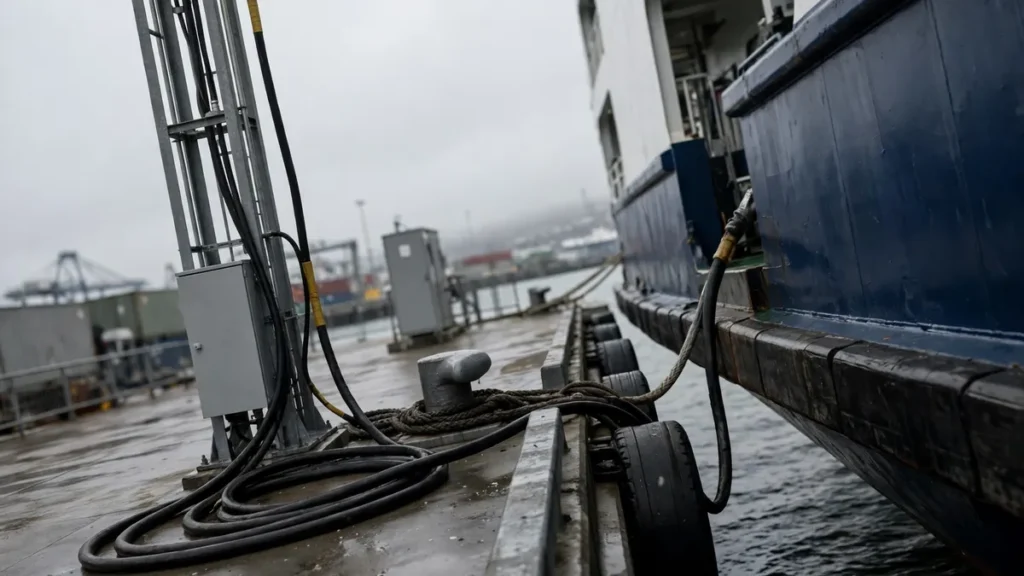
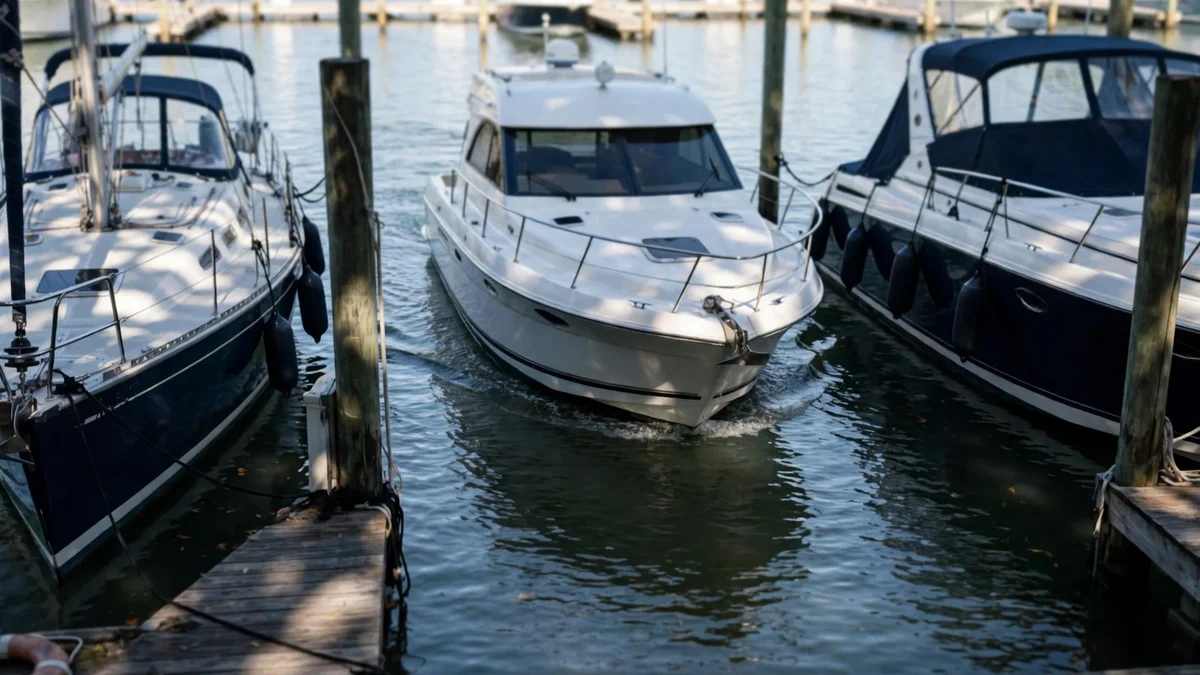
Docking is the moment every boater dreads. The wind is pushing the bow sideways, the current is doing something else entirely, the berth looks half the size it did from the fairway, and an audience of other boaters is watching from the dock. It is the one manoeuvre where a small mistake becomes a loud crunch and a repair bill. Autonomous docking exists to take that moment away — to let the yacht park itself, slowly and precisely, while the crew stands by and watches.
An autonomous docking system is not a single gadget. It is a combination of cameras, GPS, wind sensors and software that builds a live three-dimensional map of the marina, plans a path into the chosen berth, and then drives the throttles, steering and thrusters itself to follow that path. The captain still chooses the berth and can take over at any moment, but the actual manoeuvre — the corrections, the sideways slides, the final gentle touch against the fenders — is done by the computer.
How It Works
Step 1: Stereo cameras build a 3D map of the marina
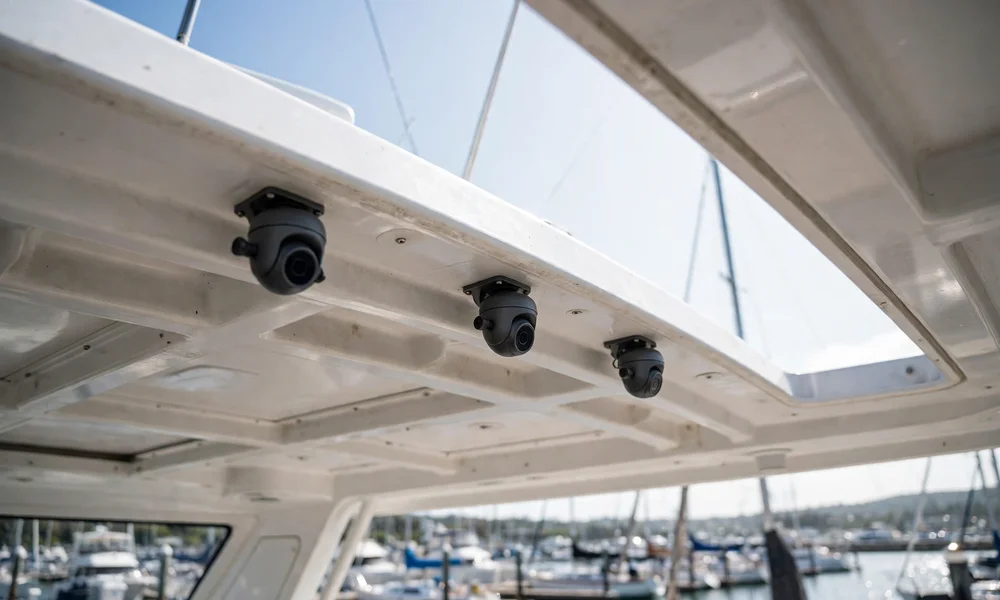
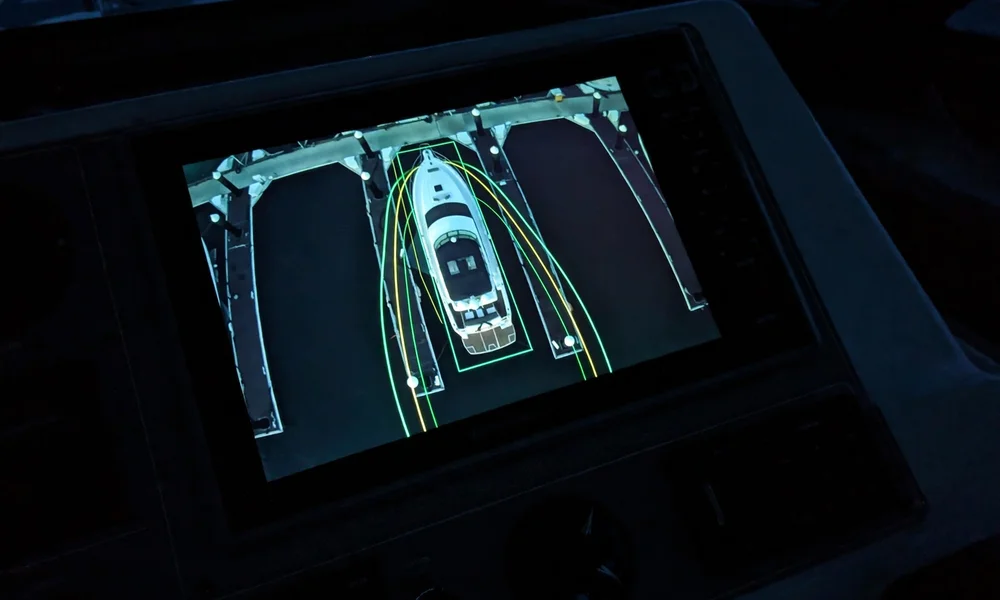
The system sees the world through cameras — typically five or six of them, mounted around the yacht so that together they cover a full 360 degrees. Each camera has two lenses set a fixed distance apart, usually around 27 centimetres, which gives it the same kind of depth perception as a pair of human eyes. By comparing the two images, the computer calculates the distance to everything it can see: the dock, the pilings, the neighbouring boats, a kayak drifting across the fairway. Combined, they build a live digital map of the berth and everything around it.
Step 2: Dual GPS receivers pin down the yacht to the centimetre
Cameras alone are not enough, because the system also needs to know exactly where the yacht is in the world. Ordinary GPS is accurate to a few metres — far too coarse for a berth with a metre of clearance on each side. Autonomous docking uses two GPS receivers, spaced apart on the boat, working with correction signals to fix the position to within a few centimetres and to measure the heading precisely. The result is a position fix good enough to thread a yacht into a tight slip.
Step 3: The captain picks a berth and the software plans a path
Nothing happens until a human chooses where to go. On the chartplotter or a tablet app, the captain taps the empty berth, drags a picture of the boat into it — bow or stern first, port or starboard side to — and the software checks whether the slip is big enough, usually needing about 1.2 metres of clearance on each side. If it fits, the system plots a path: a slow approach, a turn into the fairway, and a final sideways slide into the berth. The dynamic positioning system that holds a superyacht still in open water uses the same idea — a computer constantly balancing thrust against wind and current — but docking adds the hard part: moving precisely through a crowded space.
Step 4: The computer takes the throttles, steering and thrusters
Once the captain presses start, the system takes control of the propulsion. It drives the engines or pod drives, the steering, and the bow thruster — and a stern thruster where one is fitted — as one coordinated system. That coordination is the key: a human works one control at a time, but the computer can push the bow sideways with the thruster while easing the stern in with the pods, rotating the boat in place or sliding it sideways like a crab. The boat moves at walking pace or slower, and the system continuously re-plans its path as the wind gusts or the current shifts, so the yacht stays on its intended track.
Step 5: The system watches for surprises and pauses if it must
A marina is never empty, so the docking computer keeps watching its camera map all the way in. If a tender crosses the path, a swimmer appears, or a neighbouring boat starts to move, the system either pauses and holds position or reroutes around the obstacle. Assisted systems work differently: they do not take over completely, but instead apply automatic steering and thrust corrections when they sense the boat closing too fast on a dock, a piling or another hull — a safety net that stops a crunch without removing the captain from the loop. The bow thruster that pushes the yacht sideways is one of the tools the computer uses most, since sideways control is what makes a tight berth possible at all.
Step 6: The boat touches the dock and holds itself there
The final step is the gentlest one. The system eases the yacht against the fenders at a crawl, then keeps the thrusters and pods working just enough to hold the boat alongside the dock while the crew steps off with the lines. Once the lines are secure, the captain takes the system out of docking mode and shuts it down. The whole manoeuvre, from the fairway to tied up, typically takes a few minutes — slower than an expert crew, but with none of the drama.
Specs
| Specification | Typical figure |
|---|---|
| Cameras | 5–6 stereo machine-vision cameras |
| Camera lens spacing | Around 27 cm per stereo pair |
| Camera field of view | Around 100 degrees per camera |
| Camera range | Up to about 20 metres |
| GPS receivers | Two, with correction signals |
| Position accuracy | Within a few centimetres |
| Berth clearance needed | Around 1.2 metres each side |
| Controls driven | Throttles, steering, bow and stern thrusters |
| Approach speed | Walking pace or slower |
| Availability | New-build yachts with joystick control |
Price
Autonomous docking is still a new-build luxury, not a retrofit. As an estimate, a full autonomous docking system adds roughly $30,000 to $100,000 to the price of a new yacht, depending on the size of the boat, the number of cameras, and whether it is a fully autonomous system or an assisted one — these are estimates, and the real figure depends on the yard, the electronics package, and the propulsion system it must integrate with. The newest fully autonomous systems are currently offered only on new boats fitted with specific engines and joystick controls, so existing owners generally cannot add one. The yacht navigation bridge is where the system lives — the cameras feed the displays the captain already watches, and the docking controls sit alongside the joystick the crew already uses.
A Rare Fact
The first widely sold assisted docking system, Raymarine DockSense, uses five cameras and artificial intelligence to recognise hazards — and it was originally developed from technology used in cars. The same stereo-camera depth perception that helps a car park itself was adapted for boats, where the problem is harder: the surface moves, the wind pushes, and there are no painted lines to follow. Volvo Penta’s earlier self-docking prototype took a different route entirely, using sensors fixed to the berth itself — which meant it only worked at docks that had been fitted with them.