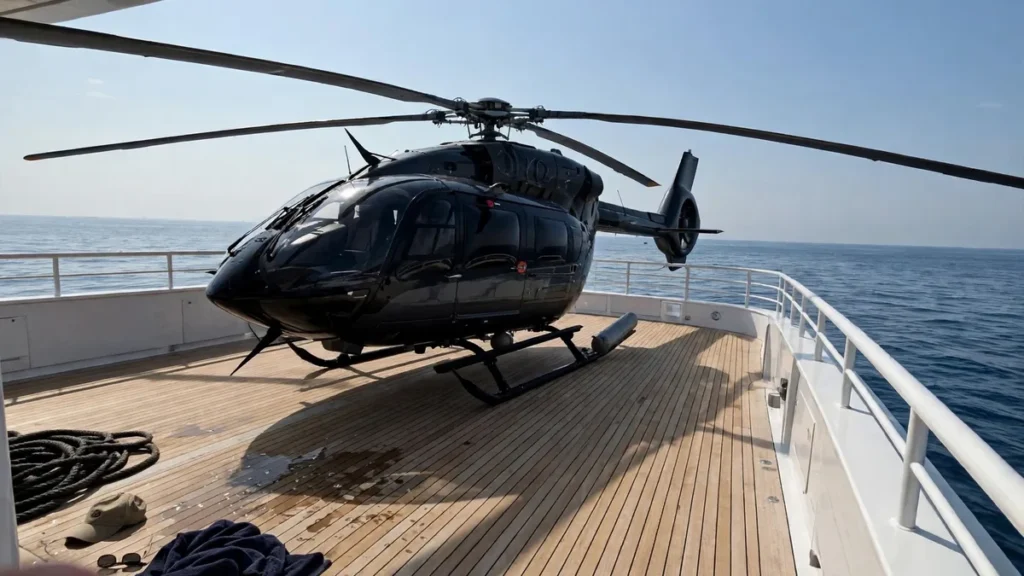
There is a particular kind of superyacht that has stopped being a boat and started being a small airport with a swimming pool attached. The helipad is the giveaway. A flat circle of reinforced deck, painted with a circle and an H, sitting where a sun deck or an open aft deck could have been. It looks spectacular in the brochure. It is also, for most yachts that carry one, a poor trade — an expensive, heavy, rarely used feature that eats the best space on the boat and turns the crew into part-time ground staff for an aircraft that spends most of its life somewhere else.
This is not an argument against helicopters at sea. A helicopter is a genuinely useful machine for a yacht: it can fetch guests from an airport, drop an injured crew member at a hospital, and reach anchorages no tender can. The argument is against the giant, permanent, certified helipad as a default feature on ever-smaller yachts, specified because a broker said it helps resale rather than because anyone on board actually flies. A helipad is not a free extra. It is a decision that shapes the whole yacht, and too often it shapes it badly.
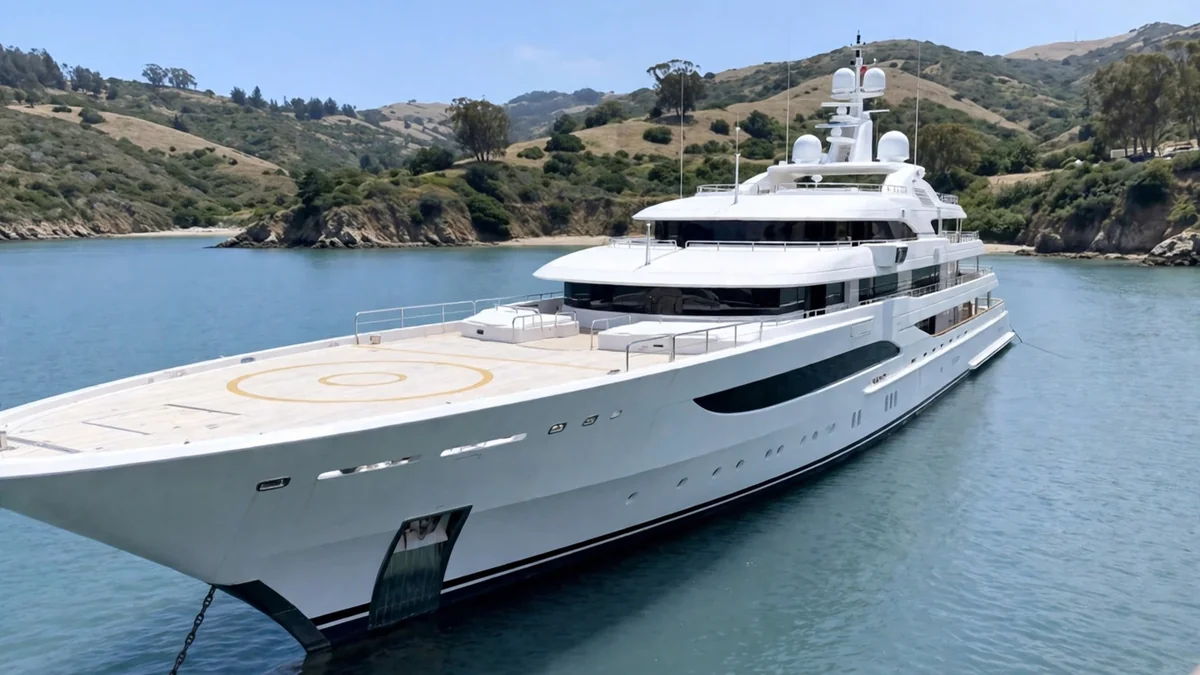
The space it steals is the best space on the yacht
A certified helideck is sized to the helicopter it must accept, and helicopters are not small. The deck is measured against the aircraft’s D-value, its greatest overall dimension with the rotors turning — about 13 metres for a common Airbus H145, nearly 17 metres for an AgustaWestland AW139, and close to 20 metres for a larger Airbus H225. Add the obstacle-free sector the regulations demand, and a helipad for a serious helicopter consumes a circle of deck roughly the size of a tennis court. On a yacht of 60 or 70 metres, that is a huge share of the usable outdoor area.
The bill is bigger than the brochure admits
A basic touch-and-go pad, where a helicopter lands with rotors turning and leaves again without shutting down, costs on the order of half a million to a little over a million dollars to build. A full certified helideck with parking, refuelling and night operations runs to one to two million, and a complete hangar installation with fuel storage can reach two to five million, with integrated installations on the largest yachts running well into eight figures. Those are build costs only. The running costs never stop: annual certification and inspection, foam firefighting systems that must be tested, lighting, a trained helicopter landing officer and deck crew, and insurance that knows exactly what a rotor strike costs.
And the weight is not trivial either. A helideck must withstand far more than the static weight of a parked helicopter: touchdown loads, dynamic forces through the undercarriage, and a landing on a moving deck. The structure is reinforced accordingly, high up in the yacht, where weight hurts stability most. Every tonne of reinforcement up top is a tonne that must be balanced below, and the yacht gets heavier, thirstier and slower. Our look at how a superyacht helicopter deck works shows just how much engineering goes into making that circle safe — engineering that could have gone into making the yacht itself better.
Most owners would be better served by a tender
Here is the honest comparison nobody in a shipyard brochure wants to make. For the cost of a certified helideck and hangar, a yacht can carry a superb tender — or two — plus a fast chase boat, plus the crew to run them. A tender transfers guests from shore in almost any weather, carries luggage, runs beach trips, tows toys, and works every single day. A helicopter transfers guests faster and further, in good weather, when the pilot is available, when the port state allows it, when the yacht is not rolling too much, and when the guests are comfortable flying in a small cabin over open water. Many are not.
The counterargument is resale. A certified helideck, the brokers say, protects value and unlocks the top tier of charter rates, and in the 80-metre-plus market yachts without helicopter capability do trade at a discount. That is true, at the top end, for yachts that genuinely charter. But it is not a reason to fit one to a yacht that will rarely charter and rarely fly. Resale value is a guess about a future buyer; the lost deck, the extra weight, the fuel system and the annual certification are certainties for the current owner. Buying a feature for the next owner, at the expense of your own summers, is a strange way to enjoy a yacht.
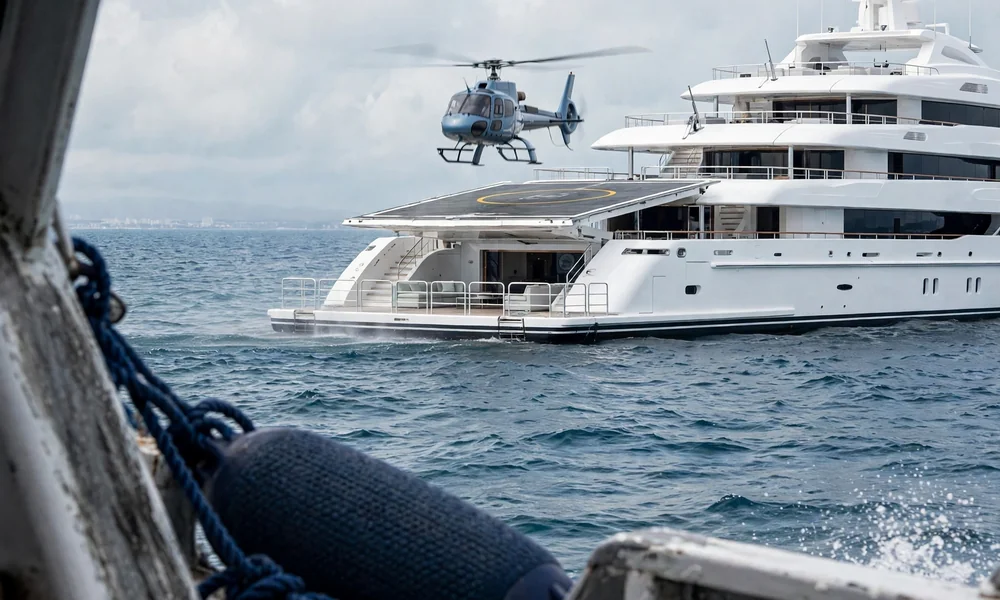
The honest version is smaller, not bigger
The sensible compromise already exists, and the industry quietly uses it: the touch-and-go pad. A simpler landing area, sized for the helicopter the owner actually uses, without the hangar, without the fuel farm, without the full certification apparatus. It handles the real use case — dropping off and picking up guests — at a fraction of the cost and complexity. The Cayman Islands Maritime Authority even advised in 2026 against using the term “touch and go” loosely, which tells you how much confusion the grey area creates, but the engineering point stands: most owners need a place to land, not an airport.
Even better, for many owners, is no pad at all. A yacht designed around its guests instead of around an aircraft — with the sun deck where the helipad would have been, the tender garage properly sized, and the top weight spent on stability instead of deck reinforcement — is simply a better boat. The helicopter can meet the yacht at the nearest airfield, which is what most owners end up doing anyway once they discover how rarely the weather, the schedule and the pilot all line up.

The helipad is the purest example of a feature specified for the photograph rather than the voyage. It costs millions, weighs tonnes, eats the best deck, demands a fuel system and a trained crew, and then sits empty while the guests crowd into whatever space is left. For the handful of yachts that genuinely live by helicopter, it is essential. For the rest, it is a monument to a use case that never arrives — and the yacht would be better, cheaper and more enjoyable without it. That is the case against the giant superyacht helipad, and it is hard to argue with the empty deck.
There is a related debate about scale itself, and it runs the same way: the case against gigantic superyachts makes the point that bigger is not automatically better at sea. The helipad is where that argument lands hardest, because it is the one feature where the cost is measured not just in money but in the very space the yacht exists to provide. If you want to know what the engineering really involves, the superyacht helicopter deck specifications lay out the dimensions, the D-values and the structural demands in full. Read them, then look at the deck plan of the yacht you are about to build, and ask whether that circle is really the best use of the best space on the boat.