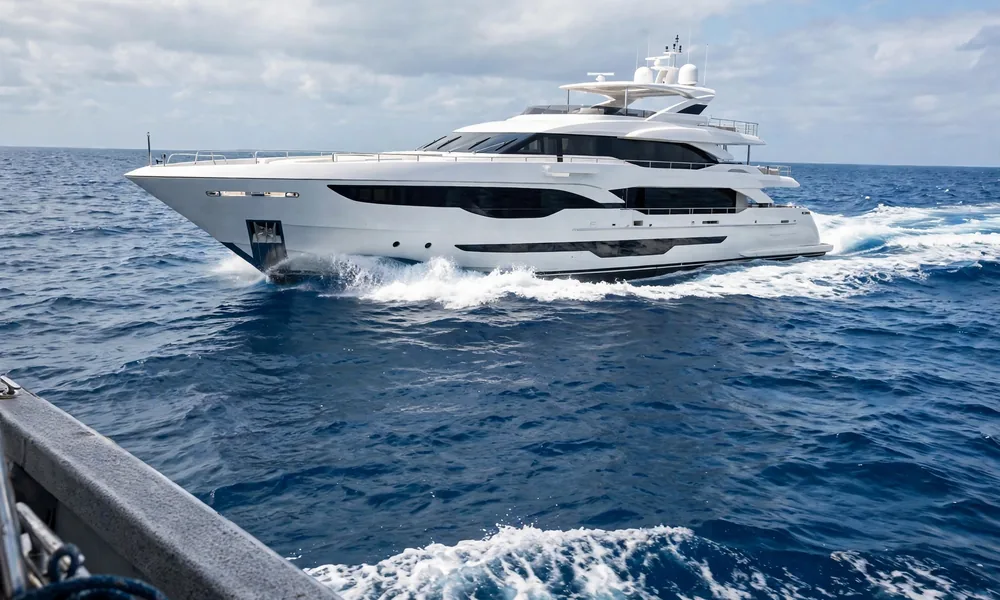
The case against gigantic superyachts is not a case against yachting. Wilklit loves yachts — the engineering, the craft, the sheer audacity of a beautiful boat. But somewhere past a hundred metres, the superyacht stops being a boat and becomes a floating argument, and the argument is not a good one. Gigantic superyachts are worse boats, worse engineering, and worse neighbours than the smaller yachts they replaced, and the industry should say so plainly instead of applauding every new record length.
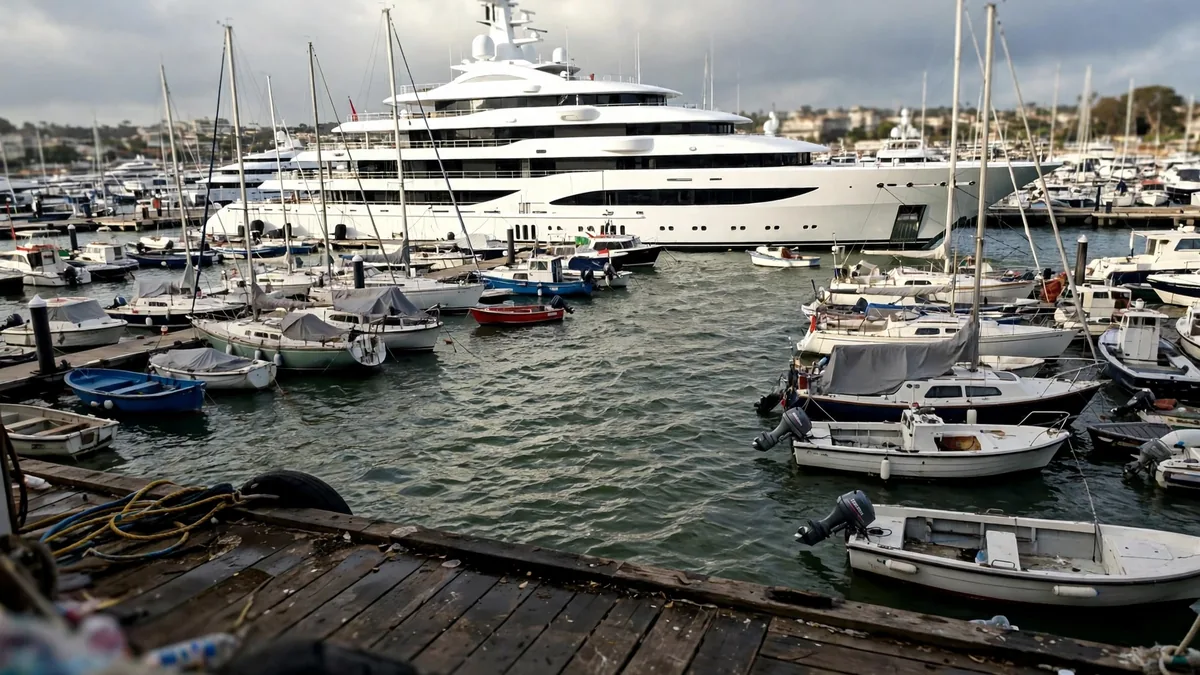
Start with the simplest test: what is a yacht for? It is for going to beautiful places on the water, for swimming off the back, for anchoring in a bay and eating dinner on deck while the sun goes down. A yacht of forty or fifty metres does all of that brilliantly. A yacht of a hundred and fifty metres does it badly. It cannot enter the bays that make the Mediterranean worth sailing. It cannot use the marinas in the old harbours. It anchors far offshore, its guests ferried in by tender like visitors to an oil rig, staring at the coastline they came to enjoy from a distance that makes it a postcard.
Size stops being engineering and starts being theatre
There is a point in every engineering discipline where more stops meaning better and starts meaning harder for its own sake. In yachts, that point is well behind us. A hull of forty metres can be built stiff, light, and efficient, with proportions a naval architect can shape for the sea rather than for a floor plan. A hull of a hundred and forty metres is a structural problem first and a boat second: vast unsupported spans, enormous loads in a seaway, weight that demands power that demands fuel that demands more weight. Every extra metre buys less and costs more, and the cost is paid in fuel, in complexity, and in a ride that no amount of stabilisation can fully civilise.
The engineering inside is no happier. A gigantic yacht is a small town that has to generate its own power, make its own water, treat its own waste, and keep a hundred people comfortable in weather that does not care about the interior designer’s mood board. That is a genuine technical achievement, and the engineers who pull it off deserve respect. But it is an achievement in service of a problem the owner created. Nobody needs a cinema, a hospital, and a helipad to enjoy the sea, and building a floating town to do the job of a boat is engineering pointed in the wrong direction.
The counter-argument, honestly stated
The defence of the gigantic yacht is worth hearing in full, because it is not stupid. First, scale enables things a smaller boat genuinely cannot do: real range, real seakeeping in bad weather, a helicopter that works in a swell, a workshop that can fix things far from land. A yacht that can cross an ocean in comfort and then sit at anchor for a month without resupply is a different machine from a coastal boat, and some owners use that capability properly.
Second, these boats are extraordinary employment. A single gigantic build keeps a yard busy for years, sustains specialist trades — joiners, electricians, naval architects, painters — and supports the marinas and suppliers of a whole region. To wish them away is to wish away real jobs held by real craftspeople, and Wilklit does not do that lightly. The steel hull of a superyacht is a serious piece of engineering, and the people who build it are among the best in the world at what they do.
Third, there is the simple point that owners may spend their money as they wish, and that taste is not a crime. A person who wants a hundred-metre yacht has every right to buy one, and the sea is large. None of that is in dispute. But a right is not a recommendation, and the question here is not whether gigantic yachts should be banned. It is whether they should be admired as the peak of yachting, or recognised as a wrong turn that the industry celebrates because it is profitable.
What gigantism costs the sea itself
The cost that is hardest to ignore is the one the sea pays. A gigantic yacht burns fuel on a scale that a smaller yacht simply does not, and it burns it to move a floating hotel rather than a boat. Its wake damages shorelines. Its anchoring scars the seabed. Its presence in a small harbour pushes out the smaller boats that belong there, and its demand for berths reshapes marinas into facilities for the very largest, at the expense of everyone else.
Nor is this a problem that hybrid power alone will solve. A hybrid system helps, and Wilklit has argued for it elsewhere, but a hundred-and-forty-metre boat with a battery bank is still a hundred-and-forty-metre boat. The first-order problem is the size, and no propulsion system changes that. The honest environmental answer for the superyacht world is not a greener gigantic yacht. It is a smaller one, used more and enjoyed more, and the materials chosen for its decks and the care taken over its build matter far more than another ten metres of length.
There is also a reputational cost, and the industry should take it seriously. Every photograph of a gigantic yacht sitting empty in a marina while the world talks about the climate is an advertisement for the worst reading of yachting. The superyacht world depends, more than it admits, on being liked — by the towns it visits, by the regulators who license its berths, by the public who tolerate its presence. Gigantic yachts are the boats most likely to turn that tolerance into resentment, and resentment eventually becomes regulation.
The verdict
Wilklit’s view is that the gigantic superyacht is a dead end dressed as a pinnacle. It is worse at the things a yacht is for, harder to engineer well, more demanding on its crew, and more damaging to the places it visits than the boats it replaced. The industry should stop treating length as the scoreboard. The best yacht is not the longest. It is the one that goes to the best places, sails beautifully, and leaves its owners closer to the sea rather than further from it.
That is not an argument for smallness for its own sake. A well-built fifty-metre yacht is a magnificent machine, and the craft that goes into it — the joinery, the engineering, the detailing — deserves every bit of praise it gets. The joinery inside a superyacht at that scale is work of real beauty, made by people who care about their trade. What deserves questioning is the race past that scale, the point where craft gives way to sheer tonnage and the boat stops being a boat.
So here is the verdict, plainly: stop building monuments and start building yachts again. The next great superyacht will not be the one that breaks the length record. It will be the one that makes a hundred-metre owner look at it and wonder why they ever needed the extra fifty metres in the first place.