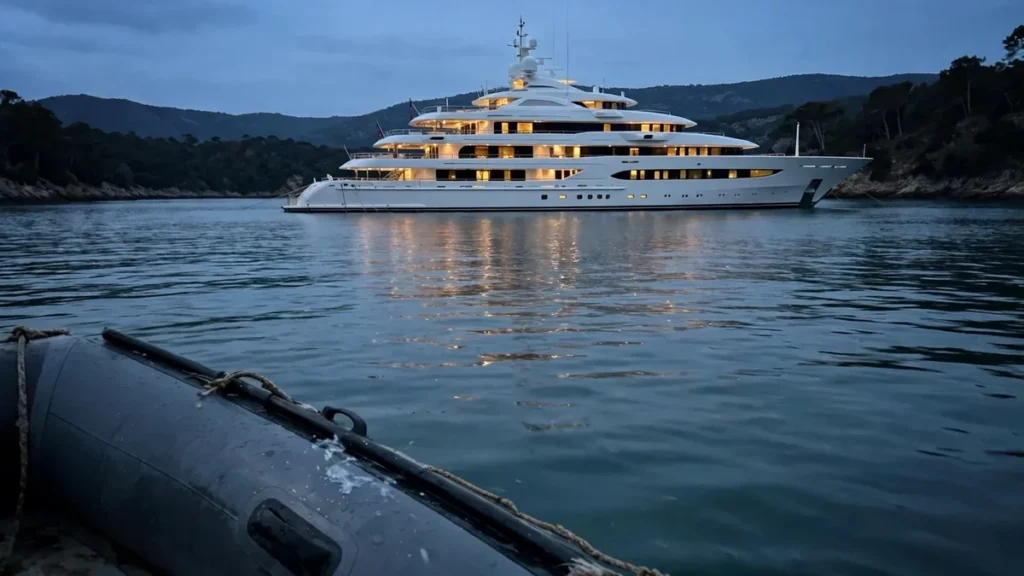
Walk along a marina and look at the yachts. The newest ones are hard to tell apart: the same tall white topsides, the same dark glass, the same sharp angles, as if they were all drawn from one template and only the length differs. Then, among them, an older boat catches the eye — a long sheer line rising to the bow, varnished wood, a teak deck silvered by the sun, and proportions that look right from every angle. It is not the biggest boat in the marina. It is the one people photograph. The case for retro yacht design is that the old shapes were not old-fashioned. They were right, and the industry has spent decades drifting away from right.
Retro yacht design means looking back to the shapes, materials and proportions of the classic era — roughly the decades when yachts were drawn by eye and built by hand — and using them as the starting point for a new boat, rather than treating them as a museum style. It is not about building a replica. It is about recovering ideas that modern design discarded too quickly: graceful lines, honest materials, and boats that look like they belong on the water. The argument is not nostalgia. It is that the old designs solved problems the new ones have forgotten.
Classic lines age; fashionable lines date
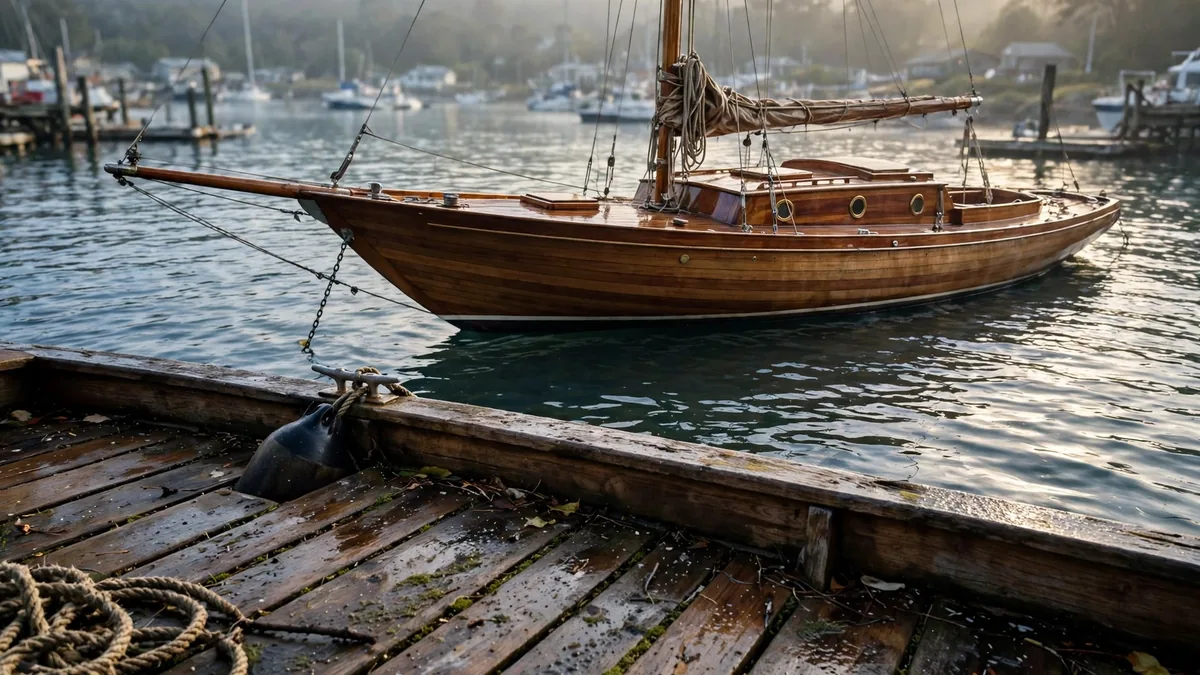
The first argument is about time. A yacht designed in a fashionable style looks modern for about five years, then starts to look dated, and after fifteen years it looks like a period piece that nobody wanted to preserve. A yacht drawn with classic proportions — a gentle sheer, a balanced bow, a stern that sits properly in the water — looks good in its first year and still looks good fifty years later. The old boats in any marina prove it. They are not admired because they are old. They are admired because the eye still accepts them.
Honest materials feel better
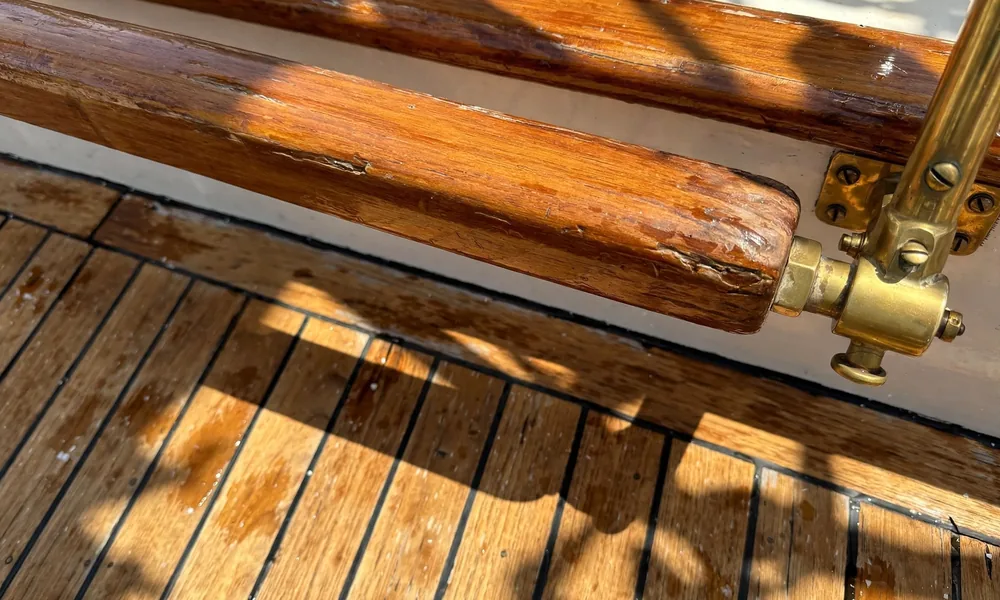
The second argument is about materials. Classic yachts were built from wood, brass, leather and canvas — materials that age visibly and gracefully, that can be repaired by hand, and that feel warm to the touch. Modern yachts are built from white composites, dark glass and grey plastic, materials that look clean on the day of delivery and then show every scuff, every stain, and every repair. Wood can be sanded and revarnished. A scratched composite panel has to be replaced.
There is also the simple pleasure of the materials themselves. A teak deck under bare feet, a varnished handrail, a brass fitting that has been polished a thousand times — these are things that make a boat feel like a boat rather than a floating apartment. The craft of how a yacht teak deck is made shows how much hand work goes into a single deck, and that work is visible in the finished boat. A retro yacht wears its making on its surface. A modern one hides it, and something is lost in the hiding.
Retro boats are easier to recognise — and to remember
The third argument is identity. The modern superyacht fleet suffers from a sameness problem: the same tall bows, the same tinted glass, the same slab sides, repeated at every size. An owner who spends a fortune on a new yacht often ends up with a boat that is indistinguishable from the one moored next to it. A retro design solves that problem at a stroke. A classic sheer, a clipper bow, a counter stern — these are signatures. They make a boat recognisable from a mile away, and they give its owner something that no amount of money spent on a modern hull can buy: a boat with a face.
Classic proportions are seaworthy proportions
The fourth argument is about how the boat behaves. Classic yacht shapes were not drawn for show. They were drawn by people who went to sea in them, and their proportions reflect what works: a bow with enough flare to lift over a wave rather than punch through it, a hull with enough reserve buoyancy forward, and a stern that follows the sea rather than fighting it. Modern yachts, designed to maximise interior volume, often have blunt bows, flat sections and wide transoms that slam in a seaway and hobby-horse in a swell.
The old shapes were slower in flat water and kinder in rough water, and for a boat that is meant to be lived aboard, kindness matters more than speed. A retro yacht may not win a race to the anchorage, but its crew arrives rested, its crockery stays in the cupboards, and its guests do not spend the passage holding on. The story of how a luxury sailboat is made shows how much of a boat’s character comes from its hull shape, and the classic shapes earned their reputation the hard way: by keeping people safe and comfortable in bad weather.
Craftsmanship is a value, not a cost
The fifth argument is about the people who build boats. Retro design demands craftsmanship: a joiner who can fit a curved bulkhead, a varnisher who can bring wood to a mirror finish, a metalworker who can shape brass by hand. Those skills are disappearing, and every boat built without them hastens their loss. A retro yacht is not just a boat. It is a commission that keeps a trade alive, and a boat built by people who care about their work carries that care in every detail.
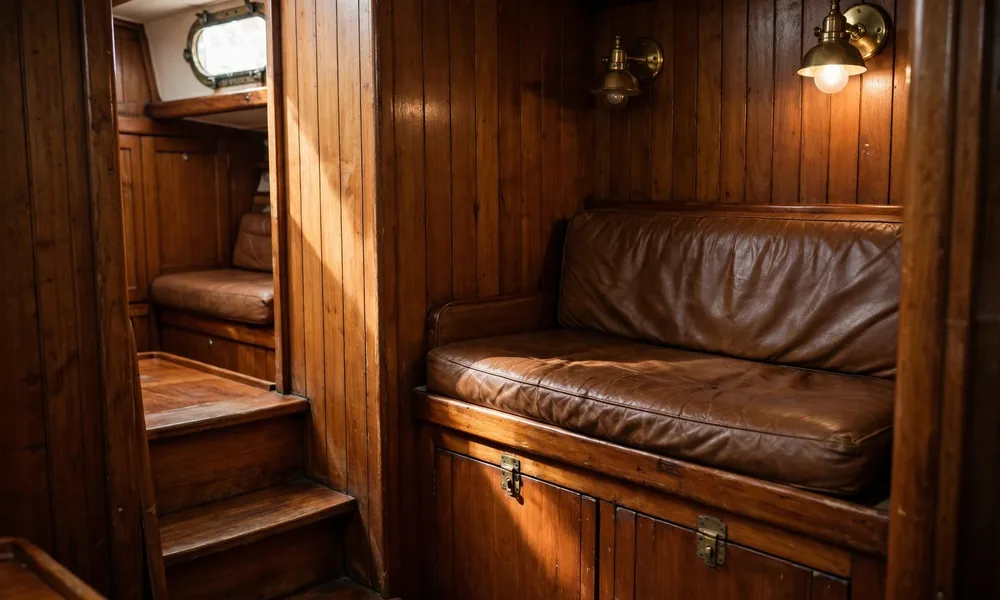
The interiors prove the point. The best luxury yacht interiors are often the ones where the hand of the maker is visible — in the grain of the wood, the stitching of the leather, the weight of a brass handle. Mass-produced interiors, however expensive, feel anonymous by comparison. A retro yacht’s interior is not a showroom. It is a room made by people, for people, and it shows.
The counter-case
The counter-case is strong. Modern yacht design is not arbitrary. The tall topsides and wide beams that retro enthusiasts dislike exist because owners want space: bigger cabins, bigger saloons, bigger windows, and room for the toys and tenders that modern yachting demands. A classic hull, with its narrow beam and low freeboard, cannot offer that space, and no amount of beautiful sheer will make a cramped cabin comfortable.
Verdict
Retro yacht design will never replace modern design, and it should not. But it should be a living option, not a museum style, for owners who value beauty, character and seaworthiness over sheer volume. The old shapes were not accidents. They were the result of generations of sailors learning what works, and they still work.
The best future for yacht design is not a choice between old and new. It is a blend: modern engineering and reliability underneath, classic lines and honest materials on top. A boat built that way would be safe, comfortable, and beautiful — and it would still turn heads in the marina fifty years from now. That is a better ambition than building the tallest white box afloat, and it is one the industry should take seriously.