There is a quiet absurdity at the heart of the modern superyacht. It is a vessel designed, engineered and priced to travel at twenty-five knots, and it spends almost its entire life travelling at ten. The yacht crosses the Mediterranean at displacement pace, anchors for a week, then putters to the next bay at the same unhurried speed. The engines capable of all that speed sit below deck, heavy, thirsty and expensive, waiting for a moment that almost never comes. The case for slower superyachts is not a case for sailing more slowly. It is a case for building yachts that are honest about how they will actually be used.
That distinction matters, because it is not the same argument as simply pulling the throttles back on a fast yacht. Running a fast yacht slowly helps — the fuel saved by easing off is real, and the physics behind it is well understood, as the case for slower superyacht cruising sets out in detail. But a fast hull run slowly is still a fast hull: it still carries the big engines, the wide flat stern, the structure and the systems that speed demanded. A yacht designed from the keel up for ten or twelve knots is a different machine altogether. It is lighter where it can be, roomier where it counts, cheaper to build and cheaper to keep, and it does the job its owner actually wants — crossing oceans comfortably and sitting beautifully at anchor — better than the fast yacht ever will.
The hull knows what it wants
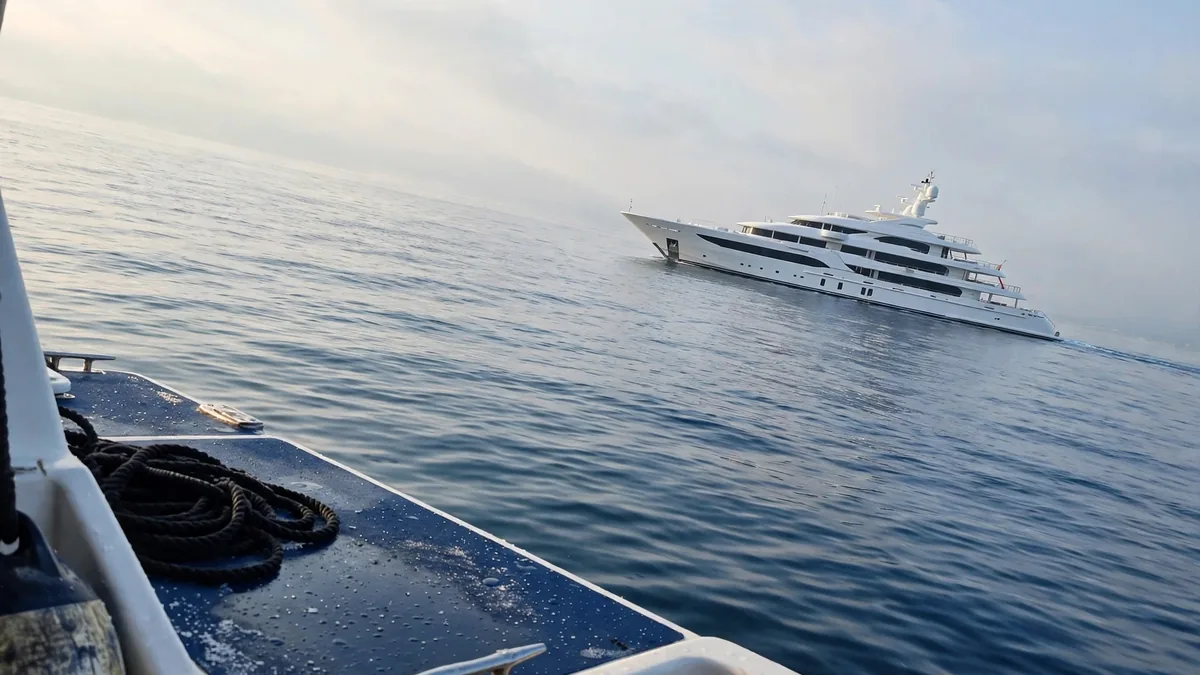
Every hull has a speed it likes, and for a displacement hull that speed is set by its own length. Push a displacement hull faster than its natural hull speed and the resistance does not rise gently; it climbs steeply as the boat starts trying to climb its own bow wave. Naval architects have known this for a century. A hull designed for twelve knots can be long, fine and efficient at that speed, slipping through the water with a modest wake and a modest engine. A hull designed for twenty-five knots needs a different shape entirely: flatter aft sections to plane, a wider transom, harder chines, and the structure to take the pounding that comes with speed in a seaway.
Design for the slower speed and the whole boat relaxes. The bow can be finer, because it never has to punch through waves at twenty knots. The stern can be rounder and narrower, because it never has to support a planing surface. The hull can be longer relative to its beam, which is the single most effective way to make a boat both faster at low speed and more comfortable in a seaway. Long, narrow hulls roll less violently, pitch more gently and slice through chop instead of slamming into it. The result is a yacht that is more comfortable at the speed it actually travels, not just more efficient.
Smaller engines, smaller bills
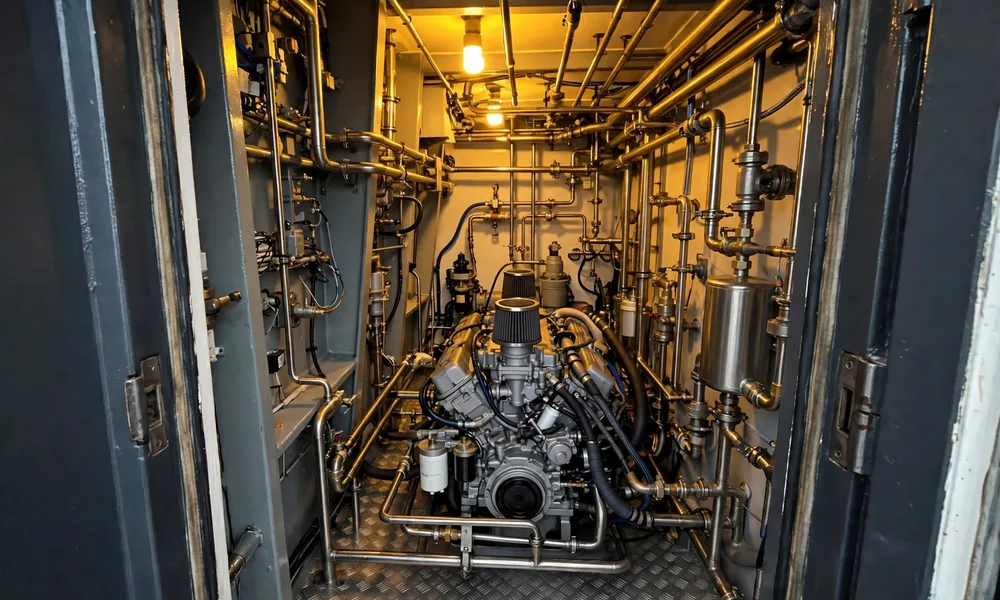
The second gain is in the engine room, and it is enormous. The power a boat needs rises roughly with the cube of speed, so halving the design speed cuts the power requirement by roughly seven-eighths. A yacht designed for twelve knots does not need a pair of engines producing thousands of horsepower each. It needs a fraction of that, in engines that are smaller, lighter, cheaper to buy, cheaper to service and far cheaper to feed. The case for smaller superyachts makes the same point from the other direction: restraint in one dimension buys generosity in all the others.
Range is the real luxury
Ask owners what they actually want from a yacht and speed is rarely at the top of the list. What they want is to go where they want, when they want, without planning their life around fuel stops. Range is the luxury that matters, and slow yachts have it in abundance. A yacht that burns a modest amount of fuel at twelve knots can cross an ocean on its tanks and still arrive with reserves. A fast yacht of the same size, even running slowly, carries the weight and the thirst of its big engines, and its range is shorter than the numbers suggest once the real weight of the boat is counted.
Comfort at rest matters more than speed underway
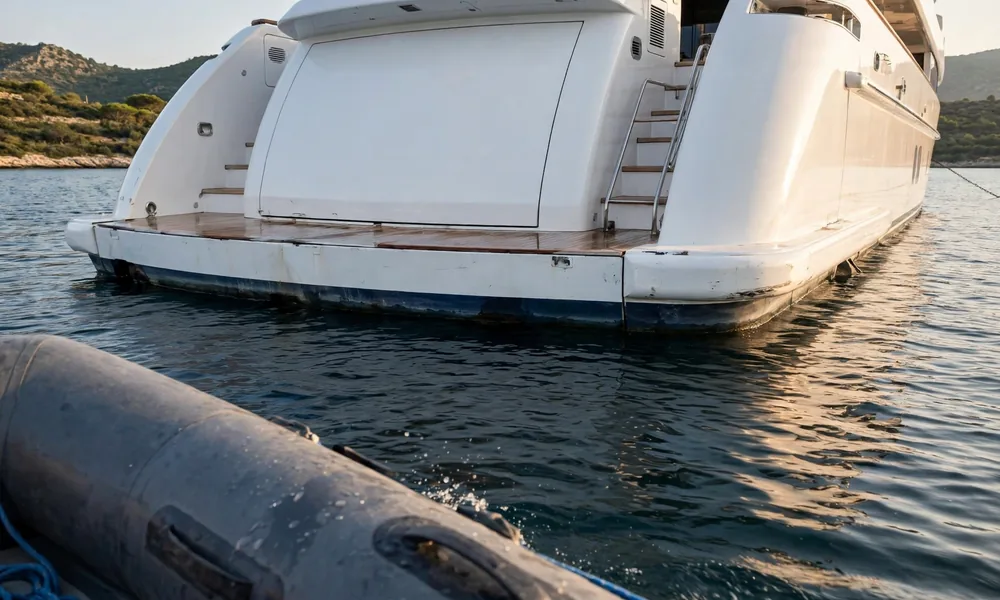
Here is the fact that the brochures never mention: a superyacht spends far more of its life at anchor than underway. For every hour steaming, there are many hours sitting in a bay, and the quality of those hours is what the owner actually experiences. A yacht designed around speed sacrifices the things that make life at anchor good: volume, stability, quiet and a hull that sits comfortably in a swell. A yacht designed around slow, long-range cruising spends its design budget on exactly those things.
The same logic applies inside. A slow yacht does not need its interior wrapped around a huge engine room or a vast fuel tank. The space goes to the owner: a bigger saloon, a proper library, a workshop, a lazarette that actually fits the tender and the toys. The steel hulls that suit this kind of yacht so well — strong, repairable, honest — are part of the same philosophy, and the case for steel hull yachts is really the case for building boats to last rather than to impress. A slow yacht is a yacht built for the long term, in every sense.
The honest objections
The case is not airtight, and it would be dishonest to pretend it is. The strongest objection is time. A slow yacht takes longer to get anywhere, and for an owner who flies in for a long weekend, the difference between a two-hour passage and a five-hour passage is the difference between a weekend on the water and a weekend watching the water go by. Charter clients, too, expect to cover ground: they want three islands in three days, not one island in three days, and a slow yacht will lose that booking to a faster one. Speed sells, in charter as in sales brochures, because time is the one thing money cannot buy more of.
There is also the weather window. A faster yacht can outrun a front, or slip through a gap in the weather that a slow yacht must wait out. In the open ocean that matters: the ability to make twenty knots for twelve hours can be the difference between a comfortable passage and a miserable one, and there are passages where a slow boat simply cannot go at certain times of year. And there is resale. The market still pays for speed, and a yacht built for twelve knots will find fewer buyers than one built for twenty-five, at least today. An owner who builds slow is betting that the market will catch up with the logic, and bets like that are not always right.
The verdict
The superyacht world has spent decades designing boats for a speed their owners almost never use, paying for it in fuel, build cost, comfort and range. The slower superyacht is not a compromise or a retreat. It is a yacht designed for the life it will actually live: long passages at a civilised pace, quiet nights at anchor, oceans crossed under its own power, and a decade of ownership that costs far less than the fast alternative. The brochure number will be smaller, Everything else — the range, the comfort, the space, the silence, the bill — will be better. That is a trade worth making, and the yards that understand it first will build the great yachts of the next decade.