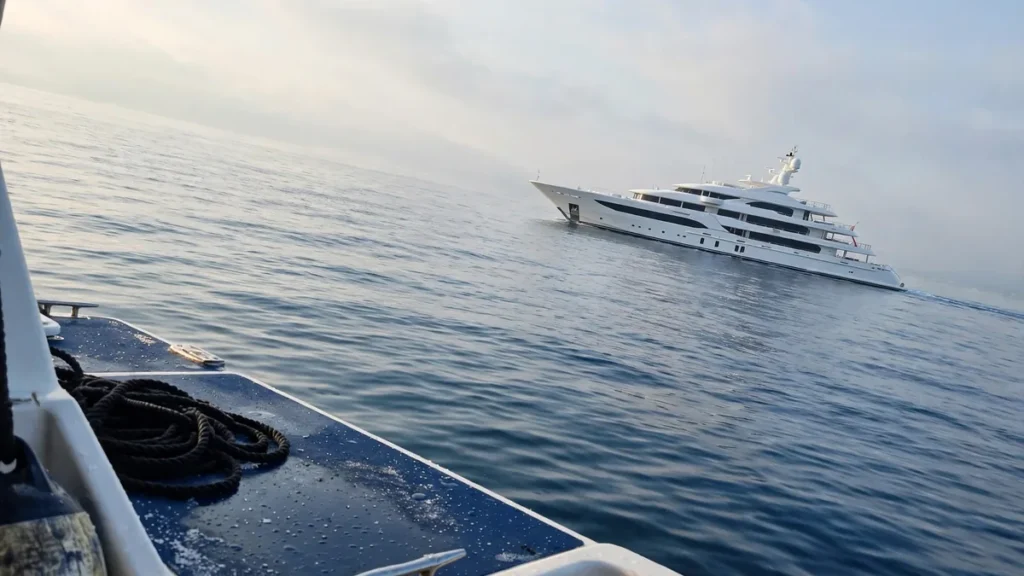
Every superyacht has two speeds: the speed on the brochure and the speed it actually needs. The brochure promises twenty knots and more, a top speed to impress at a boat show and a cruising speed to brag about in the marina. The speed the yacht actually needs, for almost every passage it will ever make, is ten knots, or nine, or eight — the unglamorous pace at which a displacement hull slips through the water instead of fighting it. The gap between those two speeds is where most of a superyacht’s fuel disappears, and closing it is the simplest, cheapest and most effective efficiency measure in yachting. The case for slower cruising is not a case for boredom. It is a case for physics.
The physics is brutally simple, and it is the reason every commercial ship on earth already does what this article proposes. The power a propeller needs rises roughly with the cube of speed, so a small cut in speed buys a large cut in power. Drop speed by ten percent and power demand falls by about twenty-seven percent. Drop it by twenty percent and power demand falls by about forty-nine percent — nearly half the fuel, for a fifth less speed. That is not a marginal gain to be squeezed out with a better propeller or a cleaner hull. It is a halving of the fuel bill, available to any captain willing to pull the throttles back and let the yacht arrive an hour later.
The Hull Speed Wall
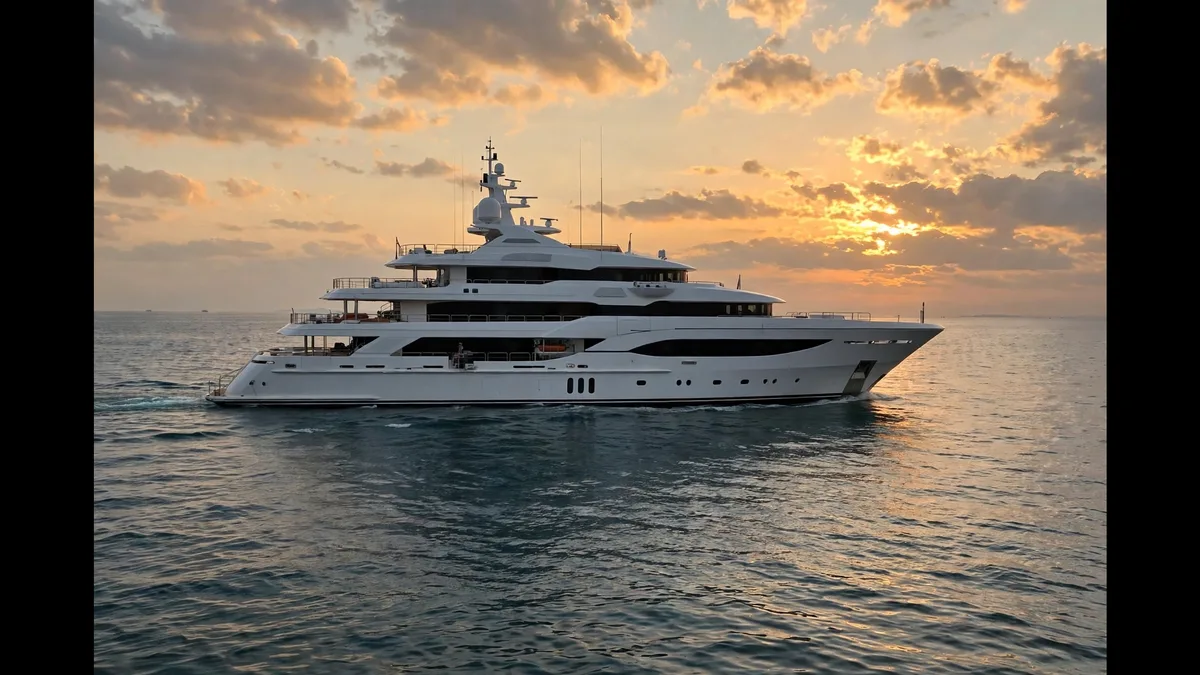
The reason the saving is so large is that a displacement hull has a wall built into it, and the wall is made of water. As a hull moves faster it makes waves, and the faster it goes the longer those waves get, until the wavelength matches the waterline length of the boat. At that point — the hull speed, roughly 1.34 times the square root of the waterline length in feet — the boat is effectively trying to climb uphill over its own bow wave, and every extra knot demands an enormous amount of extra power for almost no extra speed.
The numbers from real boats make the point better than any formula. On a 46-foot sailing yacht fitted with test equipment, the power needed at hull speed, 8.28 knots, was between 55 and 74 horsepower depending on the propeller. Slow down by one knot, to 7.28, and the demand fell to between 26 and 32 horsepower — less than half. Slow down by two knots, to 6.28, and it fell to 15 to 17 horsepower, about a quarter of the demand at hull speed. Fuel consumption followed the same curve: three and a half to nearly five gallons an hour at hull speed, down to between one and a half and two gallons at a knot slower. The last two knots of speed cost three times as much power as the first six.
Superyachts live on the same curve, only with bigger numbers. A 70-foot motor yacht has been recorded burning eighteen gallons an hour at 9.75 knots and almost thirty gallons an hour at 10.75 knots — a single extra knot costing more than sixty percent more fuel. Scale that to a fifty- or sixty-metre yacht with engines measured in thousands of horsepower, and the cost of chasing the last few knots is measured in thousands of litres per passage. The steel hull does not care how fast it goes. The fuel bill does.
Time Is Cheaper Than Fuel
The obvious objection is time, and it is worth pricing honestly. On a forty-mile crossing, the difference between twelve knots and ten knots is forty minutes. On an overnight passage, it is the difference between arriving at eight in the morning and arriving at ten, with the crew having had a quieter night and the engines having had an easier one. The guests, in most cases, never notice: they were asleep, or eating, or watching the sunset from a deck that is noticeably quieter and steadier at the slower speed.
The Engine Problem Nobody Mentions
There is a complication, and it would be dishonest to leave it out. Big marine diesels do not like running too slowly for too long. At very low load, combustion temperatures fall, unburnt fuel and carbon build up on cylinder walls and turbochargers, and the engine glazes its bores — the slow-steaming problem that commercial operators manage with careful load management and periodic high-load runs. A superyacht captain who drops to idle and stays there for a week will come home to an engine bill, not a saving.
But the answer is not to give up on slow cruising; it is to do it properly. The efficient band for most superyacht diesels is not flat-out and not idle but the steady middle: enough load to keep combustion temperatures healthy, enough speed to stay comfortably below hull speed, and a regular short burst to full load to clear carbon. Modern engine management systems and hybrid battery banks make this easier than ever, because the hotel load can be carried by batteries while the main engines run at their efficient point. The point is not to run the engines at their worst. It is to stop running them at their most wasteful, which is the top of the speed curve.
Why Yachts Still Go Fast
The Counter-Argument, Honestly Stated
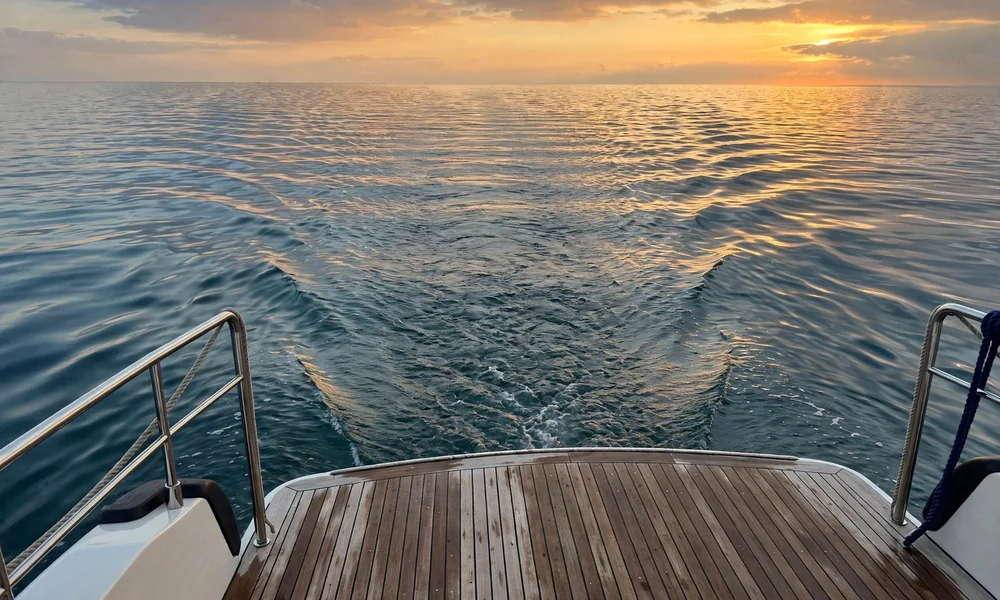
The strongest objection to slower cruising is the owner’s expectations. A superyacht is a luxury purchase, and luxury does not like to be told to wait. An owner who has paid for a yacht that can cross the Mediterranean in a day does not want to be told that the correct speed is the one that takes two, and a charter guest who has paid for a week does not want to spend it watching the same coastline crawl past. If the owner values an extra hour at anchor over a thousand litres of fuel, that is a rational choice for someone who can afford it.
That is fair, and it is the reason this article argues for a default rather than a rule. Slow cruising should be the normal way a superyacht moves, with speed kept in reserve for the days when it genuinely matters — weather, schedules, a guest who needs to be ashore. The saving is so large, and the cost in time so small, that the burden of proof should run the other way: not why go slow, but why go fast on this particular passage, today, in these conditions. The engineering of the yacht rewards that question with a quieter boat, a longer range and a smaller bill.
The Verdict
Slow down. Not to a crawl, and not so slowly that the engines suffer, but to the speed the hull actually wants to go — just below hull speed, where the power curve flattens and the fuel burn collapses. The saving is not a few percent but a third to a half, the time cost on a typical passage is measured in minutes, and the boat is quieter, steadier and longer-ranged at the slower pace. The most expensive yachts ever built were not bought to burn fuel for the sake of it, and their owners did not become wealthy by paying twice as much for the same journey. The cruising speed is a decision, and it is the cheapest decision a superyacht owner will ever make.