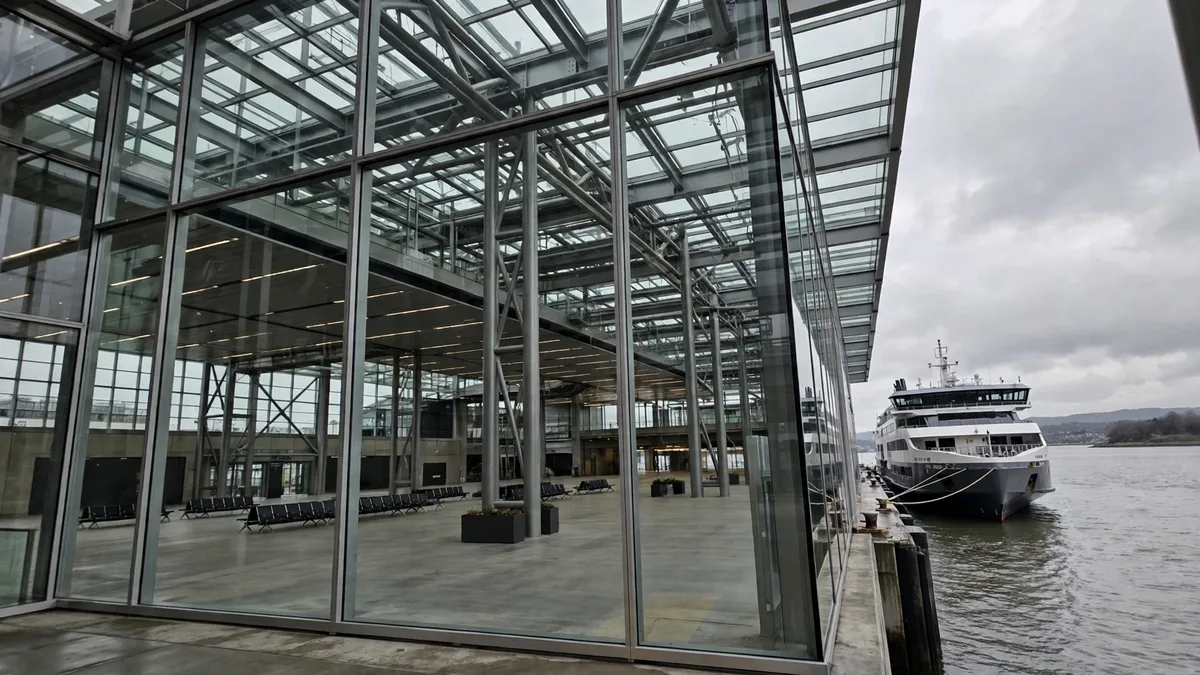
Electric ferries are a good idea. Giant electric ferry terminals are not. As ferry operators switch from diesel to battery power, ports are being told they need enormous new buildings: vast charging halls, huge grid connections, and terminal complexes the size of shopping centres. The argument is that electric ferries need electric infrastructure, and the bigger the ferry, the bigger the building. I think this is a costly mistake, and the ports that build the biggest terminals will be the ones regretting them first.
The problem is not electrification. Battery ferries work, and they work well on short crossings — the evidence is already in service in Norway and Denmark. The problem is the assumption that an electric ferry needs a giant terminal, when what it actually needs is a plug, a berth, and a sensible charging schedule. A ferry is a ship that comes back to the same place many times a day. That is the easiest charging problem in transport, not the hardest, and it does not need a cathedral to solve it.
The ferry already solves the problem
Consider what a ferry actually does. It crosses the same stretch of water, back and forth, all day, docking at the same two berths. Each crossing takes minutes, and the vessel sits at the berth between sailings. That dwell time is charging time, and it repeats dozens of times a day. How an electric ferry is made shows how the vessel itself is designed around this rhythm: batteries sized for the crossing, motors that need little maintenance, and charging built into the normal routine of docking.
This is nothing like an electric car, which might charge anywhere, or an electric aircraft, which needs new infrastructure everywhere it lands. A ferry has a fixed route and a fixed home. The charging point can be a single connection at the berth, installed where the ship already stops. What a solar-powered crossing shows is that the whole system can stay modest: what a solar electric ferry is demonstrates that small-scale charging, matched to a short route, is enough. The giant terminal adds nothing to this picture except cost.
What the giant terminal really costs
The bill for a mega-terminal is not just concrete and glass. There is the grid connection, which may need new substations and kilometres of cabling. There is the land, usually prime waterfront that could be housing, parks, or working harbour. There is the construction, which closes parts of the port for years. And there is the maintenance of a huge building that is busy for an hour at each sailing and empty in between — a structure sized for peak crowds that spends most of its life echoing.
Then there is the risk. Ferry routes change. Operators merge, timetables shift, and a vessel class gets replaced after twenty years. A modest berth with a charger can be repurposed in a weekend; a giant terminal cannot. Ports that built enormous terminals for the ferries of the 1990s are still paying to heat and repair them today, long after the routes they were built for have changed. The bigger the building, the longer the regret.
The waterfront pays the price
The worst cost is the one nobody puts in the budget: the waterfront itself. Ferry terminals sit on the best land a coastal town has — the edge of the water, where people want to walk, eat, and look at the sea. A giant terminal walls that off behind security fences, service roads, and blank facades. The town loses its harbour to a building that serves passengers for a few minutes at a time and gives nothing back to the place around it.
Small terminals do the opposite. A modest building, a sheltered waiting area, and a clear path from the town to the boat keep the port part of the place. Passengers step off the ferry and into the town, not into a shopping mall that happens to float. The ferry becomes part of the waterfront rather than a fortress on it. That matters more than it sounds: ports that stay open and human-scale keep the shops, cafes, and life that make people want to visit at all.
What to build instead
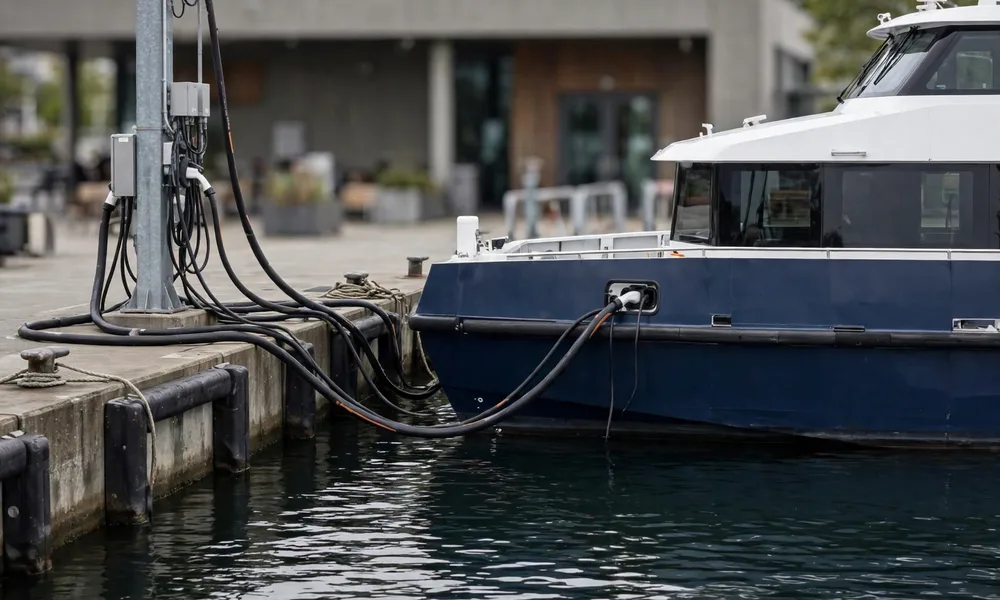
The alternative is not to build nothing. Electric ferries do need investment — just investment in the right places. Put the money into the berth: a robust charging connection, a battery buffer on the quayside to smooth the load on the grid, and a simple shelter for waiting passengers. Put money into the vessels, where it improves the crossing itself. And put money into the grid connection at the scale the route actually needs, not the scale a grand opening ceremony needs.
Charging while docked is a solved engineering problem, and the hardware keeps getting simpler. Automated connection systems now let a ferry plug itself in as it berths, and the same principles that keep a vessel safely moored — as how an electric boat anchor works shows for the smaller end of the scale — apply to the discipline of the berth: hold the ship still, make the connection, and let the schedule do the rest. The ferry does not need a palace. It needs a plug and a timetable.

The numbers favour the modest berth
Run the numbers on a typical short crossing and the giant terminal looks even harder to justify. A ferry that takes thirty minutes to cross and spends ten minutes at the berth can take on a useful charge in every one of those ten-minute stops, and it makes the trip dozens of times a day. Over a full day of service, those short top-ups add up to far more energy than the vessel needs, with no fast-charging hall required. The battery is sized for one crossing plus a safety margin, not for a whole day, because the berth keeps topping it up. That is the whole trick of the electric ferry, and it works with a single connection at the quay.
The grid side is just as manageable. A quayside battery buffer — a container-sized pack sitting quietly beside the berth — can charge slowly from the grid all day and deliver fast bursts to the ferry during its ten-minute stops. The port never needs a huge grid connection, the local network never sees a spike, and the whole installation fits in the space of a few parking bays. Compare that with a mega-terminal, which needs its own substation, its own planning battle, and a construction programme measured in years. The modest version is cheaper, faster to build, and easier to move if the route ever changes.
The verdict
Electric ferries deserve investment, and ports that prepare for them are doing the right thing. But the giant terminal is the wrong shape for that investment: expensive to build, expensive to run, hard to repurpose, and hostile to the waterfront it sits on. A ferry that docks in the same place all day needs a charger at the berth, not a cathedral on the quay. Build the charging, keep the building small, and spend the saving on better boats and better crossings. The passengers will notice the ferry. Nobody ever praised a crossing because the terminal was big.


