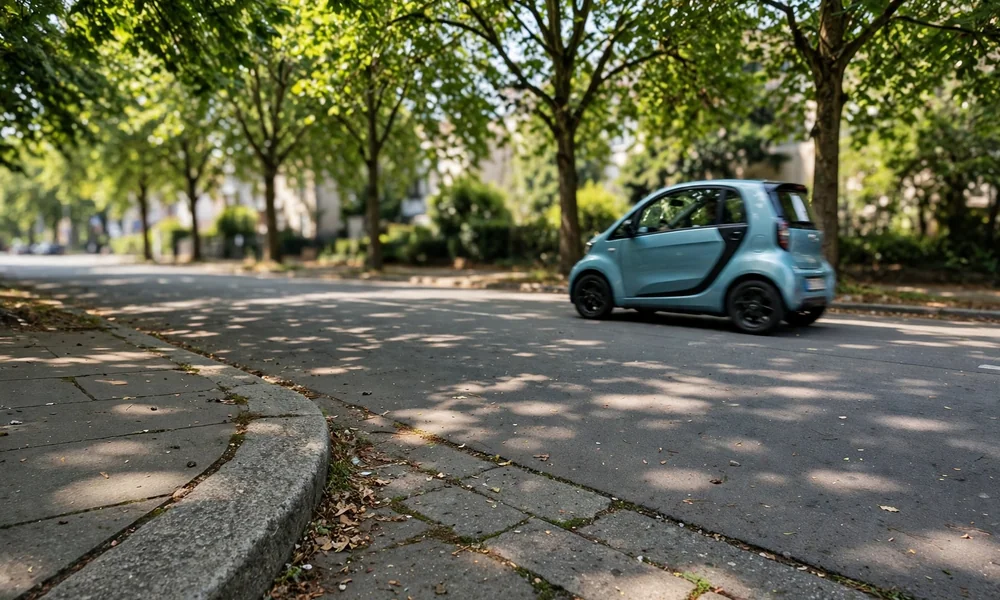
Walk through any car park and you will see the same shape repeated row after row: a large electric car, tall and wide, with a battery big enough to cross a country and seats for a family of five. Most of them are carrying one person. Most of them are going a few miles. Most of them will be parked again within the hour.
That is not a failure of engineering. It is a failure of imagination. The electric car was supposed to free us from the compromises of the petrol age, yet the industry has rebuilt the same oversized car and simply swapped the engine for a battery. The smaller electric car, the one that fits the journey most people actually make, is treated as a lesser product, a starter car, a compromise. It should be treated as the right answer.
This is the case for smaller electric cars: lighter, cheaper, easier to live with, and honest about what a car is for. Not for every driver and not for every journey, but for the daily driving that makes up most of a car’s life.
Most Journeys Are Small Journeys
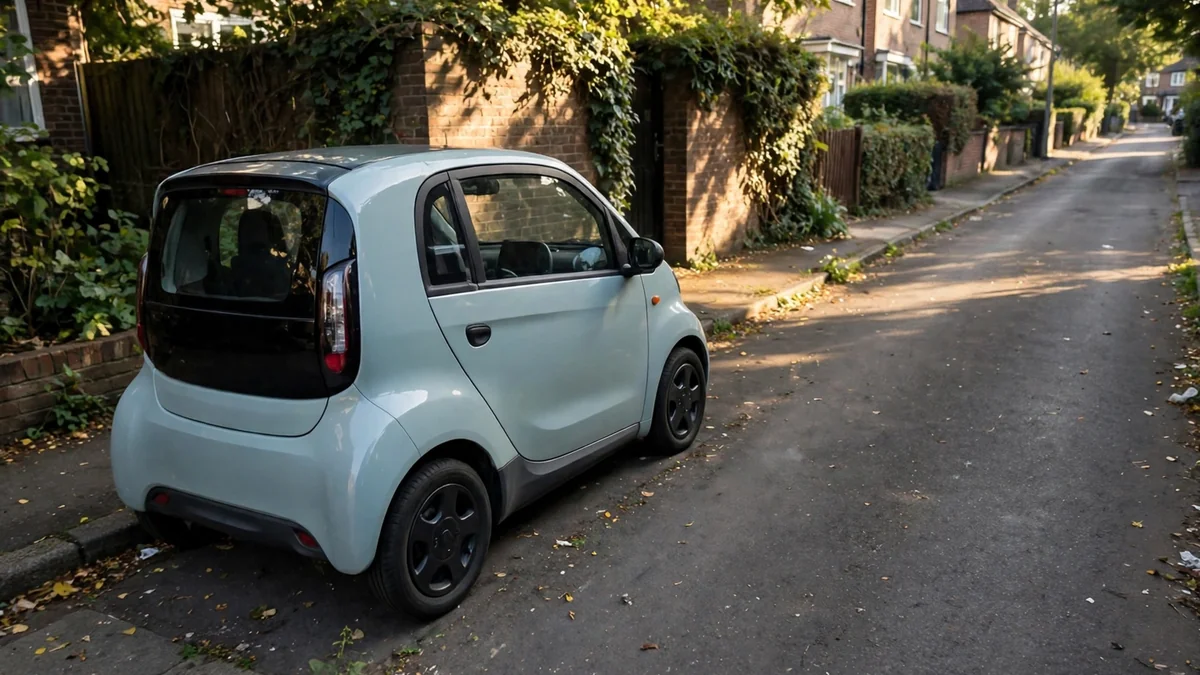
A car is usually bought for its hardest journey and then used for its easiest ones. The buyer imagines the annual holiday, the long drive to visit family, the weekend when everyone and everything has to fit, and chooses a car big enough for that day. Then, for the rest of the year, that car carries one person to work, to the shops, to school, and back again.
A Smaller Battery Is a Better Battery
The battery is the most expensive and heaviest part of an electric car, and its size sets the price of the whole vehicle. A smaller car needs a smaller battery to cover the same daily distance, because it is lighter and needs less energy to move. That saving shows up directly in the price on the windscreen, and it is the difference between an electric car that is a luxury and one that an ordinary buyer can afford.
There is a materials argument too. Batteries need metals that are mined, refined, and shipped, and a smaller pack uses less of all of them. If the goal of the electric car is to reduce the harm that driving does, then using the smallest battery that does the job is part of that goal, not a detail to be brushed aside. The engineering of the battery pack itself is explained in EV battery pack specs explained, where the trade-off between capacity, weight, and cost is laid out cell by cell.
Small Cars Fit the Streets We Have
Our streets were not built for the cars we now drive. Parking bays, side streets, and city centres were laid out when cars were narrower and shorter, and every extra centimetre of width makes parking harder, passing harder, and turning harder. A smaller electric car slips into spaces a large one has to circle the block to find, and it leaves room on the road for everyone else.

Lighter Means More Efficient
Efficiency is the quiet argument for the small electric car, and it is the strongest one. Moving a heavy car takes more energy than moving a light one, on every journey, at every speed, in every season. A large electric car may have a bigger battery, but much of that battery is spent carrying itself around, and the range on the dashboard flatters the engineering rather than the physics.
A smaller car turns the same amount of stored energy into more miles, because less of it is wasted on mass. That means the range that matters, the range per unit of battery, is better in the small car, even when the headline range is lower. The driver who thinks in terms of efficiency rather than capacity will find the small car goes further on less, costs less to run, and asks less of the charging network.
Safer for Everyone Outside the Car
A car is not only a machine for its occupants. It shares the road with pedestrians, cyclists, and other drivers, and its size and weight decide what happens when something goes wrong. A heavier car carries more energy into a collision, and a taller car with a high, flat front is harder for a driver to see over and more dangerous for a person on foot.
A smaller electric car is lower, lighter, and easier to see out of. Its driver can judge the kerb, the crossing, and the cyclist alongside with less guesswork, and if the worst happens, the forces involved are smaller. That is not a sentimental argument. It is an engineering one: mass is the enemy of safety for everyone who is not inside the vehicle.
The quiet running of an electric car is often praised, and the same logic applies here. A small, light electric car is the version of the idea that asks the least of the people around it, and that should count for more than it does in the showroom. How that quiet running is achieved is described in how a luxury electric car works, where the motor, the battery, and the silence are traced from the road to the cabin.
The Counter-Case: Sometimes Big Is the Right Answer
None of this means large electric cars should not exist. Families with several children, drivers who tow, people who live far from a town and drive long distances in all weathers, and anyone whose work means carrying heavy loads will need a bigger car, and they should be able to buy one. A small car cannot do everything, and pretending otherwise would be dishonest.
Long journeys are the real test. A small battery means more charging stops on a long drive, and in places where chargers are scarce that is a genuine inconvenience. Cold weather, hills, and a full car all reduce range, and a small car has less margin to absorb them. For the driver who regularly crosses a country, the bigger battery is not a luxury but a necessity.
The honest answer is that the market needs both, but it needs them in the right proportion. The best luxury electric cars show what a large car can do at its best, and the ranking of the best luxury electric cars of 2027 is a reminder that big cars can be magnificent. The question is not whether they are good, but whether they should be the first car most people buy.
Verdict: Buy the Smallest Car That Fits Your Real Life
The smaller electric car deserves to be the default, not the apology. It fits the journeys most people make, it costs less to buy and to run, it uses a smaller battery to do the same daily work, it fits the streets we actually have, and it is kinder to everyone outside it. Its limits are real, but they are limits that most drivers will rarely meet, and they can be worked around on the rare days they matter.
The electric age gave car makers a chance to rethink the car from the ground up. The boldest thing they could do with that chance is also the simplest: build the car smaller. The future of driving is not a bigger battery in a bigger box. It is a right-sized car, quietly doing the ordinary job, day after day, without asking the driver, the street, or the planet to pay for size nobody needed.