The first time most people think about an electric car’s battery, it is because of a single number: range. How far will it go on a charge? But range is only the last number in a long chain of specifications, and the ones that come before it — capacity, voltage, energy density, charge rate — decide almost everything about how the car actually behaves.
An EV battery pack is the largest, heaviest, and most expensive single component in an electric car, often weighing half a tonne and costing more than the rest of the drivetrain combined.
This guide explains the key numbers on an EV battery pack spec sheet in plain English: what capacity really means, why voltage matters more than most buyers realise, how fast charging actually works, and which figures are worth comparing when you are choosing between cars.
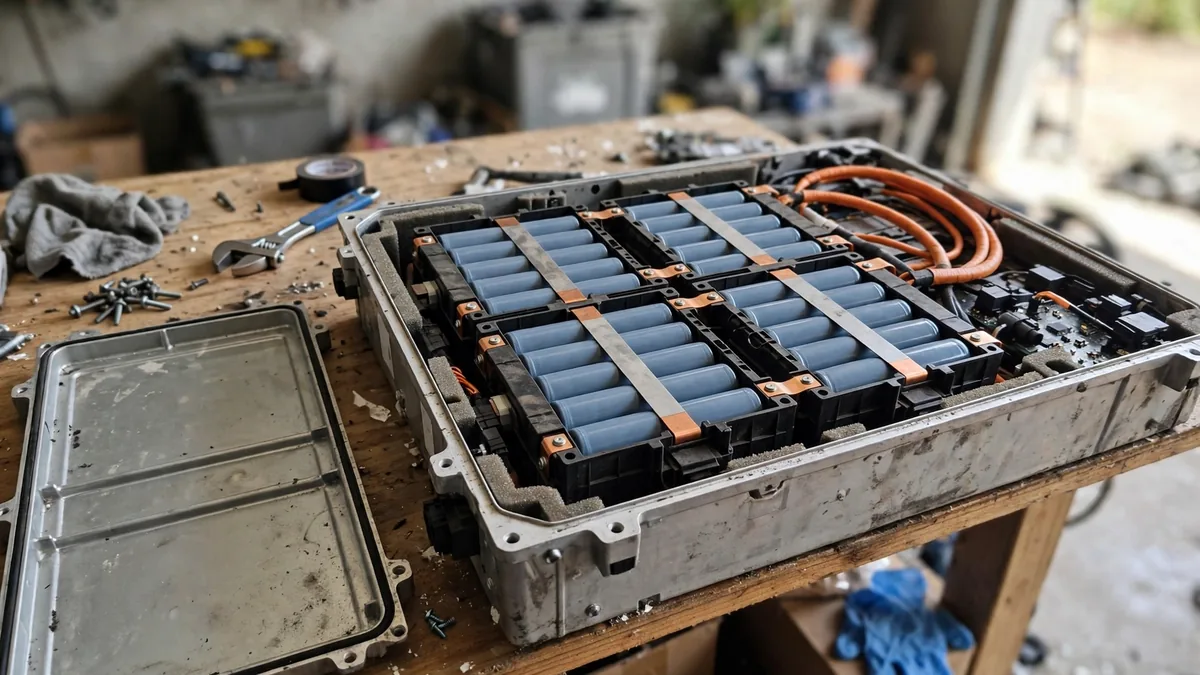
EV Battery Pack Specs Explained
1. Capacity: the size of the tank
Capacity is measured in kilowatt-hours, usually written kWh, and it is the closest thing an EV has to a fuel tank size. A typical family EV carries 60 to 80 kWh, while long-range models reach 100 kWh or more. One kilowatt-hour is the energy used by a one-kilowatt appliance running for an hour, and a car that uses 15 kWh per 100 kilometres will travel roughly 400 kilometres on a 60 kWh pack. Capacity is the single biggest driver of range, but it is not the whole story: a heavy car with a big pack can go less far than a light car with a smaller one.
2. Voltage: the pressure in the system
Voltage is the electrical pressure in the pack, and modern EVs run at either around 400 volts or around 800 volts. The difference matters most at the charger: for the same power, doubling the voltage halves the current, which means thinner cables, less heat, and much faster charging. An 800-volt car can add hundreds of kilometres of range in under twenty minutes at a suitably powerful charger, while a 400-volt car on the same charger will take considerably longer. The individual cells inside the pack and how they are wired are explained in the EV battery cell specs, and the way the whole pack is assembled is covered in how an EV battery pack is made.
3. Energy density: how much power fits in a kilogram
Energy density measures how much energy a battery holds per kilogram or per litre, and it is the number that decides how heavy and how large a pack must be for a given range. A typical modern EV pack stores roughly 150 to 270 watt-hours per kilogram at cell level, though the finished pack is lower once the casing, cooling, and structure are added. Higher density means more range from the same weight, or the same range from a lighter car — and weight is everything in a vehicle, affecting handling, braking, and efficiency.
4. Charge rate: how fast it fills up
Charge rate is measured in kilowatts, and it is the maximum power the pack can accept — typically 150 to 350 kW on a modern fast charger. But the peak figure is only part of the story. A pack charges fastest when it is nearly empty and slows dramatically as it fills, so the time from 10 to 80 percent is the honest number to compare, not the peak kilowatt figure. The materials that make fast charging possible without damaging the cells are covered in the materials engineering of the EV battery pack.
5. Cycle life and degradation: how long it lasts
Cycle life is the number of full charge-and-discharge cycles a pack can survive before its capacity falls to about 80 percent of its original value — typically 1,000 to 2,000 cycles for a modern EV, which translates to roughly 300,000 to 500,000 kilometres of driving. Degradation is gradual, not sudden: a pack loses a few percent in its first year and then settles into a slow decline. Warranties usually guarantee at least 70 percent capacity after eight years or around 160,000 kilometres.
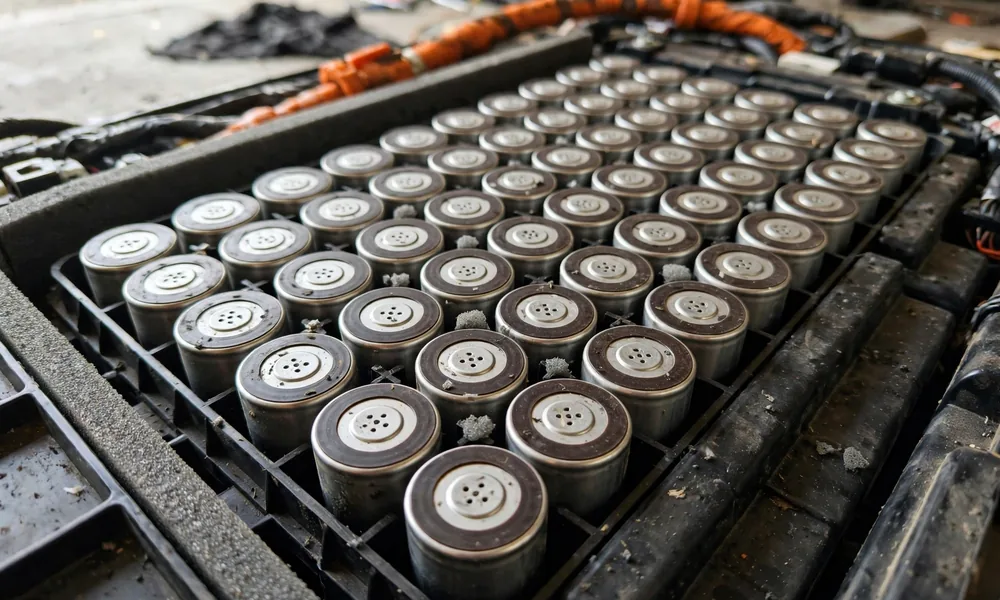
6. Thermal management: keeping the pack in its comfort zone
A battery pack works best between roughly 20 and 40 degrees Celsius, and keeping it there is the job of the thermal management system — usually a liquid cooling loop that snakes through the pack, with a heater for cold mornings. The spec sheet rarely gives this system a headline number, but its quality shows up in the numbers that do appear: charge rate, range in winter, and degradation over time. A well-cooled pack charges faster, lasts longer, and loses less range in the cold.
7. Weight and packaging: the half-tonne in the floor
A typical EV pack weighs 400 to 600 kilograms, and most of that weight sits low in the floor, between the axles. That placement is a gift to handling — a low centre of gravity makes the car stable and planted — but it also means the pack is structural, forming part of the car’s crash protection. Pack energy is sometimes quoted as watt-hours per kilogram at pack level, which is the honest figure for comparing cars, and it usually lands between 130 and 180 Wh/kg once the casing and cooling are included. The weight is also why pack cost is so closely watched: at current prices the battery is the most expensive part of the car, a subject covered in why the EV battery pack is so expensive.
EV Battery Pack Specs
| Specification | Typical range |
|---|---|
| Capacity | 60 to 100 kWh |
| Voltage | 400 V or 800 V architecture |
| Energy density (cell) | 150 to 270 Wh/kg |
| Peak charge rate | 150 to 350 kW |
| 10 to 80% charge time | 18 to 35 minutes |
| Cycle life | 1,000 to 2,000 cycles to 80% capacity |
| Pack weight | 400 to 600 kg |
| Operating temperature | 20 to 40 °C ideal |
What Does an EV Battery Pack Cost?
A replacement EV battery pack is estimated at roughly $10,000 to $20,000 for a mainstream car and $20,000 to $30,000 or more for a large long-range pack, before labour. At the level of the cells themselves, pack prices have fallen to an estimated $100 to $140 per kilowatt-hour, down from several hundred dollars a decade ago. All prices are estimates only and vary widely by model, capacity, and market. The falling price of the pack is the main reason electric cars keep getting cheaper.
A Rare Fact
The first electric cars of the 1890s used lead-acid batteries, and one of them — the 1899 La Jamais Contente, a bullet-shaped Belgian car — became the first vehicle of any kind to travel faster than 100 kilometres per hour. It ran on lead-acid cells, weighed more than a tonne, and needed its batteries recharged after every run. Every number on a modern spec sheet is an answer to that old question.

The spec sheet is the honest version of the sales brochure. Capacity tells you the size of the tank, voltage tells you how fast it can fill, density tells you how heavy the answer is, and cycle life tells you how long the answer lasts.


