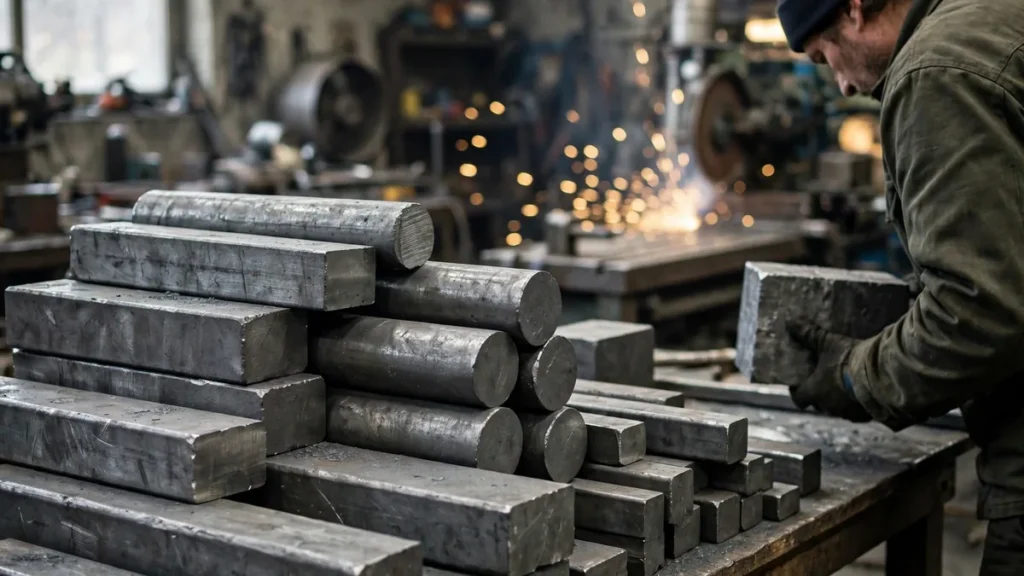
There is a metal that melts at a temperature no ordinary factory furnace can reach, so dense that a bar the size of a chocolate bar weighs as much as a brick, and so hard that it can cut through steel. It is tungsten, and on its own it is almost unusable: too brittle to bend, too hard to machine, too stubborn to melt and cast. The tungsten alloy is the compromise that makes this extraordinary metal useful, blending it with nickel, iron or copper until it can be shaped, drilled and trusted where nothing else survives.
Tungsten alloys live in the hottest, hardest places in engineering: the throat of a rocket nozzle, the counterweight in a race car, the shielding around a radiation source, the filament that once lit every home.
Here is what those materials are, and why each one earned its place.
The Materials Behind Tungsten Alloy
1. Tungsten itself, the metal that refuses to melt
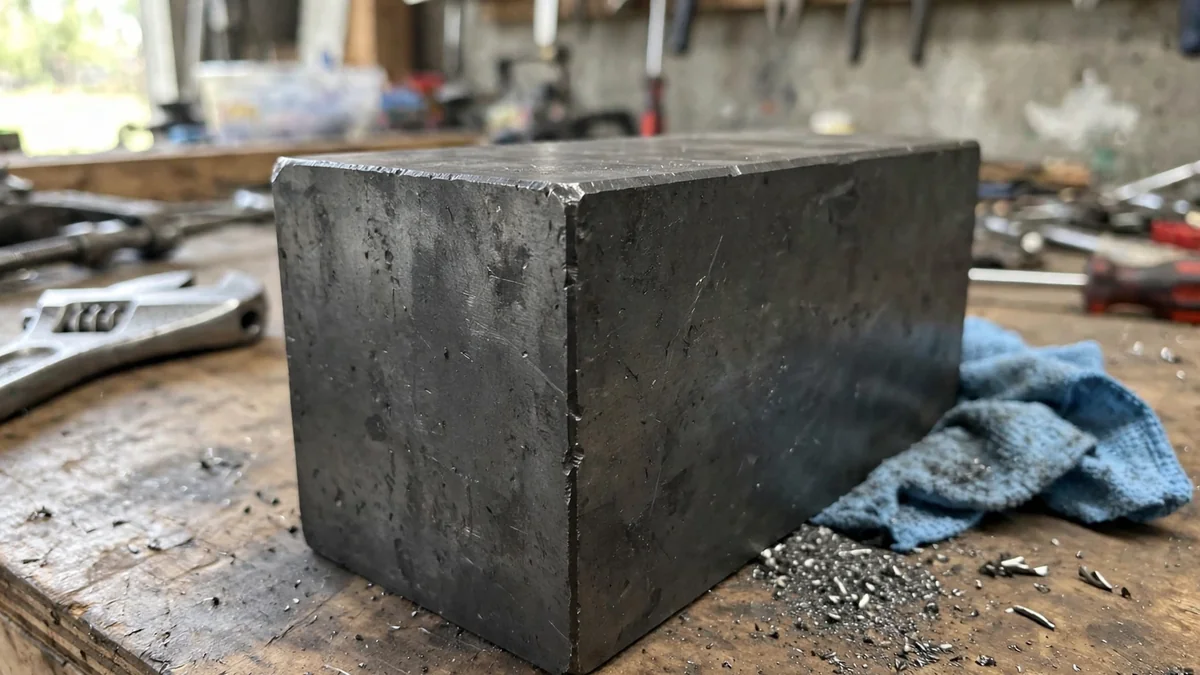
Tungsten is the starting point, and its numbers are extreme. It melts at 3,422 degrees Celsius, the highest melting point of any metal, and it is nearly twice as dense as lead, at 19.3 grams per cubic centimetre. That density packs weight into a small space, and that melting point lets it survive inside furnaces, rocket nozzles and light bulbs. Pure tungsten is brittle at room temperature and almost impossible to cast, because no ordinary crucible can hold molten tungsten, so it is usually worked as a powder, pressed and heated until the grains fuse. The way that powder becomes a finished part is shown in inside tungsten alloy production, from powder to sintered billet.
2. Nickel and iron, the binders that make it tough
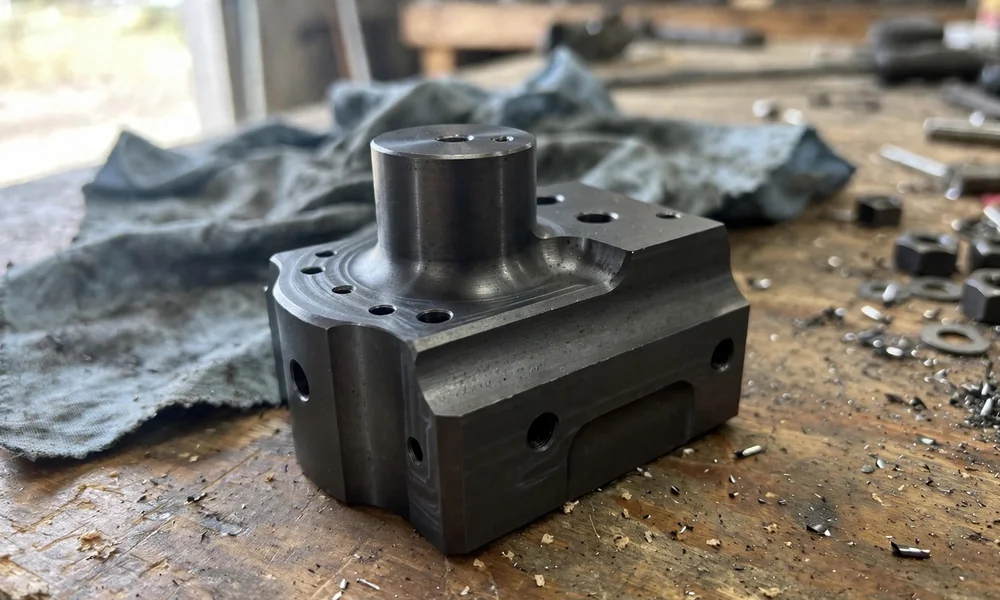
The most common tungsten alloys are the heavy alloys, typically 90 to 97 percent tungsten, the rest nickel and iron. The nickel-iron blend melts at a far lower temperature than tungsten, so during sintering it flows between the tungsten grains and glues them together into a dense, machinable metal. The result keeps most of tungsten’s density, around 17 to 18.5 grams per cubic centimetre, but it can be drilled, milled and threaded like an ordinary metal, and is far tougher than pure tungsten. The balance is tuned to the job: more nickel makes the alloy more ductile, more iron makes it stronger, from a vibration damper to a radiation shield.
3. Copper, the binder that carries heat and current
Some tungsten alloys use copper instead of iron, and the reason is heat. Tungsten-copper is used for electrical contacts, welding electrodes and heat sinks in electronics, because copper conducts heat and electricity superbly while tungsten gives the alloy its strength and resistance to wear. A tungsten-copper contact in a circuit breaker can interrupt enormous currents without welding itself shut, and a tungsten-copper welding electrode survives heat that would destroy a copper one. The two metals do not truly alloy; they form a composite, with copper filling the spaces between tungsten grains, made by infiltrating a porous tungsten skeleton with molten copper.
4. Carbide, the cutting edge of tungsten
Tungsten carbide is the hardest material in this story, and it is not a metal at all but a ceramic-like compound of tungsten and carbon, usually bound with cobalt. It is the material of drill bits, cutting tools and mining teeth, and can cut steel at speeds that would melt an ordinary tool. The cobalt binder, usually 6 to 12 percent, holds the carbide grains together and gives the material just enough toughness to survive an interrupted cut. A tungsten carbide tool is expensive and brittle, and is brazed onto a steel shank rather than made whole, but for cutting metal it has no serious rival.
5. Molybdenum and rhenium, the partners for extreme heat
For the hottest jobs, tungsten is alloyed with molybdenum or rhenium. Tungsten-rhenium is used for thermocouples that measure temperatures above 2,000 degrees Celsius, and for rocket nozzles and furnace parts, because rhenium makes tungsten ductile enough to be drawn into wire and formed into shapes. Molybdenum, tungsten’s lighter cousin, improves workability and lowers the cost. These are niche alloys for aerospace and research, made in small batches and priced accordingly. The superalloys in the hottest part of a jet engine face a similar problem, and the materials behind Inconel alloy show how another family of metals solves it.
6. Sintering, the shaping that never melts the metal
Almost every tungsten alloy is made by powder metallurgy, because the metal cannot be melted and cast normally. Fine tungsten powder is mixed with the binder metals, pressed into shape, and heated until the binder melts and the tungsten grains bond, a process called liquid-phase sintering. The part shrinks as it densifies, so the mould must be made oversize, and the finished part is machined to its final dimensions. It is a slow, expensive process, and the reason tungsten parts cost so much, but also the only way to shape a metal that refuses to melt. The contrast with a metal that is forged rather than sintered is shown in the materials behind titanium forging, where heat and pressure shape a metal that can actually be melted.
Tungsten Alloy Materials
| Material | Where it is used | Why it is chosen |
|---|---|---|
| Tungsten | Base metal of every alloy | Highest melting point of any metal, extreme density |
| Nickel and iron | Heavy alloy binders | Glue tungsten grains, add toughness and machinability |
| Copper | Electrical and heat-sink alloys | Conducts heat and current, tungsten adds wear resistance |
| Tungsten carbide | Cutting tools and drill bits | Harder than steel, keeps its edge at high speed |
| Rhenium | Extreme-temperature alloys | Makes tungsten ductile, survives above 2,000 degrees |
| Powder sintering | Shaping the alloy | Only practical way to form a metal that will not melt |
What Does Tungsten Alloy Cost?
Tungsten alloy is expensive, and the price starts with the raw metal. Tungsten is estimated at roughly $30 to $40 per kilogram, against roughly $2 to $3 for steel, and the finished heavy alloy costs more again once the nickel, iron and sintering are counted. A small tungsten counterweight for a race car can be estimated at $500 to $2,000, and a tungsten carbide cutting tool at $50 to $300, depending on size. The cost is justified where the job is impossible any other way: a shield must be dense, a nozzle must not melt, a tool must stay hard. Where those demands do not apply, engineers use steel and save the money.
A Rare Fact
Tungsten’s name tells its history. It comes from the Swedish tung sten, meaning heavy stone, because the mineral was so dense that miners thought it was a worthless rock that ate up the tin in their ore. Its chemical symbol, W, comes from its other name, wolfram, from the German wolf rahm, or wolf’s foam, because the metal seemed to devour tin like a wolf. Tungsten is also the metal in the filament of the old incandescent light bulb, which runs at about 2,500 degrees Celsius, a temperature at which every other common metal would have melted.

Tungsten alloy is engineering at the edge of what is possible: a metal that will not melt, made usable by binders that will, shaped without ever becoming liquid. Nickel and iron make it tough, copper makes it conduct, carbide makes it cut, and rhenium lets it run hotter than almost anything else. It is expensive, heavy and difficult, and for the jobs it does, there is simply nothing else.