Pick up a bar of tungsten alloy and the first surprise is the weight. A piece the size of a paperback feels like a brick, and a brick-sized piece feels like it should need two hands. It is nearly twice as dense as lead, and it stays strong when other metals have long since gone soft. That is why it ends up in jet engines, radiation shielding, racing crankshafts and armour — and why it costs so much. A small block can cost more than a month’s wages.
Tungsten alloy is not a metal you dig up and pour. Tungsten ore is scarce, the metal melts at the highest temperature of any metal, and it is so hard and brittle that shaping it takes furnaces, presses and diamond tools that most workshops do not own. Every step — mining, refining, sintering and machining — is slow, hot and expensive. That chain of difficulty is what makes the alloy so expensive.
The money goes into rare ore, furnaces that run hotter than a volcano, and machining that wears out tools in hours. Here is where it goes.

Why Tungsten Alloy Costs So Much
1. Ore that is rare and hard to win
Tungsten does not occur as a shiny metal in the ground. It comes locked inside ores like wolframite and scheelite, mined in only a handful of countries, and the ore grades are low — tonnes of rock for a small amount of metal. The mines are often remote, the ore must be crushed and chemically refined to a powder, and supply is concentrated enough that prices swing sharply. A tungsten part starts life as a powder worth more per kilogram than most finished steel. How the alloy is made from that powder is covered in our look at inside tungsten alloy production.
2. A melting point no ordinary furnace can reach
Tungsten melts at about 3,422 degrees Celsius, the highest of any metal, and far beyond what a normal foundry furnace can reach. So tungsten parts are not cast like steel. The powder is pressed into shape and sintered — heated in a hydrogen furnace until the grains bond without fully melting — in a process that takes hours and huge amounts of energy. The furnaces are specialised, the atmosphere must be controlled to keep oxygen out, and a failed sintering run can ruin a batch worth thousands. The materials and why engineers chose them are explained in our look at the alloy’s engineering, as covered in our guide to tungsten alloy materials.
3. Hardness that eats machine tools
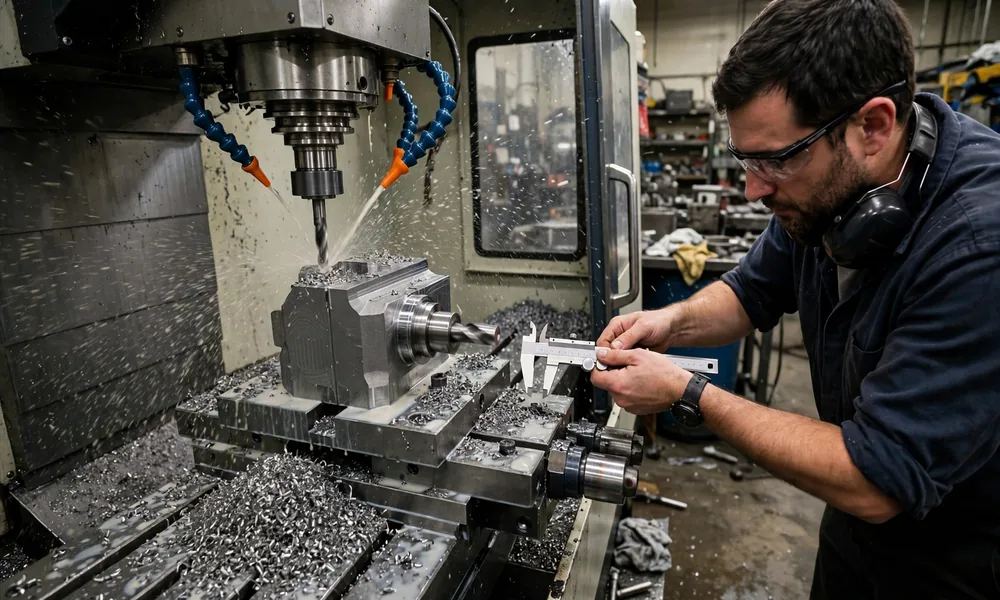
Once sintered, tungsten alloy is so hard and dense that ordinary cutting tools barely scratch it. Machining a tungsten part means slow speeds, diamond or carbide tooling, constant coolant, and tools that wear out far faster than they would on steel. A feature that takes minutes in aluminium can take hours in tungsten. Some shapes cannot be machined at all and must be pressed to near-final shape before sintering, which means expensive dies for every new design.
4. Density that makes every gram count
Tungsten alloy is about 17 to 18.5 grams per cubic centimetre, nearly twice the density of lead and more than twice that of steel. That density is the point — it is used where a small, heavy part is needed — but it also means the raw material bill is heavy in the most literal sense. A radiation shield the size of a lunchbox can weigh ten kilograms, and every kilogram is bought at tungsten prices.
5. Purity and testing that never stop
Tungsten alloy for aerospace, medical and defence work is bought to strict specifications, and every batch is tested: density, hardness, grain size and chemical composition are measured and recorded, and parts are checked with X-ray and ultrasonic inspection for hidden cracks. A single failed test can scrap a whole batch, and the paperwork that proves the metal is what it claims to be is part of the price. The numbers behind the alloy are set out in our guide to tungsten alloy specs.
6. Low volumes and few makers
There are only a few dozen plants in the world that can sinter and machine tungsten alloy well, and most of their orders are small — a handful of parts for one engine, one medical device, one instrument. There is no mass market to spread the cost of furnaces, dies and testing over, so each small order carries a large share of the workshop’s costs. A mass-market steel part spreads its development cost over millions of units; a tungsten part spreads its over a few dozen.

Tungsten Alloy Costs at a Glance
| Part of the cost | Estimated cost | What drives it |
|---|---|---|
| Tungsten powder | $50–$120 per kilogram | Scarce ore, low grades, chemical refining |
| Sintering and furnaces | $30–$80 per kilogram | Hydrogen furnaces, high energy, long cycles |
| Machining | $100–$400 per part | Diamond tooling, slow speeds, fast tool wear |
| Dies and tooling | $5,000–$50,000 per design | Pressed shapes need expensive dies |
| Testing and certification | $500–$5,000 per batch | Density, X-ray, ultrasonic and chemical checks |
| Small-batch overhead | 20–40% of part cost | Few makers, tiny orders, no mass market |
| Total for a machined part | $200–$2,000+ per part | All costs above, by size and complexity |
All prices in the table are estimates only, and vary with alloy grade, part size and order volume.
What Does Tungsten Alloy Cost?
A machined tungsten alloy part is estimated at $200 to $2,000 or more, depending on size and complexity, with raw tungsten alloy stock estimated at $80 to $200 per kilogram and large or complex parts reported well above $5,000 once dies and testing are included. Prices are estimates only and vary with alloy grade, part size and order volume. The alloy is never sold in a normal shop in any real sense — it arrives as powder, bar or a finished part from a specialist supplier — but the estimate reflects what it takes to turn scarce ore into a metal that survives temperatures where steel melts, shaped by tools that wear out in hours.
Tungsten Alloy Specifications
| Specification | Typical value |
|---|---|
| Density | 17.0–18.5 grams per cubic centimetre |
| Tungsten content | 90–97% tungsten, balance nickel and iron |
| Melting point of tungsten | About 3,422 degrees Celsius |
| Tensile strength | 700–1,000 megapascals |
| Hardness | 25–32 Rockwell C |
| Thermal conductivity | About 100–170 watts per metre-kelvin |
| Common forms | Bar, rod, plate, block, sintered parts |
| Main uses | Counterweights, shielding, aerospace, racing |
A Rare Fact
Tungsten is so dense that a small tungsten alloy cube the size of a sugar lump weighs about as much as a whole bar of aluminium the size of a smartphone — and it was once used to make counterfeit gold bars, because a tungsten core wrapped in gold weighs almost exactly the same as a solid gold bar. The trick was only caught by careful testing, since tungsten is nearly as dense as gold — which is why assayers now test bars with ultrasound instead of trusting a scale.
Tungsten alloy is the heavyweight of the engineering world — a metal that refuses to melt, refuses to wear, and refuses to be cheap. Its cost is the price of that refusal: rare ore, furnaces hotter than any foundry, and machine tools that wear out just trying to cut it. Pick up a tungsten bar and feel the weight in your hand, and the price stops looking strange. It feels like the only way a metal this stubborn could ever be made.


