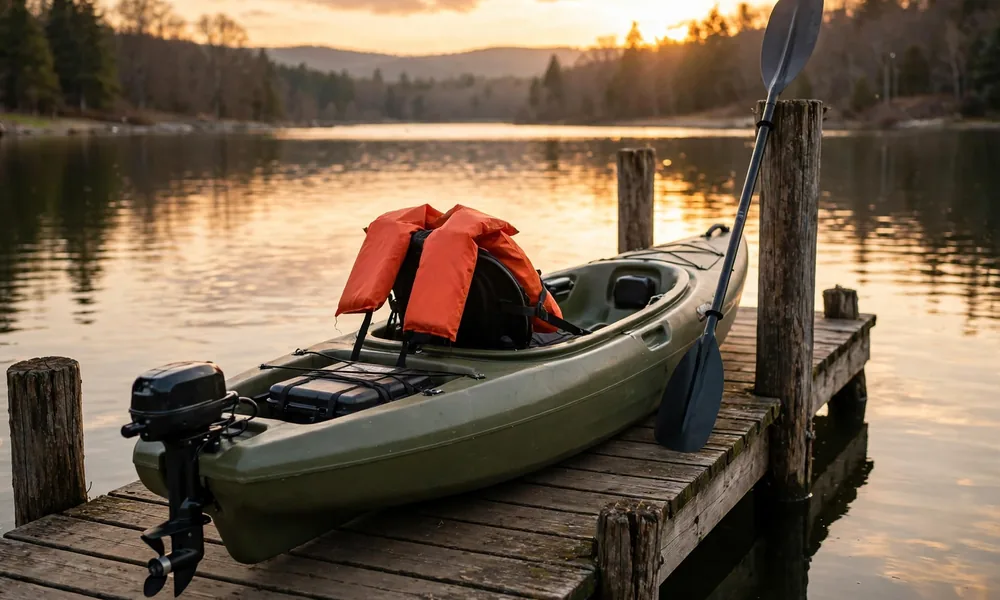
A kayak is a small, narrow boat you sit in and paddle with a double-ended paddle. An electric kayak keeps all of that and adds a motor: a small electric propeller or jet under the hull, a battery tucked into the boat, and a controller that lets you move without paddling at all.
The result is a craft that sits between a kayak and a small electric boat. It is quiet, easy to launch, and surprisingly capable, and it has opened kayaking to people who could never paddle far against the wind. This guide explains what an electric kayak is, how it works, and who it is for.

The kayak, with a motor added
An electric kayak looks like an ordinary kayak from above: long, narrow, and low in the water, with a seat in the middle and a paddle across the deck. Most are between three and four metres long, and they are usually rigid plastic or composite hulls, though some are inflatable. The difference is underneath and inside.
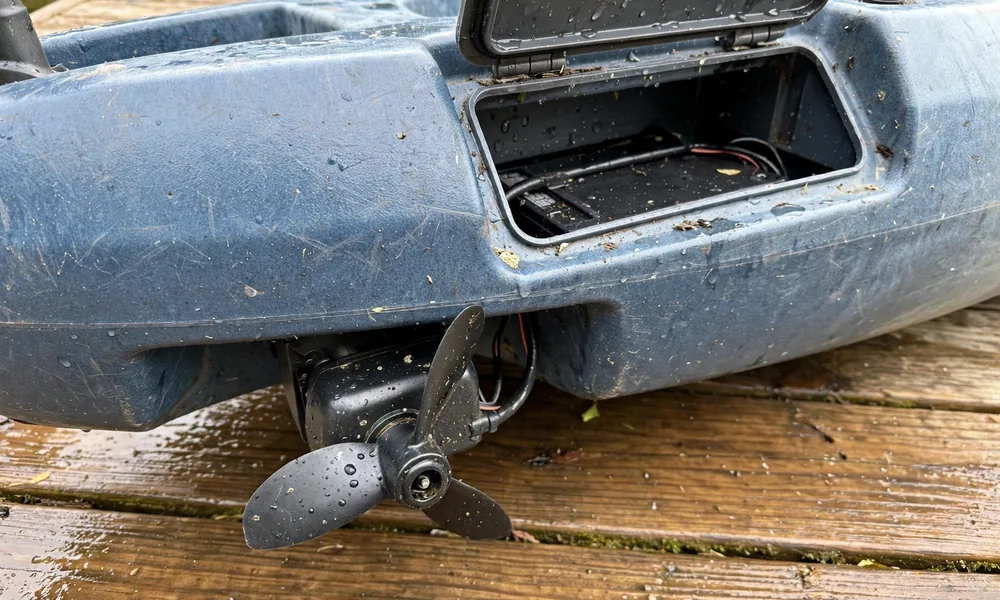
Under the hull, near the stern, sits the propulsion unit: either a small propeller in a protective shroud or a water jet that draws water in and pushes it out behind. Inside the hull is the battery, usually a lithium-ion pack sealed into a waterproof compartment, and a controller that takes the signal from the throttle and turns it into power at the motor. The whole kayak weighs more than a normal one, often 25 to 35 kilograms, because of the motor and battery, but it is still light enough to carry to the water with a friend.
How the motor and battery work
The motor on an electric kayak is a small brushless electric motor, the same kind found in drones and electric bikes, sealed against water. It is usually rated at around half a kilowatt to one kilowatt, which is modest by boat standards but plenty for a craft that weighs less than its paddler. The motor drives the propeller directly, with no gearbox, which keeps it quiet and simple.
The battery is the heart of the kayak, and it is a lithium-ion pack of roughly half a kilowatt-hour to one kilowatt-hour. At a gentle cruising speed it gives around two to three hours of motoring, and at full speed that drops to under an hour. The battery is removable on many kayaks, so a paddler can carry a spare and swap it on the shore, and it charges from an ordinary mains socket overnight.
How you control it
The paddler controls the motor with a small throttle, usually a twist grip or a thumb lever mounted beside the seat, or a wireless remote held in the hand. Twist it and the kayak accelerates; release it and the kayak slows to a stop. Some systems add a small display showing speed and battery level, and a few offer a cruise mode that holds a steady speed while the paddler rests.
Steering is done the old-fashioned way: with the paddle, and with a small rudder on kayaks that have one. The motor pushes the kayak forward, and the paddler steers it, which means the kayak behaves like a normal kayak that happens to move on its own. Reverse is available on many systems, which makes launching from a slipway and manoeuvring in a tight spot much easier than in a paddle-only kayak.
How fast, how far, and where you can paddle
An electric kayak typically cruises at around 6 to 8 kilometres per hour and reaches a top speed of around 10 kilometres per hour. That is not fast by boat standards, but it feels fast when you are sitting a few centimetres above the water, and it is about twice the speed a fit paddler can sustain. It turns a long paddle against the wind into a relaxed cruise.
Range depends on speed. At a gentle cruise, a kayak will cover 15 to 20 kilometres on a charge. At full speed, that falls to half as much. Wind and current matter a great deal: a headwind that would exhaust a paddler is simply ridden through on an electric kayak, but it costs battery, and a wise paddler keeps enough charge in reserve for the return trip.
Kayak, paddleboard, jet ski: where it sits
The electric kayak has close cousins, and the differences are worth knowing. An electric paddleboard is ridden standing up, which is harder on balance and better for a workout, while the kayak is sat in, which is steadier and kinder to older paddlers. What an electric paddleboard is covers that craft in its own right, and the kayak is the seated, sheltered alternative.
At the faster end sits the electric jet ski, which is bigger, faster and louder, and needs a trailer and a licence in many places. What an electric jet ski is is the machine for speed, while the kayak is the machine for quiet water and close-up wildlife. The electric hydrofoil board is faster still, lifting clear of the water altogether, and what an electric hydrofoil board is explains that very different ride. The kayak is the calm one in the family.
Safety and the rules of the water
An electric kayak is a small vessel, and on most waters it is treated like one. The rules vary by country and by waterway, but the common requirements are a life jacket, a whistle or other sound signal, and a light after dark. Some lakes and rivers restrict motorised craft, and an electric kayak may count as motorised even though it is silent, so it is worth checking the local rules before launching.
The safety habits are simple. Wear a life jacket, even though the water looks calm. Stay within swimming distance of the shore if you are alone. And keep an eye on the battery: the kayak does not paddle itself home when the battery is flat, and paddling a heavy electric kayak against the wind is hard work, though it is still possible, which is more than can be said for most motorised craft.
Buying and owning one
Electric kayaks cost more than ordinary kayaks, and the price reflects the motor and the battery. A decent kayak typically costs a few thousand pounds or dollars, and a second battery adds a few hundred more.
The battery is the part that wears out. Like any lithium-ion battery, it loses capacity over hundreds of charge cycles, and after a few years of regular use it may hold noticeably less charge. Replacement batteries are available from the manufacturer, and they are the biggest running cost of the kayak. The motor itself is sealed and largely maintenance-free, and the propeller is the only part likely to need replacing, usually after a scrape on a rock or a tangle with weed.
The quiet appeal
The best thing about an electric kayak is the quiet. There is no engine noise, no exhaust smell, and no wake to disturb the water. The paddler glides across a lake with only the sound of the water under the hull, and the wildlife does not scatter. It is the closest thing to paddling, without the paddling, and for people who love the water but not the effort, that is enough.