Open the bonnet of a modern electric car and you will not find an engine. You will find a quiet metal box, about the size of a shoebox, bolted to the motor. It has no moving parts, makes no noise, and does nothing you can see. Yet without it the car would not move at all. It is the inverter, and in the best electric cars it is built from silicon carbide — a material so hard it is used to grind steel, and so expensive that it changes the price of the whole car.
The inverter’s job is simple to describe and hard to do: it turns the battery’s direct current into the alternating current the motor needs, hundreds of times a second, at hundreds of volts. Do it badly and the car wastes energy as heat. Do it with silicon carbide and the car goes further, charges faster and runs cooler. The material is the reason for the improvement, and the reason for the price.
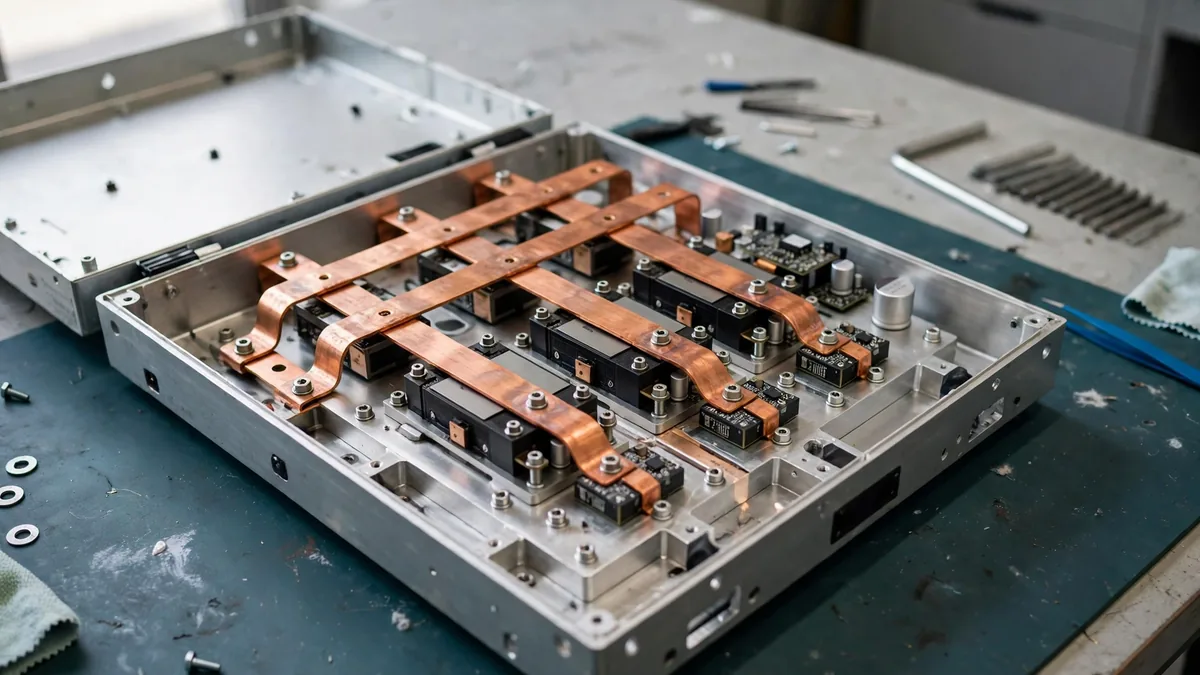
Why an EV Silicon Carbide Inverter Costs So Much
A silicon carbide inverter looks like any other electronic box, but almost everything inside it is harder to make, harder to test and harder to buy than the silicon version it replaces. Here are the seven reasons the price is so high.
Reason 1: The crystal is slow and costly to grow
Silicon carbide does not come from sand the way ordinary silicon does. It is grown as a crystal, one wafer at a time, in furnaces running at more than 2,000 degrees Celsius for days. The process is slow, the yield is low, and a wafer with too many defects is useless. A single finished wafer can cost many times more than a silicon wafer of the same size (estimate), and the price falls on every inverter built from it. The crystal is the first and largest cost in the whole device.
Reason 2: The chips are tiny and hard to make
Once the wafer exists, it must be cut into chips and processed in a clean room, where a speck of dust can ruin a device. Silicon carbide is harder than the tools used to cut it, so the wafers are sliced slowly with diamond wire, and each chip is tested before it is packaged. Many chips fail the test, and the failures are thrown away — the cost of the good ones has to cover the bad ones too. Making these chips needs factories that cost billions of dollars (estimate) to build, and there are not many of them. The modules themselves are the heart of the device, as the silicon carbide inverter materials show.
Reason 3: It switches faster, so everything around it must be better
Silicon carbide can switch on and off far faster than silicon, which is why it wastes less energy. But that speed creates its own problems: fast switching makes electrical noise, voltage spikes and heat in the parts around the chip. The circuit board, the capacitors and the wiring all have to be designed to cope, using better materials and tighter layouts than a silicon inverter needs. The speed is the benefit, and the better supporting cast is part of the price.
Reason 4: Cooling is a design problem of its own
A silicon carbide inverter wastes less energy, but the energy it does waste is concentrated in a chip the size of a postage stamp. That heat must be pulled away fast, or the chip will fail, so the inverter sits on a liquid-cooled plate with channels machined to a fraction of a millimetre. The plate, the seals, the pump and the coolant loop are all precision parts, and they must work for the life of the car without leaking. Cooling is not an accessory. It is half the engineering of the inverter.
Reason 5: The packaging must survive a car
An inverter lives in a hostile place: under a bonnet, next to a hot motor, shaken by every bump, expected to last fifteen years. The chips are bonded to ceramic plates, wired with ultrasonic welds, and sealed in a metal case that must keep out water and dust while letting heat out. Every bond is inspected, because a single cracked joint can stop the car. Building a package that survives all of that is a specialised skill, and the testing that proves it — heat, cold, vibration, humidity — adds cost to every unit.
Reason 6: The software that drives it is complex
Switching hundreds of amps at high speed, without destroying the motor or the battery, needs control software that is tuned to the exact motor it drives. Engineers spend months calibrating the switching patterns for efficiency, quietness and smoothness, and the software must also protect the inverter from faults: a short circuit, an over-temperature, a sudden loss of cooling. That development cost is spread across the cars that use the inverter, and when volumes are small, each car carries a large share of it. The assembly and tuning are part of the story told in how a silicon carbide inverter is made.
Reason 7: Supply is tight and demand is rising
The final reason is the market. Silicon carbide wafers are wanted by every carmaker building a premium electric car, and by the makers of solar inverters and fast chargers too. Supply has grown, but demand has grown faster, and the factories that make the wafers cannot be built overnight. Carmakers pay a premium to secure supply, and that premium is passed on to the buyer. A conventional inverter is cheaper, as how an EV inverter works explains — but it cannot match what silicon carbide does, and for a long-range car, that gap is worth paying for.
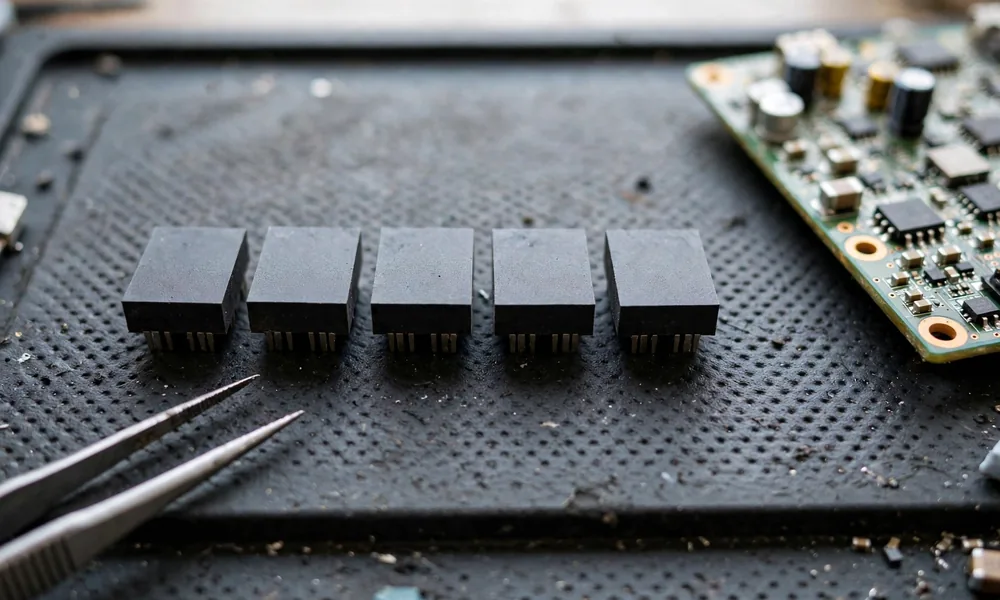
EV Silicon Carbide Inverter at a Glance
| Specification | Detail |
|---|---|
| Semiconductor | Silicon carbide (SiC) MOSFETs |
| Typical voltage | 400 to 800 volts |
| Switching speed | Far faster than silicon (estimate) |
| Efficiency | About 98 to 99 percent (estimate) |
| Wafer growth temperature | Over 2,000°C |
| Cooling | Liquid cold plate |
| Typical unit cost | $1,000 to $3,000 (estimate) |
| Main benefit | Longer range, faster charging |
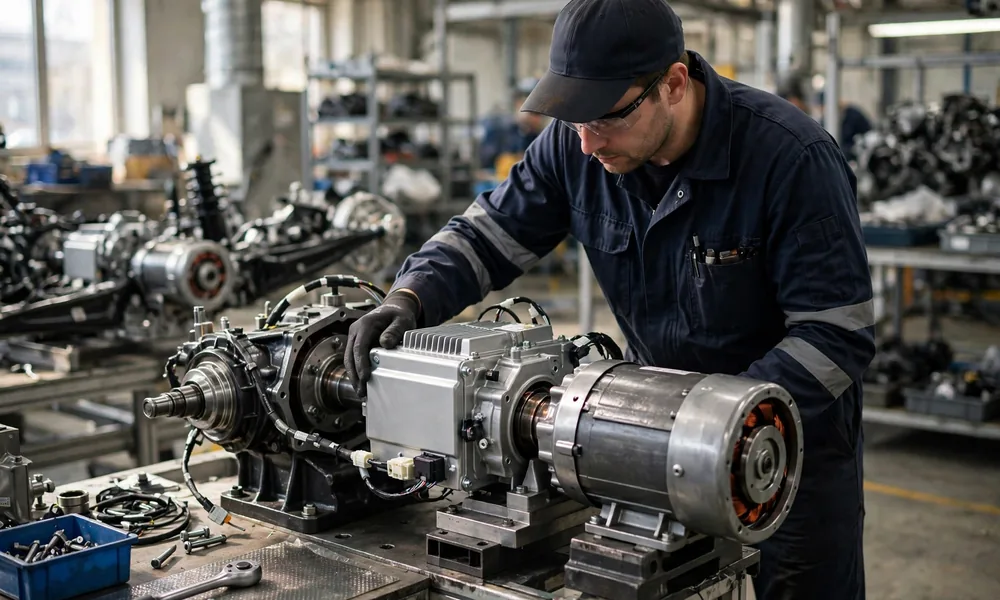
What Does It Cost?
A silicon carbide inverter typically costs between $1,000 and $3,000 (estimate) — several times the price of a silicon inverter of the same power. What that buys is range: the higher efficiency can add several percent to how far a car travels on a charge, and the faster switching allows higher-voltage charging that cuts charging times. Over the life of the car, the extra range and the shorter charging stops are worth far more than the price difference, which is why almost every premium electric car now uses silicon carbide. The buyer pays more for the box, and less in time and electricity over the years.
A Rare Fact
Silicon carbide is so hard that it is used as an abrasive — the same material that switches power in an electric car is also used to grind and polish steel. It sits just below diamond on the hardness scale, which is why the wafers are so difficult to cut and why the factories that make them need diamond tools. A material hard enough to wear away metal is now quietly doing the most delicate job in the car: switching hundreds of amps on and off, thousands of times a second, without wearing out itself.


