On a beach at low tide, a hovercraft sits on the sand like a creature that has crawled out of the sea. It has no hull in the water, no propeller churning below, just a dark, flexible curtain hanging around its base. That curtain is the skirt, and it is the whole reason the craft works. It traps a cushion of air beneath the hull, lifting the entire vehicle clear of the water, the sand, and the mud, and letting it glide where no boat and no wheeled vehicle can follow.
It looks like a rubber curtain, and in a sense it is. But a hovercraft skirt is one of the most abused parts in all of transport. It drags across sand, slams into waves, flexes thousands of times an hour, and is expected to keep working after all of it. Here is why it costs so much.
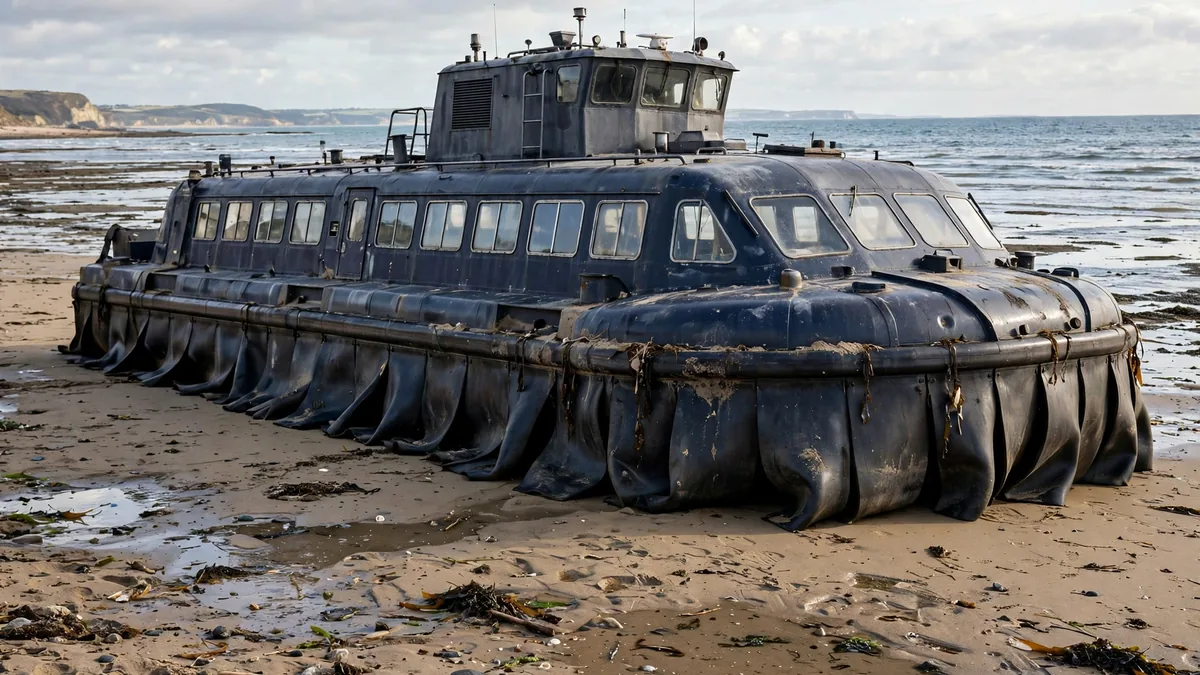
Why It Costs So Much
A hovercraft skirt is expensive because it lives a harder life than almost any other component on any vehicle. It is a flexible seal that must hold back a cushion of air at pressure, while being dragged, battered, and soaked, and it must do this for hundreds of hours between replacements. The skirt is not a single piece of rubber. It is a system of segments, fingers, and attachments, each one designed to fail gracefully, and each one made from materials that cost far more than ordinary rubber.
The materials
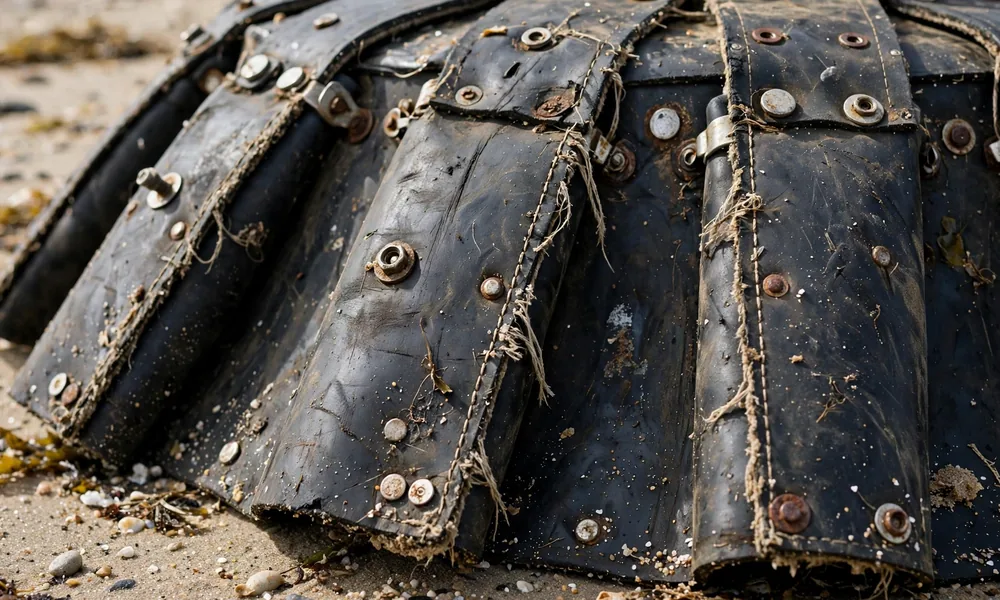
The skirt is made from rubberised fabric, layers of nylon or polyester cloth coated in neoprene or natural rubber. The fabric gives it strength, the rubber gives it flexibility and keeps the air in, and the combination has to survive salt water, sunlight, sand, and constant flexing. Ordinary rubber would crack and tear within hours. Skirt material is compounded to resist abrasion, ozone, and oil, and it is made in small batches to a specification that few mills in the world can meet.
The fingers at the bottom of the skirt take the worst of it. They are the parts that touch the water and the ground, and they are designed to be sacrificial, wearing away so the rest of the skirt survives. The attachments are just as demanding: stainless steel bolts, reinforced eyelets, and clamps that must hold through thousands of flexing cycles without tearing the fabric they grip.
The labour
A skirt is built by hand, in a workshop that looks more like a sail loft than a factory. Workers lay out huge sheets of rubberised fabric, mark them, cut them with long knives, and join them with adhesives and stitching.
Fitting the skirt to the craft is just as slow. The segments are bolted around the hull one by one, each one tensioned and checked, and the whole skirt is then tested by inflating the cushion and watching for leaks. A large passenger hovercraft has a skirt that runs for tens of metres around the hull, and fitting it can take a team days. The labour is skilled, repetitive, and hard to automate, because every skirt is shaped to one craft and every craft is different.
The rarity
Hovercraft are rare, and their skirts are rarer still. Only a few manufacturers build large hovercraft, and each one designs its own skirt system. There is no standard skirt, no catalogue part, and no aftermarket.
The materials are scarce for the same reason. Rubberised fabric to skirt specification is made by a small number of mills, in short runs, for a market that buys by the roll rather than by the tonne. The adhesives, the coatings, and the fastenings are all specialist products, and the people who know how to work with them are few. A hovercraft skirt is expensive because the whole supply chain for it is small, specialised, and irreplaceable.
The testing
Before a skirt goes into service, it is tested on the craft itself. The cushion is inflated, the craft is run over water, sand, and concrete, and the skirt is inspected after every run. Engineers look for wear patterns, for fingers that are tearing, and for seams that are opening, because a skirt that looks fine in the workshop can fail quickly in service. The testing is done in real conditions, with the craft carrying its full load, and it takes days of running time.
The testing never really stops. Operators inspect the skirt before and after every trip, and they log the wear on each segment. That constant attention is part of the cost: a skirt is not a fit-and-forget part, but a component that is watched, measured, and replaced on a schedule dictated by what the sea and the sand do to it.
The low volumes
Skirts are built in low volumes, and low volumes make everything dearer. The fabric is ordered for one skirt at a time. The cutting tables are set up for one pattern. The workshop builds a handful of skirts a year, and each one carries its full share of the rent, the tools, and the expertise. There is no production line to spread the cost, and no economy of scale to soften it.
Low volume also means the skirt is a recurring cost, not a one-off. A hard-working hovercraft can wear through a skirt in a year or two, and each replacement costs nearly as much as the first. The skirt is expensive to buy, and it is expensive to keep buying.
Cost Breakdown
Exact prices are rarely published, so these figures are estimates showing where the money goes.
| Cost area | Estimated share | Estimated cost |
|---|---|---|
| Rubberised fabric and materials | 30% | $15,000 – $45,000 (estimate) |
| Cutting, joining, and assembly | 25% | $12,500 – $37,500 (estimate) |
| Fastenings, fingers, and spares | 15% | $7,500 – $22,500 (estimate) |
| Design and pattern-making | 12% | $6,000 – $18,000 (estimate) |
| Fitting and cushion testing | 10% | $5,000 – $15,000 (estimate) |
| Shipping and installation support | 8% | $4,000 – $12,000 (estimate) |
| Total per skirt | 100% | $50,000 – $150,000 (estimate) |
Specifications
| Feature | Typical detail |
|---|---|
| Material | Rubber-coated nylon or polyester fabric |
| Structure | Segmented skirt with replaceable fingers |
| Function | Traps the air cushion beneath the hull |
| Operating pressure | Low pressure, a fraction of a car tyre |
| Wear life | About 500 to 2,000 operating hours |
| Replacement | Segment by segment, or full skirt |
| Environments | Water, sand, mud, ice, and concrete |

A Rare Fact
A hovercraft skirt is designed to be damaged. The fingers at its base are meant to wear away, tear, and be replaced, because it is far better for a cheap finger to fail than for the skirt itself to rip. Some operators carry spare fingers on board and change them on the beach between trips, like changing a tyre. It is the only part of a vehicle that is built to be sacrificed, a curtain of rubber that dies a little on every journey so the craft can keep flying. To see how it works, read how a hovercraft skirt works, how a yacht bow thruster is made, and why a ship’s bow bulb costs so much.


