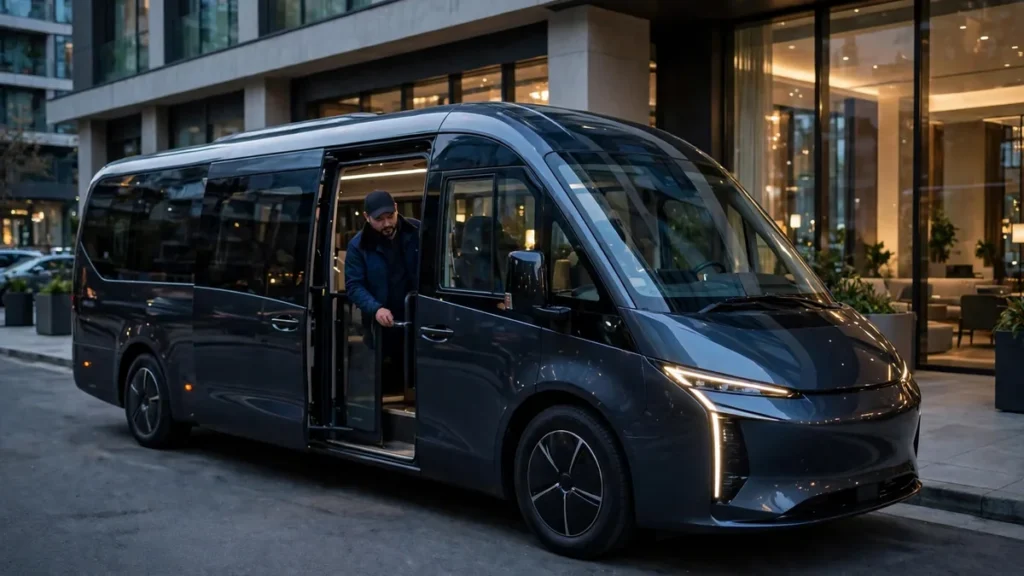
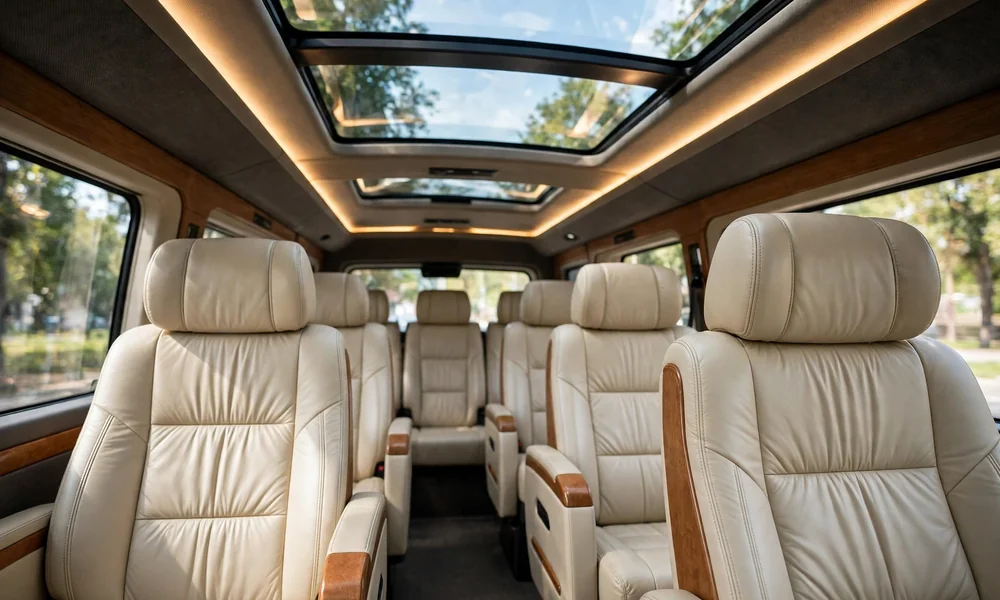
The minibus pulled up outside the hotel, and the guests who stepped out looked as if they had just left a first-class lounge. They had not been in a car. They had been in a vehicle with eight leather chairs, a panoramic glass roof, and a silence so complete that conversation never had to rise above a murmur. Then someone asked the price, and the room went quiet for a different reason. A luxury electric minibus can cost two or three times as much as an ordinary minibus, and the first reaction is always the same: how can a box on wheels cost that much? The answer is that it is not a box on wheels. It is a small hotel, a large battery, and a handmade interior, all sharing the same chassis.
The price is not a mystery once you look at what goes into the machine, and it is not a markup for the sake of it. Every part of a luxury minibus is more expensive than its ordinary equivalent, and there are far fewer of them made, so the cost of designing it is spread across a small number of vehicles. This guide walks through the six reasons the price is what it is, and what, if anything, the buyer actually gets for the money.
1. The Battery: A Small House Worth of Power
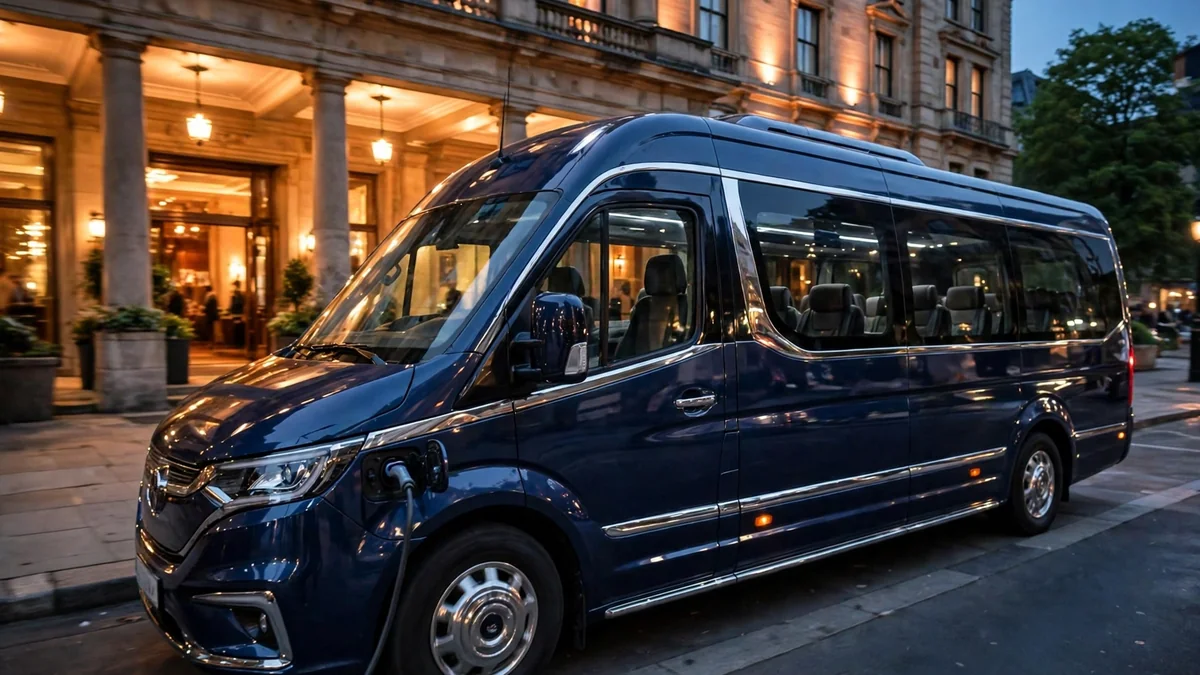
The battery is the single largest cost in the vehicle, and it is also the reason the minibus can do its job at all. A luxury electric minibus carries 90 to 120 kilowatt-hours of battery, which is roughly twice the battery of a large family car, and that battery alone can cost 15,000 to 25,000 dollars to build. It has to carry three tonnes of vehicle, eight passengers, and their luggage, for 300 to 400 kilometres, in all weather, with the heating or air conditioning running. There is no cheap way to do that. The cells must be the best available, the cooling system must keep them at exactly the right temperature, and the whole pack must be protected so well that it survives a decade of daily charging.
2. The Cabin: Hand-Finished, Not Mass-Produced
Step inside and the second cost becomes obvious. The cabin of a luxury minibus is not assembled on a fast production line. It is finished by hand, by people who fit leather seats, wood trim, and soft lighting one vehicle at a time. Eight captain’s chairs in fine leather, each with its own heating, ventilation, and adjustment, cost far more than the bench seats of an ordinary minibus, and the panoramic glass roof, which is a single curved piece of laminated glass, is one of the most expensive parts of the whole vehicle. The wood is real, the metal is real, and the stitching is done by people who have done nothing else for years.
The quiet is also expensive. The cabin is lined with acoustic insulation, the glass is double-glazed, and the suspension is tuned so that the vehicle glides rather than thumps over bad roads. Every one of those choices adds weight, and every kilogram of weight has to be carried by the battery, which has to be bigger, which costs more. Luxury, in a minibus, is a circle, and the price is the circumference. The cabin thinking is the same as in the best electric people-carriers, and the luxury electric minibus specifications explained shows the numbers behind the quiet and the space.
3. Small Numbers, Big Development Bills
A mass-market car spreads the cost of its design across hundreds of thousands of vehicles. A luxury electric minibus spreads the same kind of cost across a few thousand. The crash testing, the software, the safety certification, and the design of the body all cost roughly the same whether you build a thousand vehicles or a million, and when you build a thousand, each one carries a much larger share of the bill. That is the most boring reason a luxury minibus is expensive, and it is also the most important one.
4. Safety, Certification, and the Duty of Care
The manufacturer also carries a duty of care that a car maker does not. If a hotel’s minibus breaks down with guests aboard, the manufacturer is expected to have a replacement on the road within hours, and to keep spare parts available for a decade. That support network, of depots, technicians, and loan vehicles, is built into the price. The build quality behind that promise is visible in how a luxury electric minivan is made, which shows the same careful assembly at a smaller scale.
5. Charging, Support, and the Whole Service
The price of a luxury minibus usually includes far more than the vehicle. It includes the charging installation at the buyer’s depot, the training of the drivers, and a service contract that covers the vehicle for years. The buyer is not buying a machine and then working out how to run it. They are buying a transport service, with the vehicle as the visible part. That service is expensive to provide, and it is one of the reasons the sticker price looks high next to an ordinary minibus that arrives with nothing but a handbook.
6. Materials That Do Not Age
Those materials cost more on the day the vehicle is built, and they save money over its life, because the minibus does not need its interior replaced after three years. A hotel that buys a luxury minibus is buying a vehicle that will still impress its guests in a decade, and that longevity is part of what the price buys. The same long-life thinking runs through other expensive electric vehicles, and why a luxury electric station wagon is so expensive shows how the same choices drive the price of a very different machine.
The Cost Breakdown
| Cost driver | Share of the price |
|---|---|
| Battery and electric drivetrain | Roughly a third |
| Hand-finished luxury cabin | Roughly a quarter |
| Development spread over few vehicles | Roughly a fifth |
| Safety, certification and support | Roughly a tenth |
| Materials that last a decade | The remainder |

Price, and What the Money Buys
A luxury electric minibus costs around 120,000 to 220,000 dollars, and that is an estimate, not a list price, because every vehicle is built to order with different seats, colours, and equipment. An ordinary electric minibus can be had for half that, and it will carry the same eight people from the same hotel to the same airport. What it will not do is carry them in the same silence, the same comfort, or the same style, and it will not still look new in ten years. Whether that difference is worth the money depends on who is paying and who is riding, and for a hotel whose guests judge it by the first and last thing they experience, the answer is usually yes.
A Rare Fact Worth Knowing
Here is the detail that explains the price better than any spreadsheet. The panoramic glass roof of a luxury minibus, the single curved piece of glass that makes the cabin feel open, is so large and so precisely shaped that only a handful of factories in the world can make it, and a noticeable share of them crack during manufacturing. Every roof that survives has to pay for the ones that did not, and that is true of the whole vehicle. The price of a luxury minibus is not the price of the parts that made it into your vehicle. It is the price of the parts that did not, as well.